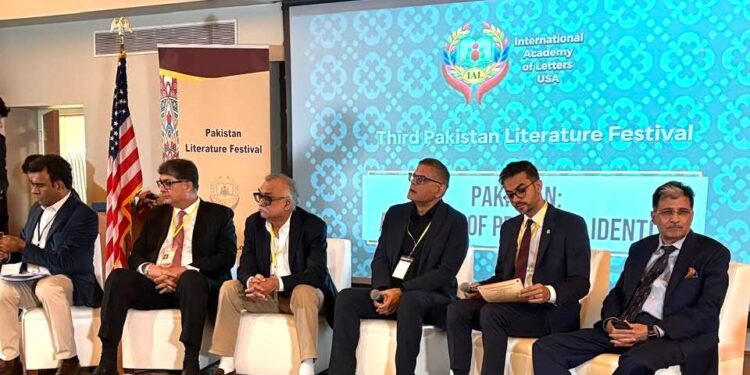
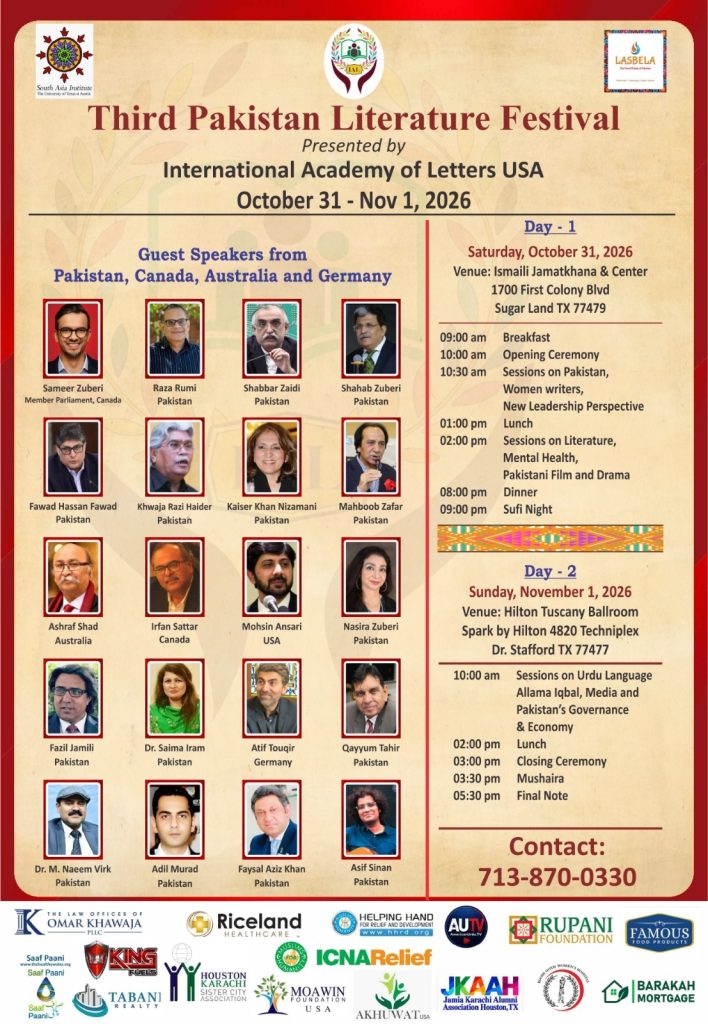
HOUSTON — The third Pakistan Literature Festival Houston has concluded successfully after bringing writers, poets, journalists, intellectuals and artists from Pakistan, the United States and Canada together for two days of discussions on literature, cultural identity, media responsibility and contemporary social challenges. Organised by the International Academy of Letters USA, the October 31-November 1 gathering in Sugar Land and Stafford, Texas, highlighted the potential of Pakistani literature and diaspora engagement to strengthen international cultural ties.
The festival’s programme extended beyond poetry and literary appreciation to include discussions on women’s contributions to Urdu literature, generational differences in leadership, mental health, Pakistani cinema and television, journalism, Allama Muhammad Iqbal and Pakistan’s future.
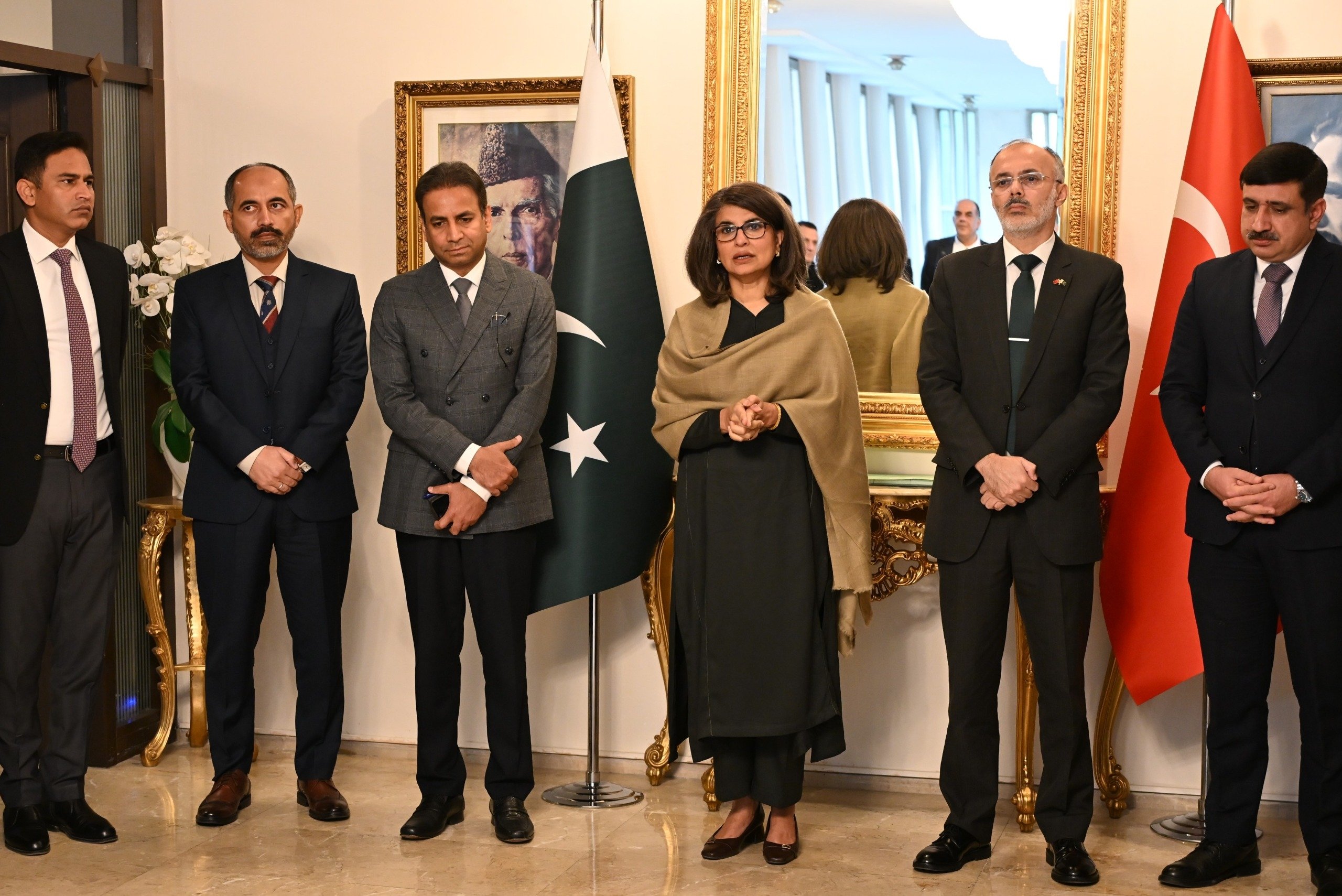
Pakistan’s Ambassador to the United States, Rizwan Saeed Sheikh, addressed participants through a video message, while Pakistan’s Consul General in Houston, Aftab Chaudhry, and Canadian parliamentarian Sameer Zuberi attended the gathering. Ghazanfar Hashmi, president of the International Academy of Letters USA, organised the festival.
The event offered a platform for Pakistani cultural expression in North America at a time when diaspora communities increasingly serve as bridges between their countries of origin and their adopted societies. Its broader significance lies in whether such gatherings can sustain intellectual exchange, encourage younger generations to engage with their heritage and build meaningful connections beyond the festival itself.
Pakistan Literature Festival Houston Strengthens Cultural Diplomacy
The festival demonstrated how literature, art and intellectual discussion can contribute to a country’s international engagement without relying exclusively on formal diplomatic channels.
Cultural diplomacy uses artistic expression, language, educational exchange and personal relationships to build understanding between societies. For Pakistan, which maintains important political, economic and security interests in the United States, such engagement provides an additional avenue for presenting its cultural diversity and intellectual traditions to international audiences.
The International Academy of Letters USA, established in 2017, identifies cultural and public diplomacy as central elements of its work. Its activities include literary events, international dialogue and initiatives connecting writers, academics, diplomats and artists.
The third festival continued this approach by bringing together participants from three countries and creating space for conversations that crossed traditional boundaries between literature, journalism, society and public affairs.
The participation of Pakistani diplomatic representatives added an official dimension to the gathering. However, the value of cultural diplomacy cannot be measured solely by the presence of diplomats or the number of prominent participants. Its longer-term effectiveness depends on whether conversations lead to sustained partnerships, wider access to Pakistani creative work and continued engagement with audiences outside established diaspora networks.
Pakistan possesses a rich literary heritage encompassing Urdu poetry, regional languages, fiction, historical writing, philosophical thought and contemporary social commentary. Presenting this heritage internationally can broaden perceptions of the country beyond the political and security narratives that frequently dominate international coverage of Pakistan.
A festival of this nature can therefore contribute to a more comprehensive understanding of Pakistani society, provided its discussions and creative contributions reach audiences beyond those already familiar with the country’s culture.
Urdu Literature and the Challenge of Connecting Generations
One of the festival’s central themes was the continuing relevance of Urdu literature and poetry among Pakistanis living abroad.
The session titled “Women’s Voices in Urdu Literature” brought together Professor Tahira Naqvi, Ishrat Afreen, Dr. Saima Iram, Mona Shahab, Bina Goindi and Tasneem Abidi. Nasira Zuberi moderated the discussion.
The inclusion of women writers and poets was significant because literary traditions develop through the contributions of different generations and perspectives. Women’s experiences, creative expression and interpretations of society form an important part of Urdu’s literary landscape.
For Pakistan’s diaspora, maintaining a connection with Urdu can be both a cultural resource and a practical challenge. Children and young adults raised in North America often navigate English-dominant educational and professional environments while remaining connected to family histories, languages and traditions originating in Pakistan.
Festivals, literary readings and discussions can help bridge this generational divide. Yet preserving a language requires more than occasional cultural gatherings. Access to books, contemporary writing, translation, educational resources and digital publications also matters.
A sustainable approach would encourage younger participants not only to listen to established writers but also to create their own work, discuss contemporary questions and explore connections between Urdu and other languages.
Pakistan’s literary heritage also extends well beyond Urdu. Punjabi, Sindhi, Pashto, Balochi, Saraiki and other regional languages carry distinctive histories, intellectual traditions and cultural experiences.
International presentations of Pakistani culture can become more representative by providing these languages and their writers with meaningful visibility alongside Urdu. Such inclusion would demonstrate the diversity of Pakistan’s cultural identity without diminishing the importance of its national language.
For organisers and cultural institutions, the challenge is to turn interest generated at festivals into continuing literary engagement through reading programmes, educational partnerships, author exchanges and accessible digital content.
Pakistani Media, Truth and Responsibility Take Centre Stage
Media accountability was another important subject on the festival’s second day.
The session “Navigating Pakistani Media: Truth and Responsibility” brought together journalists Absar Alam, Raza Rumi, Shahab Zuberi, Ashraf Shad, Atif Tauqir, Fazil Jamili and Khurram Shahzad. Ghazanfar Hashmi moderated the discussion.
The choice of subject was particularly relevant to Pakistan, where the news industry faces the challenges of political polarisation, misinformation, changing audience behaviour and the transition towards digital publishing.
For news organisations, credibility depends on verification, transparent sourcing, accurate headlines, fair treatment of competing claims and timely corrections when errors occur. These principles become especially important when reporting concerns political disputes, international relations or sensitive social issues.
Pakistan’s international image is shaped not only by government communications and diplomatic engagements but also by the work of journalists, researchers, writers and independent media organisations.
Responsible journalism can provide international audiences with a better understanding of the country’s institutions, economic conditions, social diversity and public debates. Conversely, unsupported claims, misleading presentation and the circulation of unverified material can undermine public confidence.
The festival’s discussion of media responsibility therefore connected cultural exchange with a wider question: how can Pakistani voices contribute to international conversations while maintaining professional standards?
Diaspora journalists and media professionals occupy a distinctive position in this process. Their work may address audiences in Pakistan while also engaging readers who live in North America and have different expectations, information sources and experiences.
Building trust across these audiences requires more than shared cultural identity. It requires reporting that is accurate, independently verifiable and open to scrutiny.
The inclusion of media accountability alongside literature and cultural discussions also highlighted the relationship between freedom of expression and intellectual development. Literary and journalistic traditions both depend on the ability to examine difficult questions, challenge assumptions and engage with different perspectives.
Allama Iqbal, Leadership and Pakistan’s Future
The second day of the festival featured a discussion titled “Iqbal: The Poet of All Ages”, examining the continuing relevance of Allama Muhammad Iqbal‘s literary and intellectual legacy.
Iqbal remains a major figure in Pakistan’s intellectual history. His poetry addresses questions of individual responsibility, self-realisation, collective identity, education and the relationship between personal development and social change.
Presenting Iqbal to international audiences offers an opportunity to explore these ideas beyond their historical setting. His work can also provide a starting point for discussions about how societies balance cultural inheritance with contemporary realities.
For younger Pakistanis, the relevance of Iqbal depends partly on whether his ideas are connected to the questions they face today, including educational opportunity, professional development, social responsibility and participation in public life.
The festival also examined changing concepts of leadership through the session “Two Cultures, Two Generations: New Concepts of Leadership”. Participants included Dr. Mohsin Ansari, Canadian parliamentarian Sameer Zuberi, Dr. Imran Sharif, Siraj Narsi, Maria Kari and Umar Khawaja. Ibrahim Javed moderated the discussion.
The subject was relevant to Pakistan and its diaspora because leadership expectations evolve across generations and institutions. Experiences in Pakistan may differ from those of Pakistanis who have developed their careers in North American political, professional and community environments.
Dialogue between these groups can help identify shared priorities while acknowledging differences in social experience.
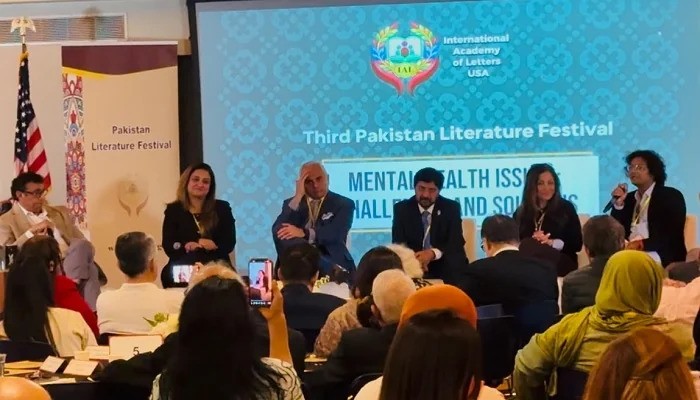
Another session explored mental health, with contributions from Nasruddin Rupani, Dr. Asim Shah, Dr. Mohsin Ansari, Mahtab Muradi, Nusrat Haris and Asif Sinan. Naveeda Hashmi delivered the opening remarks, while Mazhar Khawaja moderated the discussion.
Including mental health in a literary and cultural programme broadened the conversation beyond heritage and national identity. It recognised that cultural communities also need spaces to discuss social pressures and personal well-being.
Such sessions can be valuable when they encourage informed discussion and help direct audiences towards reliable information and appropriate professional support.
The programme also included a conversation with Shabbar Zaidi on reimagining Pakistan’s future, linking the festival’s literary and cultural themes with wider questions about the country’s development.
Pakistani Cinema and the Wider Cultural Landscape
The festival’s discussion of Pakistani cinema and television drama brought another dimension of cultural expression into the programme.
The session featured Shahab Zuberi, Nilofar Abbasi, Noor Naghmi, Adil Murad, Kamran Ali Asdar and Yasir Raza, with Najia Ashar as moderator.
Cinema and television can reach audiences that may have limited exposure to Pakistani literature or formal cultural institutions. Films, dramas and visual storytelling can communicate family experiences, social change, historical memory and everyday life in ways that cross linguistic and geographical boundaries.
For Pakistan, the international circulation of creative work offers potential opportunities for cultural engagement and the development of its creative industries.
However, meaningful international reach requires more than producing content for domestic audiences. Translation, subtitles, international distribution, partnerships with overseas platforms and sustained promotion can help Pakistani productions reach viewers who do not speak Urdu.
There is also scope for greater collaboration between literary institutions, filmmakers, universities and diaspora organisations. Adaptations of literary works, author-filmmaker discussions and international screenings could extend the impact of cultural festivals beyond their immediate audiences.
The festival’s cultural programme included “Sham-e-Ishq”, featuring Sufi music performances by Hasnain Javed and Asif Sinan. Book exhibitions and displays of fine arts also formed part of the gathering.
These activities illustrated the range of cultural forms through which Pakistan’s heritage can be presented internationally, from poetry and music to cinema and visual art.
What the Festival Means for Pakistan and Its Diaspora
The Pakistan Literature Festival Houston offers a useful example of how diaspora communities can contribute to cultural engagement between Pakistan and North America.
Pakistani communities abroad maintain personal, professional and cultural connections with their country of origin while participating in the societies where they live. These relationships can support educational exchanges, literary collaboration, academic partnerships and broader people-to-people contacts.
For Pakistan, the opportunity is to develop these connections as part of a sustained cultural strategy rather than treating each festival as an isolated event.
That strategy could include exchanges between Pakistani and North American universities, collaborative publishing projects, translation initiatives, visiting-writer programmes and digital archives of Pakistani literary and artistic work.
Engagement with younger generations will be particularly important. Digital platforms provide opportunities to introduce poetry, fiction, history and contemporary Pakistani writing to audiences who may not regularly attend traditional literary events.
Organisers could also measure the impact of cultural programmes through participation by students, partnerships established, books distributed, subsequent collaborations and engagement with audiences beyond the immediate event.
These measures would not replace the intrinsic value of literature and artistic expression. They would help demonstrate whether cultural activities are building durable relationships and expanding access to Pakistan’s creative traditions.
It is equally important that cultural representation remains broad and credible. Pakistan’s identity includes multiple languages, religious communities, regional histories and different intellectual perspectives. Presenting this diversity can provide international audiences with a more complete understanding of the country.
Cultural diplomacy is most effective when it creates opportunities for genuine exchange rather than relying exclusively on promotional messaging.
Conclusion: From Cultural Celebration to Lasting Engagement
The third Pakistan Literature Festival Houston brought together literary, journalistic and cultural voices from Pakistan, the United States and Canada for discussions extending from Urdu poetry to media accountability and Pakistan’s future.
Its programme demonstrated the potential of literature and the arts to connect communities across national boundaries. It also highlighted subjects that remain important to Pakistan’s domestic development, including language preservation, generational engagement, responsible journalism and access to informed public discussion.
The larger test for Pakistan’s cultural diplomacy is whether such initiatives can build relationships that continue after the final session. Sustained literary exchanges, stronger educational partnerships, wider international distribution of Pakistani creative work and meaningful participation by younger generations would help extend the festival’s reach.
For Pakistan, cultural influence does not depend solely on presenting its heritage abroad. It also depends on supporting writers, artists, journalists and institutions whose work can withstand international scrutiny and contribute to open intellectual exchange.
The Houston gathering provided a platform for that engagement. Its lasting value will ultimately depend on the relationships, ideas and collaborative opportunities that emerge from it.