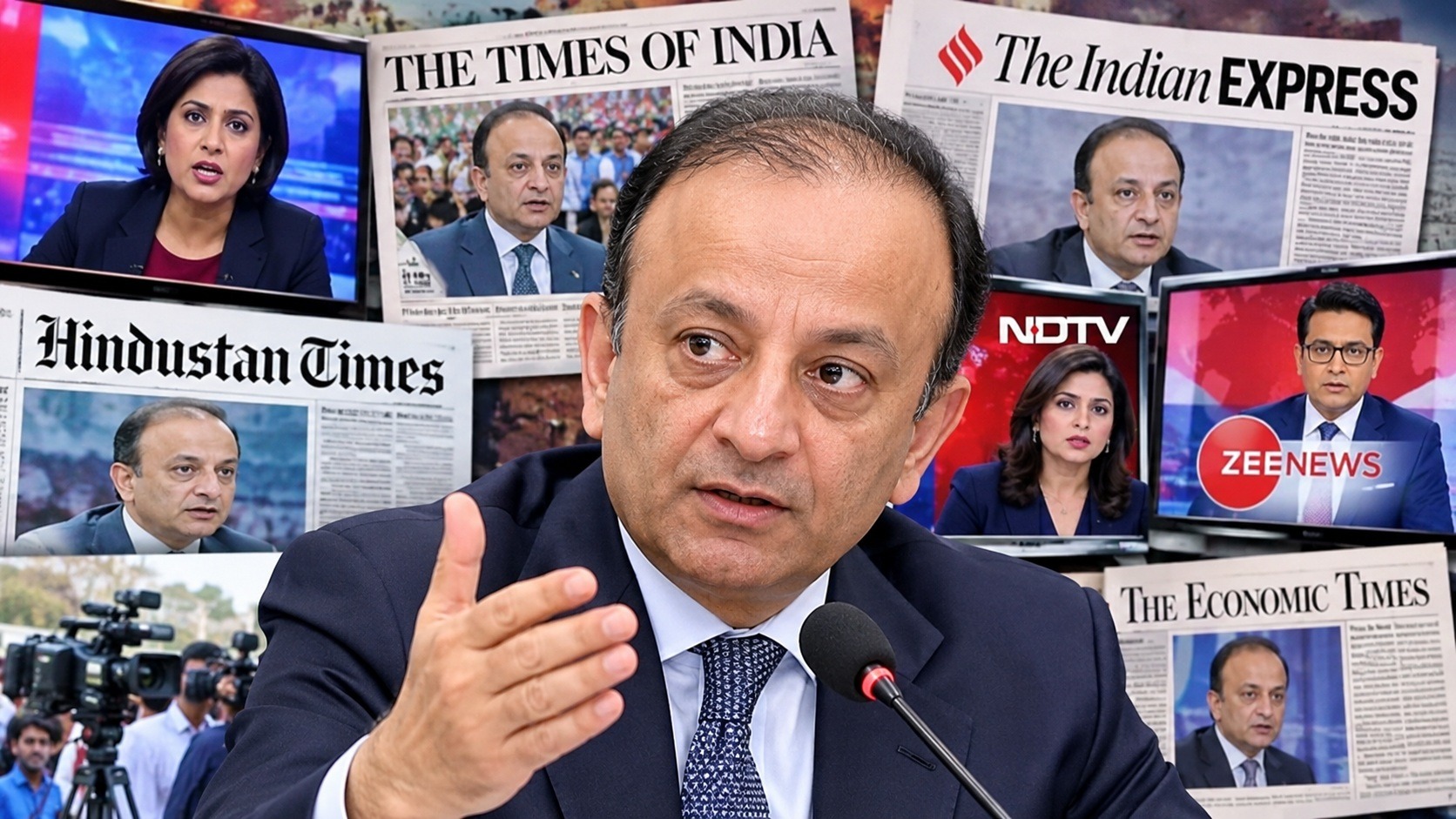
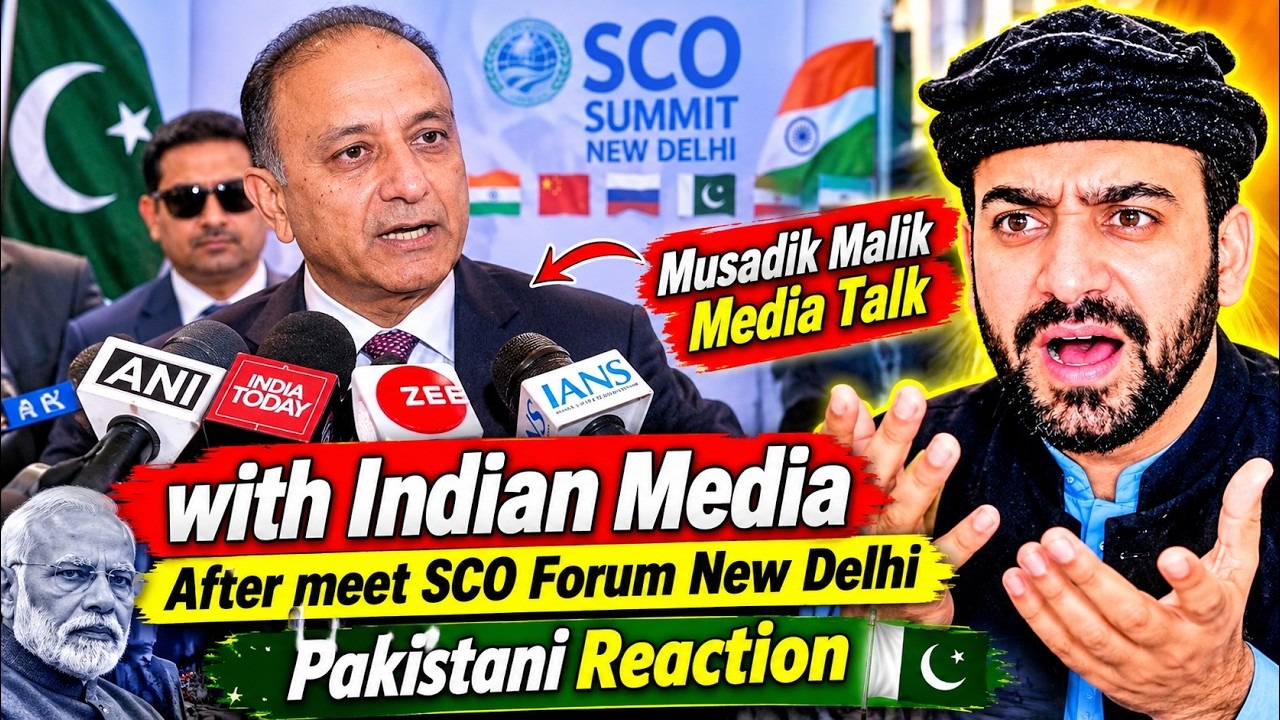
NEW DELHI / ISLAMABAD (PNP): The visit of Pakistan’s Federal Minister for Climate Change and Environmental Coordination, Dr Musadik Masood Malik, to New Delhi for the Shanghai Cooperation Organisation (SCO) Civilisational Dialogue Forum attracted considerable attention from Indian media, with leading news outlets highlighting his diplomatic statements, views on regional cooperation and the wider implications of his presence amid strained Pakistan-India relations.
Malik attended the three-day forum from November 20 to 22, 2026, leading Pakistan’s delegation. His visit marked the first time a Pakistani federal minister had travelled to India since former Foreign Minister Bilawal Bhutto Zardari attended the SCO foreign ministers’ meeting in Goa in May 2023.
Mainstream Indian publications, including The Indian Express and NDTV, devoted coverage to the minister’s arrival, political background, statements on cultural engagement, comments on terrorism and the Indus Waters Treaty (IWT), as well as developments concerning his proposed visits to historical and religious sites.
The coverage reflected the diplomatic significance of Pakistan’s participation in a multilateral forum hosted in India at a time when bilateral relations remain tense.
Indian Media Highlights Diplomatic Significance of Musadik Malik’s SCO Visit
The Indian Express published an explanatory report examining why Pakistan had nominated Malik to represent the country at the SCO Civilisational Dialogue Forum instead of its Minister for Culture and National Heritage, Aurangzeb Khan Khichi, who had initially been invited.
The newspaper reported that Pakistan finalised Malik’s nomination following consultations between officials in Islamabad and the Pakistan High Commission in New Delhi.
It also reviewed Malik’s political and ministerial background, including his previous responsibilities in the energy and water sectors and his role in Pakistan’s public position on the Indus Waters Treaty.
The publication noted that his attendance was particularly significant because it represented the first visit by a Pakistani minister to India since May 2023.
The forum was organised within the SCO framework, bringing together representatives of member countries to discuss civilisational dialogue and cultural understanding. Its proceedings were therefore multilateral in nature rather than a formal bilateral engagement between Islamabad and New Delhi.
Indian Prime Minister Narendra Modi attended the forum’s inauguration at the historic Purana Qila in New Delhi.
Musadik Malik’s Message on Cultural Dialogue and Regional Relations
One of the main themes in Indian media coverage was Malik’s emphasis on cultural engagement as a possible means of improving understanding between countries facing political disagreements.
Speaking to reporters on the sidelines of the forum, the Pakistani minister described cultural interaction as an important way to build bridges between societies.
According to Indian media, Malik said that greater cultural engagement between Pakistan and India could create additional opportunities for dialogue, even when political differences made direct communication difficult.
He also cautioned against viewing the SCO gathering exclusively through the perspective of bilateral relations between Pakistan and India.
“This forum is multilateral in itself,” he said, according to the broadcaster, explaining that the discussions involved a wider regional framework.
Malik highlighted the shared historical and cultural connections among countries in the region, including Pakistan, India, China, Russia and Central Asian states.
He argued that greater understanding of different cultures, traditions and ways of life could contribute to cooperation and regional stability.
During another interaction with local reporters, he expressed optimism about the future of regional relations, saying that geopolitical developments were changing rapidly and countries needed to adopt a broader perspective.
His remarks received attention from Indian news organisations because they came during a period of limited diplomatic engagement between Islamabad and New Delhi.
Indian Media Reports Malik’s Proposal for a Transparent Mechanism on Terrorism
Another important subject covered by Indian media was Malik’s response to questions concerning terrorism and regional security.
In his interaction with journalists, the Pakistani minister called for a transparent mechanism through which countries could address security concerns using evidence and structured engagement.
He emphasized that Pakistan had suffered from terrorist attacks and also recognised that India had experienced such incidents.
The minister argued that regional security challenges should not be confined to mutual accusations between two countries. Instead, he suggested addressing broader regional problems through cooperation and an evidence-based approach.
The broadcaster also reported that Malik did not directly respond to a question about India’s baseless allegations concerning terrorist networks operating from Pakistani territory, preferring to place the discussion within the wider SCO framework.
His comments were covered against the background of continuing differences between the two countries over security issues following the Pahalgam attack in April 2025.
The Indian government’s stated position on cross-border terrorism has remained a major obstacle to normalising bilateral engagement.
Indus Waters Treaty Dispute Remains Part of the Media Narrative
The Indus Waters Treaty was another prominent issue in Indian reporting about the Pakistani minister’s visit.
Indian media recalled Malik’s previous strong statements concerning India’s decision to place the 1960 water-sharing agreement in abeyance.
Several newspapers noted that although the treaty is primarily handled by Pakistan’s Ministry of Water Resources, Malik has played a public role in highlighting Pakistan’s concerns internationally.
It also referred to his earlier remarks warning against any attempt to restrict Pakistan’s share of the Indus waters.
During his New Delhi visit, Malik indicated that the SCO event was not a bilateral negotiation. However, he did not rule out discussing the treaty-related concerns in an appropriate context.
The continued disagreement over the treaty illustrates the wider diplomatic challenges confronting the two neighbouring countries.
Water security is particularly important for Pakistan because of the Indus river system’s central role in agriculture, food production, energy generation and livelihoods.
The issue therefore carries implications beyond diplomatic exchanges and remains a significant concern for regional stability.
Taj Mahal and Nizamuddin Dargah Plans Also Attract Coverage
Beyond the formal SCO proceedings, Malik’s proposed visits to historical and religious sites in India became another subject of media attention.
CNN News-18 reported that the Indian government had approved his proposed visit to the Taj Mahal in Agra but had not granted permission for a visit to the Hazrat Nizamuddin Dargah in New Delhi.
The broadcaster, citing unnamed sources, attributed the decision concerning the dargah to logistical and security considerations.
The report added that Malik had sought permission for both visits during his stay in India.
The development received attention because visits to prominent historical and religious sites can carry cultural and people-to-people significance, particularly during periods of limited contact between the two countries.
However, the reported permissions were separate from the official SCO programme and should not be interpreted as evidence of a change in bilateral diplomatic policy.
Pakistan’s SCO Role Adds Wider Regional Significance
Malik’s participation also came at an important time for Pakistan’s engagement with the regional organisation.
Pakistan has assumed the rotating chairmanship of the SCO Council of Heads of State for the 2026-27 term and is scheduled to host the organisation’s summit in Islamabad in August 2027.
The chairmanship is expected to involve several ministerial meetings, expert-level discussions and other organisational activities ahead of the summit.
The SCO brings together countries with significant political, economic, security and strategic interests across Eurasia. Its agenda includes regional cooperation, connectivity, trade, security and cultural engagement.
For Pakistan, active participation provides an opportunity to strengthen relations with member states and contribute to discussions on shared regional challenges.
The New Delhi forum also demonstrated how multilateral platforms can bring representatives of countries together even when their bilateral relations remain difficult.
What Indian Media Coverage Indicates About the Visit
The reporting by Indian outlets showed that Malik’s visit was viewed through several overlapping perspectives.
The Indian Express concentrated on his political background, Pakistan’s decision to nominate him and the significance of his earlier statements on the Indus Waters Treaty.
NDTV gave considerable attention to his comments on cultural engagement, regional dialogue, terrorism and the diplomatic circumstances surrounding his visit.
Coverage of the Taj Mahal and Nizamuddin Dargah requests added a separate cultural and logistical dimension to the reporting.
These different angles illustrate that the visit was not covered solely as an SCO diplomatic engagement. It also became an opportunity for Indian media to examine Pakistan’s current political position, its approach to regional relations and the unresolved issues between the two neighbours.
At the same time, the minister’s repeated emphasis on multilateral dialogue indicated Pakistan’s preference to engage through the wider SCO framework rather than allowing the gathering to become exclusively focused on bilateral disputes.
Conclusion: Multilateral Dialogue Offers Space for Regional Engagement
Dr Musadik Masood Malik’s participation in the SCO Civilisational Dialogue Forum in New Delhi attracted attention from prominent Indian media outlets because of its diplomatic timing and the range of issues associated with his visit.
His emphasis on cultural understanding, regional cooperation and evidence-based approaches to security discussions formed the central themes of his public statements.
The coverage also highlighted the continuing challenges in Pakistan-India relations, particularly over terrorism and the Indus Waters Treaty.
Although the SCO forum did not constitute a formal bilateral negotiation, it provided an opportunity for Pakistani and Indian representatives to participate in a shared multilateral setting.
For Pakistan, the visit was also relevant in the context of its upcoming responsibilities as chair of the SCO Council of Heads of State and its preparations to host the organisation’s summit in Islamabad in August 2027.
The wider significance of the engagement will ultimately depend on whether such multilateral interactions can contribute to sustained regional cooperation, greater mutual understanding and opportunities for constructive dialogue.

Mr. Sabahuddin Qazi is a senior journalist, analyst and researcher based in Islamabad.