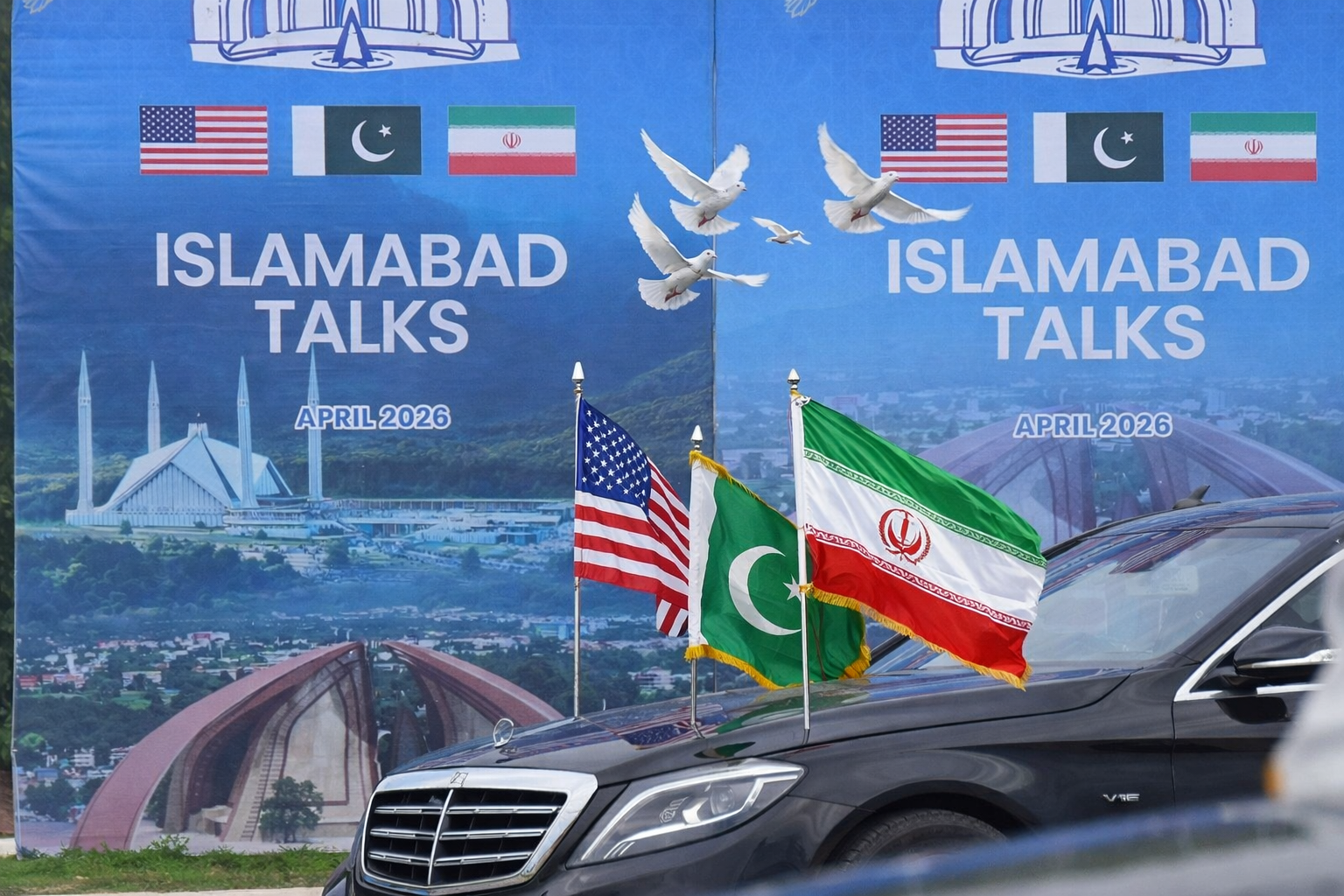
US Iran Second Round Talks are now being widely anticipated following the first round of negotiations in the Pakistani capital of Islamabad. While many initially described the earlier talks as a failure, a closer look reveals that they laid a strong foundation for future dialogue. The possibility of a second round in Islamabad reflects a significant diplomatic breakthrough and offers renewed hope for peace.
The first round of talks brought the United States and Iran face-to-face after decades of hostility. Although no formal agreement was signed, the continuation of dialogue itself is being viewed as a major success. Now, attention has shifted toward what the US Iran Second Round Talks could achieve.
⏳ From First Round to Second Round: A Natural Progression
The initial negotiations in Islamabad lasted over 20 hours and involved intense discussions between the two sides. The US delegation, led by Vice President JD Vance, and the Iranian delegation engaged in detailed exchanges on key issues.
Pakistan, under the leadership of Prime Minister Shehbaz Sharif, played a central role in facilitating these talks. Separate meetings with both delegations helped build trust and ensured that communication remained constructive.
Despite the absence of a final agreement, both sides left Islamabad without closing the door on diplomacy. This is precisely why the US Iran Second Round Talks are now considered both necessary and promising.
⏳ Was the First Round of Islamabad Talks a Failure?
Despite the absence of a signed agreement, the US Iran Ceasefire Talks Analysis suggests multiple positive outcomes:
1. Dialogue Has Been Established
For the first time in decades, both nations engaged in direct dialogue. This alone is a historic achievement.
2. Framework for Future Talks
The United States presented a formal framework for future negotiations, providing a clear roadmap for continued discussions.
3. Diplomatic Channels Remain Open
Both sides confirmed that they are willing to continue talks, ensuring that diplomacy remains the primary path forward.
4. Mutual Understanding Improved
Detailed discussions allowed both sides to better understand each other’s positions, reducing the risk of miscalculation.
The Islamabad talks should not be seen as a failure but as a foundation for future success. In real-world diplomacy, major agreements are rarely achieved in a single meeting. Instead, they are built through continuous dialogue and gradual progress.
Pakistan’s role in bringing both parties together is a source of pride and highlights its growing importance in global diplomacy.
The US Iran Ceasefire Talks Analysis ultimately points toward hope—hope that continued engagement will lead to a lasting peace agreement in the future.
🤝 Pakistan’s Continued Role in US Iran Second Round Talks
Pakistan is expected to remain at the center of the second round of negotiations. Foreign Minister Ishaq Dar has already indicated that Islamabad is ready to facilitate further dialogue.
Field Marshal COAS Asim Munir played most important role during the first round, and his involvement highlights the seriousness of Pakistan’s diplomatic efforts.
Pakistan’s ability to maintain balanced relations with both the United States and Iran makes it an ideal venue for continued negotiations. The country has effectively positioned itself as a neutral and credible mediator.
🌟 Why the US Iran Second Round Talks Matter
The anticipated US Iran Second Round Talks are more than just another diplomatic meeting—they represent a series of powerful signals emerging from Islamabad that point toward gradual but meaningful progress in global peace efforts.
1. Building on Established Dialogue
The first round of talks marked a historic breakthrough, bringing the United States and Iran face-to-face after decades of silence. With engagement led by figures like JD Vance, this initial contact broke psychological and political barriers. The second round signals that this dialogue is not a one-off event but the beginning of a sustained diplomatic process.
2. Refining Negotiation Frameworks
During the first round, the US presented a structured framework outlining its expectations, particularly on nuclear assurances and regional stability. The upcoming talks provide a critical opportunity for both sides to refine, negotiate, and possibly align on these proposals. This evolution from broad demands to detailed negotiation is a strong indicator of serious intent.
3. Reducing Global Tensions
At a time when the Middle East remains highly volatile, continued dialogue between Washington and Tehran serves as a stabilizing force. The second round of talks in Islamabad helps maintain the fragile ceasefire and reduces the risk of sudden escalation, offering relief not just to the region but to the global community.
4. Strengthening Diplomatic Trust
Trust cannot be built overnight, especially between long-standing adversaries. However, repeated engagement—facilitated by Pakistan—helps create a foundation of mutual understanding. Leadership from Shehbaz Sharif and diplomatic coordination by Ishaq Dar reinforce confidence in the process, making future agreements more achievable.
5. Pakistan’s Emergence as a Peace Hub
The hosting of consecutive rounds in Islamabad highlights Pakistan’s growing stature as a credible mediator. By maintaining balanced relations with both sides and ensuring a neutral platform, Pakistan is positioning itself as a key player in global diplomacy—transforming Islamabad into a symbolic “peace capital.”
6. Shift from Confrontation to Negotiation
For years, US-Iran relations have been defined by hostility and indirect confrontation. The continuation into a second round signals a clear shift toward diplomacy over conflict. This transition alone is a powerful message to the international community that even the most entrenched rivalries can move toward dialogue.
7. Opening Doors for Broader Agreements
While immediate consensus on complex issues like nuclear policy or regional conflicts may remain elusive, the second round opens doors for incremental agreements. Confidence-building measures, partial understandings, or humanitarian arrangements could emerge, paving the way for a comprehensive deal in the future.
⚖️ Key Issues for the Second Round
US Iran Second Round Talks: Core Challenges Ahead
Several major issues are expected to dominate the second round:
- Nuclear Program: The US seeks firm assurances, while Iran insists on its rights.
- Strait of Hormuz: Control and access remain contested.
- Lebanon Conflict: Ongoing tensions could influence negotiations.
These challenges are complex, but the second round provides an opportunity to move closer to compromise.
📊 Comparison of Positions Heading into Second Round
| Issue | US Position | Iran Position | Outlook |
|---|---|---|---|
| Nuclear Program | No nuclear weapons commitment | Civilian enrichment rights | Negotiable |
| Strait of Hormuz | Free navigation | Strategic control | Ongoing debate |
| Lebanon | Limited leverage on Israel | Full ceasefire demand | Uncertain |
⚠️ Opportunities and Risks
While the US Iran Second Round Talks bring hope, they also come with risks:
Opportunities:
- Continued diplomatic engagement
- Possibility of partial agreements
- Strengthening Pakistan’s global role
Risks:
- Breakdown of ceasefire
- External influence from regional actors
- Political unpredictability
Balancing these factors will be crucial for success.
🌏 Global Implications of US Iran Second Round Talks
The outcome of the second round could have far-reaching consequences:
- Stabilization of the Middle East
- Improved global economic conditions
- Reduced risk of large-scale conflict
The world is closely watching Islamabad as a potential hub for peace diplomacy to host the US Iran Second Round Talks.
🕊️ Conclusion: A Step Closer to Peace
The US Iran Second Round Talks represent more than just another meeting—they symbolize hope. While the first round did not produce a formal agreement, it achieved something equally important: it opened the door to dialogue.
Even without a signed agreement, the talks have:
- Reduced immediate tensions
- Created opportunities for future dialogue
- Demonstrated the effectiveness of mediation
- Way forward for Second Round
In international diplomacy, progress is often gradual. The US Iran Second Round Talks offers an opportunity to build on the foundation already established and move closer to a lasting peace agreement. Several powerful signals from Islamabad demonstrate that the US Iran Second Round Talks are not just about resolving disputes—they are about reshaping the diplomatic landscape and creating a realistic path toward lasting peace.