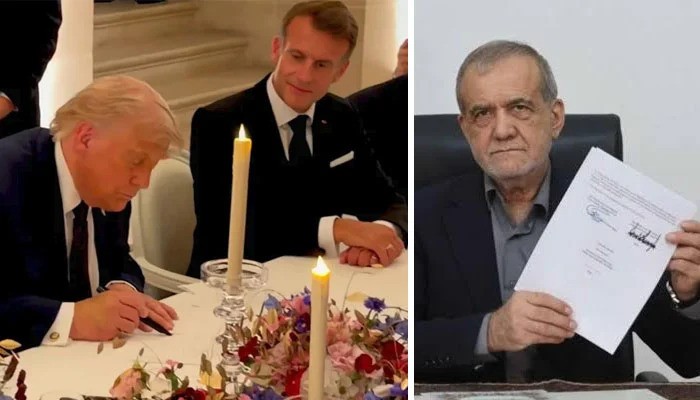
US-Iran MOU has emerged as one of the most consequential diplomatic developments in the Middle East in recent years. The memorandum of understanding (MOU), officially released by the United States, outlines a framework for ending military hostilities, reopening critical maritime routes, easing sanctions on Iran, and launching negotiations aimed at reaching a comprehensive agreement within 60 days.
The document, titled the “Islamabad Memorandum of Understanding between the United States of America and the Islamic Republic of Iran,” carries significance far beyond Washington and Tehran. If implemented successfully, the agreement could affect global oil markets, regional security arrangements, nuclear diplomacy, and the strategic balance across the Gulf region.
For Pakistan, whose economy and security interests are closely tied to developments in the Middle East, the agreement presents both opportunities and challenges.
Key Highlights of the 14-Point US-Iran MOU
The memorandum outlines a broad framework for ending hostilities and negotiating a comprehensive agreement. The key provisions include:
| Point | Summary |
|---|---|
| 1 | Immediate and permanent end to military operations between the US, Iran, and their allies, including Lebanon. |
| 2 | Mutual commitment to respect sovereignty and territorial integrity. |
| 3 | Negotiations for a final agreement within 60 days, extendable by mutual consent. |
| 4 | Gradual removal of US naval restrictions and military impediments around Iran. |
| 5 | Iran to facilitate safe commercial shipping through the Strait of Hormuz. |
| 6 | US and partners to develop a $300 billion reconstruction and development plan for Iran. |
| 7 | Framework for terminating UN, IAEA, and US sanctions against Iran. |
| 8 | Iran reaffirms it will not develop nuclear weapons and agrees to negotiations over enriched uranium stockpiles. |
| 9 | Both sides maintain the current status quo pending a final agreement. |
| 10 | US Treasury to issue waivers allowing Iranian oil exports and related financial services. |
| 11 | Release and accessibility of frozen Iranian assets and funds. |
| 12 | Creation of a monitoring mechanism to oversee implementation and compliance. |
| 13 | Formal negotiations on remaining issues to begin after initial confidence-building measures are implemented. |
| 14 | Final agreement to be endorsed through a binding UN Security Council resolution. |
Pakistan’s Diplomatic Significance Gains Attention
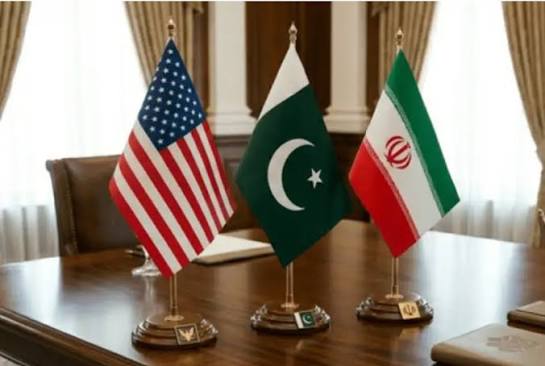
The decision to title the agreement the “Islamabad Memorandum of Understanding” has drawn attention to Pakistan’s diplomatic relevance at a time of growing geopolitical uncertainty. Although the released document does not explicitly describe Pakistan’s role in facilitating negotiations, the use of Islamabad in the agreement’s title underscores the country’s importance as a regional stakeholder with working relationships across competing blocs.
Pakistan maintains diplomatic ties with the United States, Iran, China, Saudi Arabia, and other Gulf states, placing it in a unique position within regional diplomacy. Successive Pakistani governments have consistently advocated dialogue, peaceful conflict resolution, and regional stability, particularly regarding tensions involving neighboring Iran.
If the memorandum eventually evolves into a comprehensive peace and nuclear agreement, Islamabad could benefit from enhanced diplomatic visibility and renewed recognition of its constructive role in promoting regional stability. For Pakistan, a reduction in tensions between Washington and Tehran would also support broader objectives related to trade, energy security, border stability, and regional economic connectivi
US-Iran MOU and the Road to De-escalation
The most significant element of the US-Iran MOU is its commitment to an immediate and permanent cessation of military operations.
The document states that both sides and their allies will refrain from future military actions against each other while respecting sovereignty and territorial integrity. The agreement also includes provisions concerning Lebanon, reflecting the broader regional dimensions of the conflict.
Another major feature is the planned reopening of the Strait of Hormuz, one of the world’s most important maritime chokepoints. Nearly one-fifth of global oil shipments pass through the waterway.
Under the MOU, Iran would facilitate the safe movement of commercial vessels while the United States would begin removing naval restrictions and military obstacles.
If these commitments are fulfilled, global energy markets could experience greater stability after months of uncertainty caused by military tensions in the Gulf.
The agreement also establishes a 60-day negotiating period to convert the memorandum into a final and legally binding arrangement endorsed by the United Nations Security Council.
This timeline suggests both sides recognize the urgency of reducing tensions while maintaining diplomatic flexibility.
US-Iran MOU and the Future of Iran’s Nuclear Program
The nuclear issue remains at the heart of the agreement.
Iran has reaffirmed that it will not pursue nuclear weapons, while both parties have agreed to negotiate the future of Tehran’s enriched uranium stockpiles.
One of the most notable additions in the final version of the memorandum is a reference to a “minimum methodology” for neutralizing highly enriched uranium through down-blending under supervision of the International Atomic Energy Agency (IAEA).
This provision appears designed to provide confidence-building measures without requiring immediate dismantlement of Iran’s nuclear infrastructure.
For Washington, the arrangement offers a pathway to prevent nuclear escalation without another military confrontation.
For Tehran, it preserves room for peaceful nuclear development while potentially securing major economic benefits through sanctions relief.
However, significant questions remain unanswered:
- How much enrichment will Iran ultimately be permitted?
- What verification mechanisms will be accepted?
- How quickly will sanctions be removed?
- What happens if either side accuses the other of non-compliance?
These issues have derailed previous negotiations and could again become obstacles.
Why the US-Iran MOU Matters for Pakistan
For Pakistan, the implications of the US-Iran MOU are substantial.
Energy Security
Pakistan remains heavily dependent on imported energy.
A reduction in tensions around the Strait of Hormuz could contribute to more stable oil prices and lower transportation risks. Any long-term stabilization of Gulf energy routes would benefit Pakistan’s economy, which remains vulnerable to fluctuations in global fuel prices.
Lower energy volatility could help ease inflationary pressures and reduce pressure on foreign exchange reserves.
Trade and Connectivity
Improved US-Iran relations may eventually create conditions for renewed discussions regarding regional connectivity projects.
Projects such as the Iran-Pakistan gas pipeline have remained largely frozen due to sanctions-related concerns. While the MOU does not directly address such initiatives, sanctions relief could alter the strategic environment in which these projects are evaluated.
Regional Stability
Pakistan shares a border with Iran and has consistently advocated dialogue over military confrontation.
A successful diplomatic process would reduce the risk of wider regional conflict that could destabilize neighboring countries and disrupt trade routes.
Islamabad has long emphasized peaceful resolution of disputes and support for regional cooperation. The naming of the agreement as the “Islamabad Memorandum of Understanding” may also draw attention to Pakistan’s diplomatic relevance in regional affairs, although the released text does not specify Pakistan’s direct role in negotiations.
Diplomatic Balancing
Pakistan maintains relations with Iran, Gulf Arab states, China, and the United States.
A reduction in US-Iran tensions could ease some of the diplomatic balancing challenges Islamabad has faced for years. It may also create opportunities for broader regional economic engagement.
Economic Dimensions of the Agreement
The economic provisions are among the most ambitious aspects of the memorandum.
The United States has pledged to work with regional partners on a reconstruction and development framework worth at least $300 billion for Iran.
The agreement also outlines:
- Potential termination of US sanctions.
- Access to frozen Iranian assets.
- Authorization for Iranian oil exports.
- Financial transaction waivers.
- Banking and insurance facilitation.
If implemented, these measures could significantly alter Iran’s economic trajectory.
Iran possesses some of the world’s largest oil and gas reserves. Reintegrating Iranian energy exports into global markets could increase supply and influence international pricing dynamics.
For Asian energy importers, including Pakistan, India, China, Japan, and South Korea, this could be particularly important.
However, implementation risks remain high because sanctions relief often requires complex legal and political processes within the United States and among international institutions.
Conclusion
The US-Iran MOU represents a potentially transformative development in Middle Eastern diplomacy. Taken together, the 14 provisions go beyond a traditional ceasefire framework. They address military de-escalation, nuclear oversight, sanctions relief, economic reconstruction, maritime security, and international legal guarantees. If fully implemented, the agreement could become one of the most significant diplomatic understandings between Washington and Tehran since the 2015 nuclear deal.
For Pakistan, the memorandum could contribute to greater regional stability, improved energy security, and new economic opportunities if negotiations progress successfully. At the same time, significant uncertainties remain regarding implementation, verification, and political acceptance.
The next 60 days of negotiations will likely determine whether the memorandum becomes a historic breakthrough or joins a long list of ambitious diplomatic initiatives that ultimately failed to produce lasting peace.

Mr. Sabahuddin Qazi is a senior journalist, analyst and researcher based in Islamabad.