
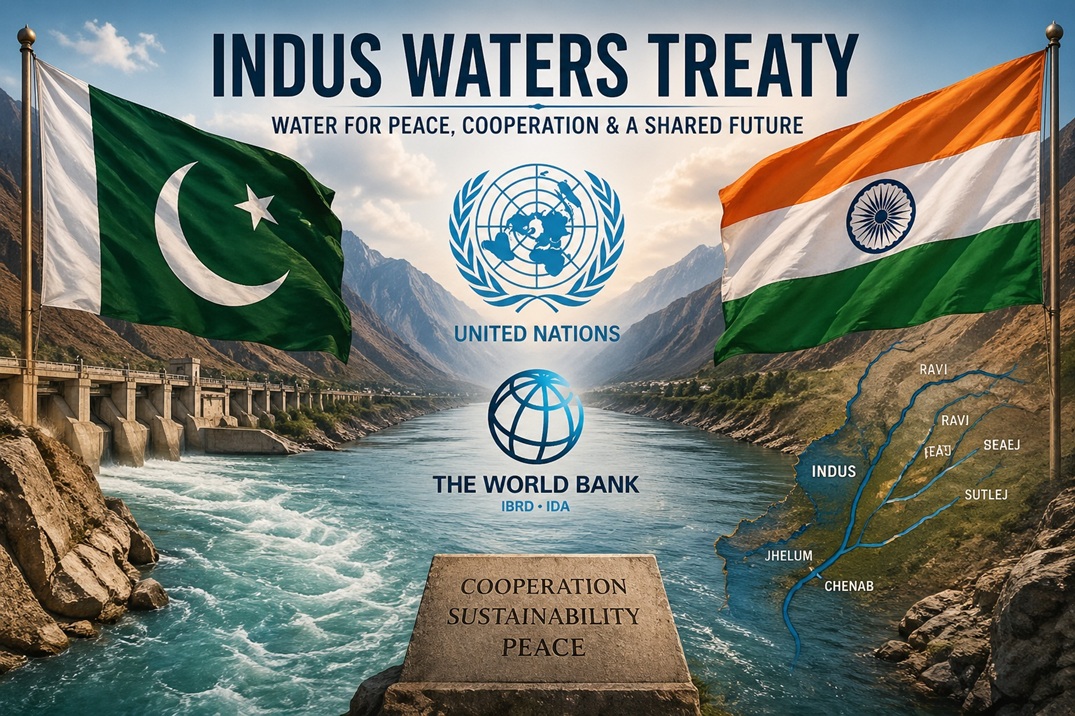
The Indus Waters Treaty is once again in the spotlight—and not for a good reason. What was once considered one of the most resilient water-sharing agreements in the world is now facing a serious test after India’s unilateral suspension. From Pakistan’s perspective, this is not just a diplomatic issue—it’s a long-term strategic, agricultural, and humanitarian concern.
Let’s unpack what’s really going on, why it matters, and what could happen next.
What is the Indus Waters Treaty?
Signed in 1960 after nine years of negotiations brokered by the World Bank, the Indus Waters Treaty divided six rivers between Pakistan and India.
- Pakistan received control over: Indus, Jhelum, Chenab
- India received control over: Ravi, Beas, Sutlej
However, India was allowed limited use (about 20%) of western rivers for non-consumptive purposes like hydropower.
The treaty also established:
- Annual meetings between water commissioners
- Data sharing on river flows
- Inspection visits of water projects
- Dispute resolution mechanisms
Despite wars and tensions, the treaty survived for over 65 years—until now.
Why Did India Suspend the Treaty?
India’s decision to suspend the Indus Waters Treaty came after a security incident in Indian-administered Kashmir. Following that:
- Diplomatic ties were downgraded
- The treaty was effectively “paused”
From Pakistan’s viewpoint, linking water agreements to political or security issues sets a dangerous precedent. Water treaties are meant to be insulated from conflict—breaking that norm risks destabilizing the entire region.
Pakistan’s Response: Taking It to the UN
Pakistan has formally raised the issue at the United Nations Security Council. The argument is simple:
👉 Suspending the Indus Waters Treaty could threaten regional peace and create humanitarian consequences.
Pakistan has urged:
- Restoration of the treaty
- International attention to treaty violations
- Consideration of Kashmir-related UN resolutions
This move is partly symbolic—but also a signal that Pakistan is ready to internationalize the issue.
What Happens When the Treaty is Suspended?
Here’s where things get tricky.
Suspension doesn’t mean rivers stop flowing—but it disrupts the system of trust and coordination.
Key disruptions:
- ❌ No data sharing on water flows
- ❌ No annual commissioner meetings
- ❌ No inspections of dam projects
This creates uncertainty—something agriculture and water management absolutely hate.
Impact on Pakistan: Not Immediate, But Real
Experts say Pakistan hasn’t suffered major damage yet. But the real concern lies ahead.
1. Agriculture at Risk
Pakistan’s irrigation system runs on a rotational method called warabandi. Farmers rely on precise water timing.
If water flow becomes unpredictable:
- Crops may not receive water on time
- Yields could drop
- Food security may be affected
2. Water Flow Manipulation
There are concerns that India could:
- Fill reservoirs suddenly → reducing downstream flow
- Release water suddenly → causing flooding
Even small disruptions can create chaos for farmers.
Comparison: Before vs After Suspension
| Aspect | Before Suspension | After Suspension |
|---|---|---|
| Data Sharing | Regular | Stopped |
| Annual Meetings | Mandatory | Suspended |
| Project Inspections | Allowed | Not happening |
| Water Flow Predictability | Stable | Uncertain |
| Agricultural Planning | Reliable | Risky |
Is India Capable of Blocking Water?
Short answer: not completely—at least not yet.
Experts believe:
- India currently lacks full infrastructure to stop Pakistan’s water
- But future projects could change that
That’s why this is being called not an immediate crisis, but a “warning signal”
The Bigger Concern: Long-Term Strategy
If India continues to bypass the Indus Waters Treaty and builds more dams:
- Water flow timing could be controlled
- Pakistan could face seasonal shortages
- Flood risks could increase
And the worst part? These impacts may take 5–10 years to fully materialize—making them harder to counter in real time.
Can the UN or Global Powers Help?
Realistically? Limited impact.
- The UN Security Council can raise awareness
- But enforcement is complicated
- Major powers may hesitate to intervene directly
Pakistan could:
- Approach the International Court of Justice
- Lobby the US and EU
- Use World Bank arbitration mechanisms
Still, outcomes depend heavily on geopolitics.
Why the Treaty Still Matters
Let’s be real—the Indus Waters Treaty is not just about water. It’s about:
- Stability in South Asia
- Trust between nuclear neighbors
- Survival of millions dependent on agriculture
Pakistan emphasizes that the treaty was not a “favor”—it was a balanced agreement where it already made concessions by allocating three rivers to India.
The Core Issue: Trust is Breaking
At its heart, this situation is about eroding trust.
Water treaties work only when:
- Data is shared
- Communication is constant
- Agreements are respected
Once that breaks, even a technically sound treaty becomes fragile.
Final Thoughts: Alarm Bell, Not Panic Button
Right now, Pakistan is not facing an immediate water crisis due to the suspension of the Indus Waters Treaty.
But ignoring the situation would be a mistake.
Think of it like this:
👉 Not a flood today—but clouds are definitely gathering.
The coming years will determine whether this remains a diplomatic dispute—or escalates into a full-blown water conflict.
Dr. Mohammad Arif is a senior analyst and researcher on water issues.