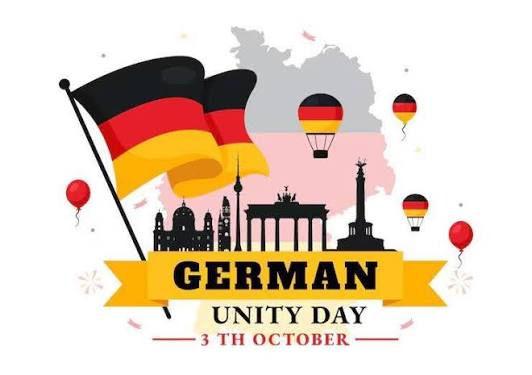
German Unity Day on October 3 marks the reunification of East and West Germany in 1990, but for Pakistan the anniversary carries significance beyond European history. It offers an opportunity to examine how a country divided for more than four decades rebuilt political institutions, economic links, industrial capacity and social cohesion — and what elements of that experience may be relevant to Pakistan.
The 2026 German Unity Day celebrations are being held in Bremen from October 2 to 4, with the programme extending beyond historical commemoration to issues including security, investment, digitalization, climate policy and social cohesion.
Pakistan has a particularly relevant reason to examine the German experience. Its own history includes the traumatic separation of East Pakistan in 1971. The comparison should not be treated as an equation between two very different historical circumstances. Rather, German reunification raises a broader question: how can political unity be translated into economic opportunity, institutional effectiveness and a sense of shared national purpose?
The answer is particularly important at a time when Pakistan is seeking stronger economic growth, industrial modernization, employment for its young population and deeper integration into international value chains.
German Unity Day Highlights the Long Road Beyond Reunification
German reunification was formally completed on October 3, 1990, when the constitutional and institutional framework of the Federal Republic of Germany was extended to the eastern German states.
The date became Germany’s national holiday.
Yet political reunification was only the beginning of a much longer process. The integration of two systems with different economic structures, institutions and social experiences required enormous investment and sustained administrative effort.
Germany’s experience demonstrates that removing a political boundary does not automatically eliminate economic or social disparities.
Eastern Germany continued to face differences in employment, investment, demographics, infrastructure and representation long after reunification. These issues remain part of Germany’s political debate today.
That continuing discussion is significant for Pakistan.
National cohesion is not maintained only through constitutions, flags or administrative boundaries. Citizens also judge the effectiveness of a federation through employment opportunities, education, infrastructure, healthcare, economic participation and access to institutions.
In this sense, German Unity Day is not simply a celebration of what happened in 1990. It is also a reminder that unity requires continuous investment.
Islamabad Reflects Strong Pakistan-Germany Ties
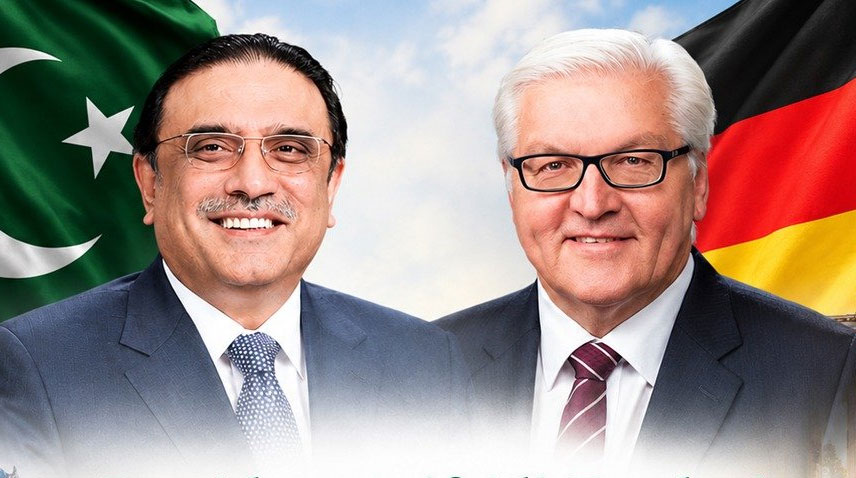
The anniversary also provides an important diplomatic occasion for Pakistan and Germany.
The Pakistani government has likewise placed Germany among its important European partners.
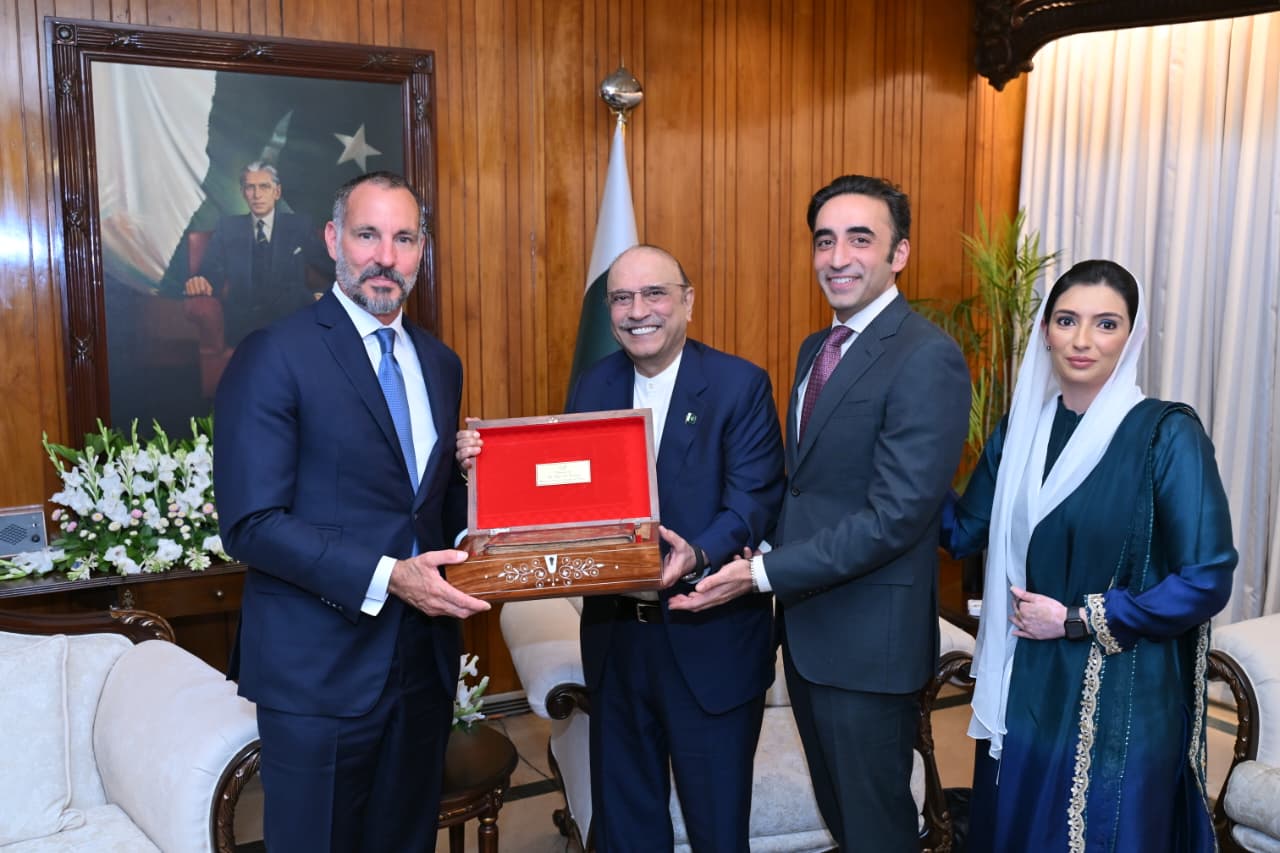
President Asif Ali Zardari congratulated German President Frank-Walter Steinmeier and the German people on German Unity Day. He said Pakistan valued Germany as a trusted partner and noted that bilateral relations were expanding across political, economic, energy, cultural, educational, scientific and technological fields.
The President also highlighted Germany’s role in the European Union and its contribution to Pakistan-EU relations.
These messages underline an important point: German-Pakistani relations are no longer confined to traditional diplomacy. They increasingly encompass trade, education, climate, technology, energy, vocational training and scientific cooperation.
From Trade to Technology: A Major Opportunity for Pakistan
Germany’s economic experience offers perhaps the most important lesson for Pakistan.
German industrial strength has been built around manufacturing, engineering, chemicals, automobiles, electrical equipment, precision machinery and a highly developed network of specialized medium-sized enterprises.
The country’s research base is another major component of that strength. Germany spent €137.1 billion on research and development in 2024, equivalent to 3.17 percent of GDP. More than €92 billion came from the business sector.
The significance for Pakistan is not simply the size of the German figure. It is the close relationship between research and production.
Pakistan already has substantial industrial capabilities in textiles, garments, leather, surgical instruments, sporting goods, food processing, pharmaceuticals and engineering. The challenge is to move more of this production towards higher-value goods and technologically sophisticated manufacturing.
Germany is particularly relevant because the two economies already trade extensively.
Bilateral trade was approximately €3.3 billion in 2024, according to the source material. Pakistan’s exports to Germany are dominated by textiles and leather products, while imports include machinery, chemicals, electrical goods, vehicles and iron products.
This pattern points to an opportunity.
Pakistan could seek greater cooperation in industrial automation, technical textiles, environmentally efficient textile production, precision engineering, recycling technologies, automotive components, pharmaceuticals and industrial energy management.
The objective should not merely be to sell more products to Germany. A more ambitious goal would be to increase the technological content of Pakistani exports.
That would mean moving from a relationship based primarily on goods to one involving technology, research, skills, standards and industrial partnerships.
Jobs and Skills: The German Vocational Education Lesson
One of Germany’s most recognized economic institutions is its dual vocational education and training system.
The model combines classroom education with practical workplace experience. Employers, vocational institutions and public authorities all play roles in preparing workers for specific industrial requirements.
For Pakistan, this has direct relevance.
The country has a large young population, but educational qualifications do not always translate into employable technical skills. Employers frequently require knowledge of modern machinery, software, quality-control systems, industrial processes and international standards.
Germany’s experience suggests that employers should have a meaningful role in determining what students are trained to do.
Vocational education therefore needs to be viewed not as an alternative for students who cannot enter universities, but as an important component of national economic strategy.
The Pakistan-Germany educational relationship already provides a foundation for further cooperation.
According to the source material, DAAD reported 9,873 Pakistani students enrolled at German universities in 2024, while the German higher-education database recorded 51 institutional partnerships between German and Pakistani universities in 2025.
These links could be expanded through joint research, co-supervised doctoral programmes, faculty exchanges, applied laboratories and university-industry partnerships.
Priority areas could include renewable energy, water management, biotechnology, pharmaceuticals, artificial intelligence, advanced manufacturing, agricultural technology and climate science.
Research Must Connect With Pakistan’s Industrial Needs
Another lesson concerns the relationship between universities and industry.
Germany’s innovation system does not depend exclusively on universities. Businesses, industrial laboratories and applied research organizations play major roles in research and development.
Pakistan has considerable academic talent, but the connection between academic research and commercial production remains relatively weak in many sectors.
This creates a familiar gap: universities may produce research that does not reach industry, while companies may import technologies that could potentially be adapted or developed locally.
A stronger system would encourage universities, manufacturers, technology companies and government agencies to work together on clearly defined industrial problems.
The objective should be practical innovation — developing products, processes and technologies that can improve productivity, create jobs and generate exports.
Climate and Energy Cooperation Can Deliver Practical Benefits
Climate cooperation is another major area of Pakistan-Germany engagement.
German development cooperation with Pakistan dates back to 1961, and Germany has pledged billions of euros in project support over the decades. Current areas of cooperation include climate and energy, sustainable economic development, vocational training, health and social protection.
For Pakistan, climate cooperation has become increasingly important.
The country faces recurring floods, extreme heat, water stress, glacier-related risks and agricultural disruption despite having contributed comparatively little to historical global greenhouse-gas emissions.
The most useful cooperation therefore needs to extend beyond conferences and declarations.
Pakistan could benefit from greater collaboration in water management, climate-resilient infrastructure, disaster forecasting, renewable energy, energy efficiency, agricultural technology and environmental monitoring.
Germany’s technological capabilities and Pakistan’s local knowledge could complement each other in developing solutions suited to South Asian conditions.
National Security Now Includes Technology and Industry
German reunification also carries a strategic lesson.
The process was shaped not only by events inside Germany but also by international diplomacy involving the United States, the Soviet Union, Britain and France. The Two Plus Four process addressed questions of sovereignty, borders and security.
Germany subsequently embedded itself deeply within European and transatlantic institutions.
Pakistan’s strategic environment is different, but the underlying principle remains relevant: national security increasingly depends on economic and technological strength.
Energy security, cyber resilience, telecommunications, food systems, water, strategic supply chains, artificial intelligence and industrial capacity are now important elements of national power.
A country that depends heavily on imported machinery, technology and industrial inputs can face strategic vulnerabilities even when its conventional defence capabilities are substantial.
For Pakistan, strengthening domestic productive capacity should therefore be viewed not only as an economic objective but also as part of long-term national resilience.
Federalism and Equal Opportunity Matter for National Cohesion
Germany’s post-reunification experience also highlights the importance of regional development.
The country’s federal system retained substantial political and administrative authority for the Länder, while eastern Germany continued to have distinct economic and demographic challenges.
The lesson for Pakistan is not to copy Germany’s federal model. Pakistan has its own constitutional structure, provincial identities and historical circumstances.
The more relevant principle is that diversity and national unity do not have to be contradictory.
Pakistan’s provinces and regions possess different languages, cultures, economies and histories. A successful federation does not require these identities to disappear.
It requires citizens to believe that the federation provides meaningful opportunities regardless of where they live.
That makes investment in universities, hospitals, transport, water, employment, digital connectivity and industrial development a matter of national cohesion as well as economic policy.
Pakistan Can Build a New Phase of Economic Cooperation With Germany
The future of Pakistan-Germany relations could extend into several emerging fields.
In digital technology, Pakistani software developers and technology companies could potentially work with German manufacturers on industrial automation, cybersecurity, embedded systems, artificial intelligence and supply-chain technologies.
Agriculture offers another opportunity. German expertise in agricultural machinery, sensors, environmental engineering and precision farming could complement Pakistan’s agricultural base.
Partnerships could also address water-efficient irrigation, cold-chain infrastructure, food processing and agricultural exports.
The pharmaceutical and medical sectors present further possibilities. Cooperation in quality control, medical devices, analytical technologies, biosimilars and regulatory systems could help Pakistani companies move towards higher-value production.
In each case, the objective should be capacity building rather than permanent dependence on imported technology.
Technology transfer is most valuable when it eventually creates domestic skills, research capacity and manufacturing capability.
The Larger Lesson: Unity Requires Capability
Germany’s reunification offers Pakistan neither a ready-made development model nor a shortcut to national transformation.
The circumstances are fundamentally different.
But the German experience does illustrate a broader principle: political unity becomes durable when citizens experience its benefits in everyday life.
Employment, education, infrastructure, justice, social protection and economic opportunity turn constitutional unity into lived unity.
Germany’s reunification required extensive legal, administrative, economic and social integration after the political decision had already been made.
Pakistan faces a different historical challenge, but it too must continually strengthen the connections between its regions, institutions, universities, industries and citizens.
The significance of German Unity Day for Pakistan therefore lies less in the Berlin Wall itself than in what happened after the wall came down.
Germany’s achievement was not simply that a divided territory became one state. It was the prolonged effort to integrate systems, develop institutions, rebuild regions and create a common economic future.
For Pakistan, the most useful takeaway is equally practical: national cohesion and national capability must develop together.
German Unity Day thus provides an occasion for Pakistan to look beyond diplomatic symbolism and consider how stronger industrial capacity, better vocational education, applied research, technology partnerships and equitable regional development can contribute to a more cohesive and competitive country.
As Pakistan and Germany continue to deepen their relationship, the next chapter can move beyond traditional trade and development assistance towards a partnership built increasingly around skills, innovation, technology, investment and shared solutions to common global challenges.
Conclusion
The fall of the Berlin Wall became the symbol of German reunification, but the decades that followed demonstrate that removing barriers is only the first step.
For Pakistan, the relevant question is not whether Germany’s path can be replicated. It cannot. The question is what principles can be adapted to Pakistan’s own circumstances.
Those principles include linking education with employment, connecting research with industry, investing in technology, strengthening regional opportunity, developing domestic production and treating institutions as long-term national assets.
German Unity Day, therefore, is more than a European historical anniversary for Pakistani observers. It is an opportunity to reflect on how unity can be supported by economic opportunity, technological capability and effective institutions.
For Islamabad and Berlin, it can also serve as a reminder that the strongest bilateral partnerships are those that convert goodwill into practical cooperation — creating skills, investment, knowledge and opportunities for people in both countries.

Mr. Sabahuddin Qazi is a senior journalist, analyst and researcher based in Islamabad.