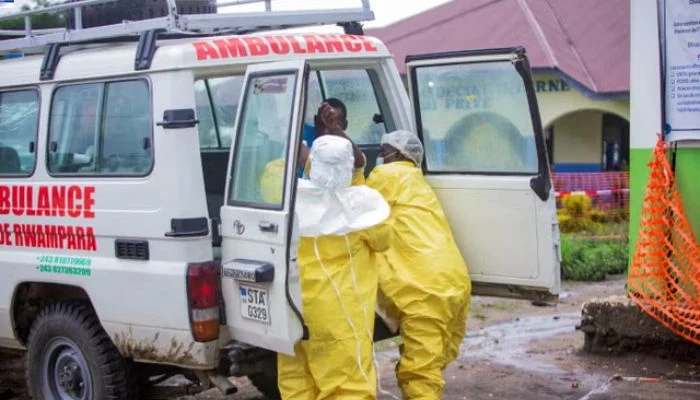
Ebola Case in France has been confirmed after a medical doctor who recently returned from the Democratic Republic of Congo tested positive for the deadly virus, French health authorities announced on June 24, 2026. The case marks France’s first reported Ebola infection linked to the ongoing outbreak in Congo, where hundreds of people have died and more than a thousand infections have been recorded.
French officials said the patient has been placed in isolation and emphasized that the risk to the wider public remains low. The development comes as international health agencies continue monitoring one of the most significant Ebola outbreaks in recent years.
Ebola Case in France Confirmed After Congo Return
France’s Health Ministry said the infected individual is a healthcare worker who had been serving in Congo before returning to France. Authorities confirmed the diagnosis on Wednesday and immediately activated established public health protocols to contain any potential spread of the virus.
According to the ministry, the patient is receiving appropriate medical care in isolation while health officials conduct contact tracing and monitor anyone who may have had close interaction with the infected doctor.
Officials stressed that Ebola is not easily transmitted through casual contact. The virus typically spreads through direct contact with the bodily fluids of an infected person or contaminated materials.
French health authorities stated that existing preparedness measures developed following previous Ebola outbreaks have been implemented to manage the situation and reduce any public health risks.
The confirmation of an Ebola case outside Africa highlights the global nature of infectious disease threats and the importance of international surveillance systems designed to detect and respond to outbreaks quickly.
Congo Outbreak Continues to Challenge Health Authorities
The current Ebola outbreak in Congo has become a major concern for global health organizations. According to reported figures, at least 267 people have died while more than 1,000 infections have been recorded since the outbreak began.
The World Health Organization (WHO) has described the outbreak as particularly significant because it has generated the highest number of confirmed Ebola cases during the first month of any recorded outbreak involving this strain.
Health experts say the outbreak is being driven by the Bundibugyo virus, one of several species of Ebola virus known to infect humans. Unlike the Zaire strain, which has approved vaccines and treatments available, there are currently no WHO-approved vaccines or medicines specifically designed for the Bundibugyo variant.
This lack of approved medical countermeasures has complicated response efforts in affected areas and increased the urgency of ongoing research initiatives.
International health agencies, governments, and humanitarian organizations have expanded surveillance, treatment, and awareness campaigns to limit transmission and support affected communities.
The outbreak has also raised concerns about cross-border transmission and the potential for isolated imported cases in countries receiving travelers or healthcare workers returning from affected regions.
Vaccine Research and Global Response Efforts
Health authorities and researchers are actively exploring possible solutions to contain the outbreak. According to available information, four vaccine candidates are currently being evaluated for potential use against the Bundibugyo strain.
However, clinical trials have not yet begun, meaning no vaccine has received authorization for public deployment against this specific virus type.
The urgency of the situation has prompted increased international cooperation among health institutions, research centers, and governments. Scientists are working to better understand the outbreak dynamics while preparing potential vaccine studies and treatment strategies.
Last month, Germany and the Czech Republic accepted two Ebola-infected doctors for specialized medical treatment. Those cases demonstrated the willingness of European nations to support international outbreak response efforts while ensuring infected individuals receive advanced care in controlled medical settings.
Public health specialists note that rapid detection, isolation, contact tracing, and community awareness remain the most effective tools for limiting Ebola transmission when vaccines or targeted treatments are unavailable.
Understanding Ebola and Its Risks
Ebola is one of the world’s most dangerous infectious diseases. Depending on the strain and available medical care, mortality rates can be extremely high and may reach up to 90% in severe outbreaks.
Symptoms often begin suddenly and may include:
- High fever
- Severe fatigue
- Muscle and joint pain
- Headache
- Nausea and vomiting
- Diarrhea
- Dehydration
- Skin rash
- Internal or external bleeding in severe cases
Medical experts also warn that Ebola can persist in certain parts of the body after recovery. In some cases, recovered patients have experienced relapses months or even years after initial infection, making long-term monitoring important.
Early diagnosis and supportive treatment significantly improve survival chances. Patients typically require intensive medical care, including fluid replacement, monitoring of vital organs, and treatment of complications.
Why the Development Matters Globally
The confirmation of an Ebola case in France serves as a reminder that infectious disease outbreaks can have international implications even when they originate in a specific region.
Modern air travel allows people to move across continents within hours, increasing the importance of strong screening systems, international health cooperation, and rapid information sharing.
For countries such as Pakistan and others with extensive international travel networks, the incident underscores the value of maintaining disease surveillance capabilities and preparedness plans for imported infectious diseases.
While health experts emphasize that the risk of widespread transmission in countries with advanced healthcare systems remains low, imported cases require immediate attention to prevent localized spread.
The WHO and national health agencies continue to monitor developments closely as efforts intensify to control the outbreak at its source in Congo.
Conclusion
The first confirmed Ebola case in France linked to the ongoing Congo outbreak has prompted swift action from health authorities, who say the infected doctor is isolated and the risk to the public remains low. The case comes as Congo continues to battle a serious outbreak caused by the Bundibugyo strain, for which no approved vaccine or treatment currently exists.
As researchers work on potential vaccine candidates and international health agencies strengthen response measures, the situation highlights the continuing challenge posed by emerging infectious diseases and the importance of coordinated global health preparedness.

Naeem Akhtar plays a key role in shaping editorial content and maintaining the highest standards of accuracy and clarity. His dedication ensures that PNP’s coverage remains timely, reliable, and impactful for its readers worldwide.