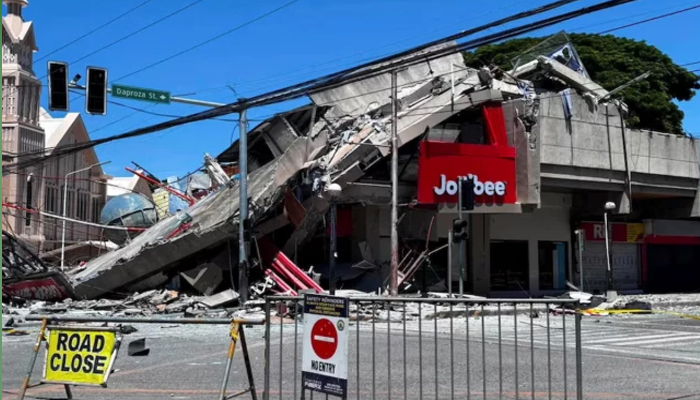
The Philippines earthquake death toll has climbed to 46 as rescue teams continue searching through collapsed structures and landslide-hit communities in the southern part of the country following a powerful 7.8-magnitude earthquake. The quake struck off the coast of Mindanao on June 8, causing widespread destruction, disrupting transportation links, and prompting tsunami alerts across several coastal areas.
Authorities said the number of missing persons has also increased significantly, raising concerns that the casualty count may continue to rise as recovery efforts advance.
Philippines Earthquake Death Toll Rises as Rescue Operations Continue
Emergency responders in southern Philippines recovered another victim from the wreckage of a collapsed supermarket in General Santos City on Wednesday, adding to the growing human toll from one of the strongest earthquakes to strike the region in recent years.
The victim, identified as 39-year-old supermarket employee Joey Deluvio, was found trapped beneath debris after an extensive search operation. Rescue workers had earlier detected what appeared to be a weak sign of life using specialized equipment, offering hope that survivors might still be trapped beneath the rubble.
However, rescuers later confirmed that Deluvio showed no signs of life when crews finally reached him.
Local rescue officials said the victim was pinned between structural beams inside the collapsed building. The supermarket had become a central focus of recovery operations because authorities believed workers and customers could have remained trapped inside following the earthquake.
Civil defense authorities confirmed that Deluvio’s death was not yet included in the official fatality figures announced earlier, indicating that the overall death toll may increase further as records are updated.
The powerful earthquake generated intense ground shaking across large parts of Mindanao, damaging homes, commercial buildings, roads, and public infrastructure.
Landslides and Building Collapses Cause Most Fatalities
According to disaster management officials, the majority of newly reported deaths occurred in Davao Occidental province, one of the areas hardest hit by the earthquake.
Authorities said many victims were killed when landslides swept through vulnerable communities or when buildings collapsed during the violent tremors.
The Philippines sits along the Pacific Ring of Fire, one of the world’s most seismically active zones. As a result, earthquakes are common, but experts noted that the magnitude and impact of this event were particularly severe.
The national disaster agency reported that the number of missing persons rose sharply from four to 17 within a day, reflecting the challenges faced by emergency responders attempting to access remote communities cut off by damaged roads and landslides.
Several villages remain difficult to reach, slowing search and rescue efforts. Emergency teams continue to deploy heavy equipment, drones, and specialized search devices to locate survivors and recover victims.
Authorities have also warned residents to remain alert for aftershocks, which continue to pose risks to damaged buildings and rescue personnel working in unstable areas.
Impact on Communities and Infrastructure Across Mindanao
The earthquake’s effects extended far beyond the immediate disaster zone.
Road networks in several provinces suffered significant damage, while landslides blocked transportation routes and hampered the delivery of aid supplies. Emergency shelters have been established for displaced families whose homes were damaged or destroyed.
Hospitals and local government facilities have also been operating under emergency conditions. In some affected areas, temporary medical stations and outdoor treatment centers were established to accommodate injured residents and ensure continuity of healthcare services.
The initial earthquake also triggered tsunami warnings across parts of southern Philippines, prompting precautionary evacuations in coastal communities. Although the tsunami threat later subsided, authorities emphasized the importance of rapid warning systems in reducing potential casualties.
Infrastructure assessments remain ongoing as engineers inspect public buildings, schools, bridges, and commercial facilities for structural damage.
Government agencies are coordinating relief operations with local authorities, humanitarian organizations, and volunteer groups to provide food, water, medical assistance, and temporary shelter to affected populations.
Seismic Risks in the Philippines
The Philippines experiences thousands of earthquakes each year due to its location along major tectonic fault lines. While many tremors are too weak to cause damage, stronger earthquakes frequently pose significant threats to densely populated areas.
Experts say earthquakes occurring near coastal regions can be particularly dangerous because they carry the potential to generate tsunamis and trigger secondary hazards such as landslides.
The latest disaster highlights ongoing challenges faced by authorities in strengthening disaster preparedness, enforcing earthquake-resistant construction standards, and improving emergency response capabilities across vulnerable regions.
As recovery efforts continue, officials remain focused on locating missing individuals, restoring essential services, and supporting affected communities as they begin the long process of rebuilding.
Conclusion
The Philippines earthquake death toll has risen to 46 following the powerful 7.8-magnitude quake that struck near Mindanao, leaving widespread destruction across southern provinces. With dozens injured, at least 17 people still missing, and aftershocks continuing, rescue teams remain engaged in a race against time. Authorities expect search and recovery operations to continue in the coming days as communities assess the full scale of the disaster and begin rebuilding efforts.

Naeem Akhtar plays a key role in shaping editorial content and maintaining the highest standards of accuracy and clarity. His dedication ensures that PNP’s coverage remains timely, reliable, and impactful for its readers worldwide.