

Pakistan’s National Assembly has approved the Defence Forces Act 2026 along with amendments to the National Command Authority Act 2010, advancing legislation designed to give effect to defence-related changes introduced under the 27th Constitutional Amendment.
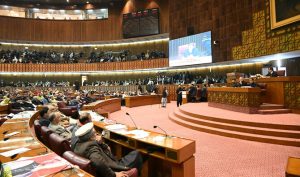
The two bills were presented by Defence Minister Khawaja Asif during Thursday’s National Assembly session chaired by Speaker Sardar Ayaz Sadiq. The Defence Forces Act amendment was approved by a majority vote, while the National Command Authority legislation was approved unanimously.
Opposition lawmakers objected to the proposed legislation and walked out of the House during proceedings.
The bills will now proceed to the Senate for consideration, marking another stage in the government’s effort to align Pakistan’s defence laws with recent constitutional changes.
Defence Forces Act Follows Constitutional Changes
The Defence Forces Act 2026 has been prepared as a continuation of changes introduced through the 27th Constitutional Amendment.
According to a statement from the Prime Minister’s Office, the legislation is intended to establish the legal and administrative framework surrounding the office of the Chief of Defence Forces, as well as matters concerning the headquarters associated with the position.
The legislation is significant because the 27th Constitutional Amendment introduced changes to Pakistan’s constitutional framework governing the armed forces.
The subsequent changes to service laws are intended to translate those constitutional provisions into operational and administrative rules.
The National Assembly’s approval therefore represents an important step in completing the legislative framework that followed the constitutional amendment.
The government has described the process as necessary to ensure that existing defence legislation remains consistent with the revised constitutional provisions.
National Command Authority Law Also Amended
Alongside the Defence Forces Act, the National Assembly approved amendments to the National Command Authority Act 2010.
The National Command Authority is responsible for Pakistan’s strategic command framework, making changes to the law governing the authority an important component of the country’s national security architecture.
The federal cabinet had approved the proposed amendment before the legislation was brought before Parliament.
 The Prime Minister’s Office said the changes to the National Command Authority Act were also required following the constitutional changes introduced through the 27th Amendment.
The National Assembly approved the amendments unanimously, according to the parliamentary proceedings reported by AAJ.
The two pieces of legislation now face consideration in the Senate. Their movement through the upper house will determine the next stage of the legislative process.
Opposition Walks Out During Debate
The passage of the bills was accompanied by political disagreement inside the National Assembly.
Opposition lawmakers objected to the proposed amendments and subsequently walked out of the House.
The government, meanwhile, maintained its position that the legislation was required to bring relevant laws into line with the constitutional framework.
The ruling Pakistan Muslim League-Nawaz had instructed its lawmakers to ensure full attendance during the session, according to the report. The party’s leadership sought to maintain its numerical strength in the House during the voting process.
The political disagreement reflects the wider sensitivity surrounding legislation concerning the country’s military command structure.
Defence and constitutional matters have traditionally attracted close attention in Pakistan because of their implications for national security, institutional responsibilities and civil-military relations.
Changes Build on the 27th Constitutional Amendment
The latest legislation cannot be viewed separately from the 27th Constitutional Amendment, which introduced significant changes relating to Pakistan’s constitutional and institutional framework.
Earlier legislation amended the laws governing the Pakistan Army, Pakistan Air Force and Pakistan Navy following the constitutional changes.
Under the amended framework, the position of Chief of Defence Forces was incorporated into the office of the Army Chief. The legislation also provided for the abolition of the Chairman Joint Chiefs of Staff Committee position from Nov. 27, 2025.
President Asif Ali Zardari subsequently approved amendments to the Pakistan Army, Air Force and Navy Acts after they had passed through Parliament.
The changes also provided for a five-year tenure for the Chief of Defence Forces and introduced provisions concerning the National Strategic Command.
The new Defence Forces Act is part of the continuing legislative process arising from those constitutional and statutory changes.
Why the Legislation Matters
The latest parliamentary developments have implications for the organization and administration of Pakistan’s armed forces.
A clearly defined legal framework can establish the responsibilities associated with senior military positions and provide statutory backing for changes introduced through constitutional amendments.
The legislation also comes at a time when Pakistan’s security environment remains complex.
The country continues to confront terrorism and security threats along its western borders while maintaining strategic concerns relating to regional stability and relations with neighboring states.
Pakistan has also increased defence cooperation with regional partners. Earlier this month, Pakistan, Saudi Arabia and Türkiye signed a joint defence agreement in Makkah, a development welcomed by National Assembly Speaker Sardar Ayaz Sadiq as an important step in strengthening regional security cooperation.
Against this backdrop, changes to the country’s defence command and legal structure are likely to attract attention both domestically and internationally.
For foreign governments and strategic analysts, the legislation provides an indication of how Pakistan is adapting its institutional arrangements to its evolving security requirements.
National Security and Parliamentary Oversight
The passage of defence legislation also highlights the role of Parliament in establishing the legal framework for national security institutions.
While governments typically argue that defence legislation is necessary to strengthen institutional effectiveness, parliamentary debate provides an opportunity for lawmakers to examine the scope and implications of proposed changes.
The opposition’s decision to walk out demonstrates that political consensus on defence-related legislation has not necessarily accompanied the government’s legislative push.
The Senate will now have an opportunity to consider the bills after their approval by the National Assembly.
The final legislative outcome will therefore depend on the next stage of parliamentary consideration.
Regional and Strategic Context
Pakistan’s defence policy is being shaped by developments well beyond its immediate borders.
The country has strengthened defence ties with Saudi Arabia and Türkiye while continuing to manage a complex security relationship with India and challenges related to militancy.
The restructuring of defence command arrangements also comes amid growing emphasis on joint operations, strategic coordination and modern military capabilities.
For Pakistan, maintaining clear lines of authority among the armed services is particularly important as modern security challenges increasingly involve conventional, cyber, technological and strategic domains.
The Defence Forces Act 2026 is consequently more than a routine amendment to military law. It forms part of a broader effort to establish the statutory framework supporting the country’s revised defence command structure.
Next Step: Senate Review
Following approval by the National Assembly, the Defence Forces Act 2026 and amendments to the National Command Authority Act 2010 are expected to move to the Senate.
The upper house will examine the legislation before the parliamentary process can be completed.
The government is expected to argue that the measures are necessary to implement the constitutional changes already approved, while opposition parties may continue to scrutinize the extent and implications of the new arrangements.
The Senate proceedings will therefore be closely watched for both the substance of the legislation and the level of political support surrounding it.
Pakistan’s Effort to Align Defence Legislation
The National Assembly’s approval of the Defence Forces Act 2026 represents a significant step in Pakistan’s continuing effort to align defence legislation with the constitutional framework established through the 27th Constitutional Amendment.
The legislation addresses the position of the Chief of Defence Forces and related administrative arrangements, while amendments to the National Command Authority Act update another key component of the country’s strategic security framework.
With both bills now moving toward the Senate, the next stage of parliamentary consideration will determine how the revised defence structure is translated into law.
The developments are likely to remain closely watched because they affect Pakistan’s military command arrangements, national security institutions and the broader constitutional framework governing the armed forces.
#DefenceForcesAct, #PakistanDefence, #NationalAssembly, #ChiefOfDefenceForces, #NationalCommandAuthority, #PakistanPolitics, #NationalSecurity, #MilitaryLegislation, #PakistanParliament, #ConstitutionalAmendment

Dr. H. Zafar is a distinguished writer and analyst associated with Press Network of Pakistan as Associate Editor. With a strong academic background and years of research experience, she brings depth, clarity, and analytical rigor to her writings.