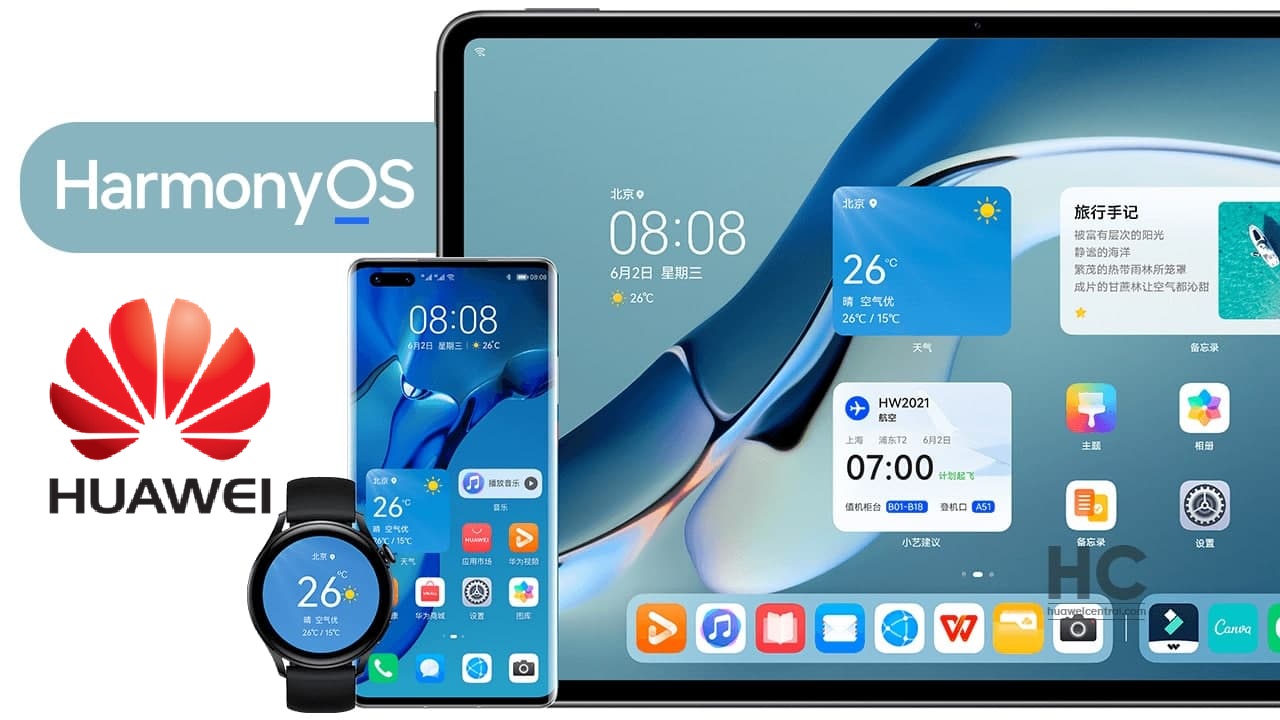
As we move into 2026, Huawei’s HarmonyOS is rapidly gaining attention — not just as an alternative to established platforms like Android and iOS, but as a genuine contender in the operating system landscape. In late 2025, Huawei officially announced that the combined rollout of HarmonyOS 5.0 and 6.0 has now surpassed 36 million devices globally, marking a major milestone in the platform’s adoption and ecosystem growth. This milestone underscores HarmonyOS’s transition from an Android-dependent project to a fully self-developed and expanding OS ecosystem powering phones, tablets, wearables, PCs, and other smart devices.
Huawei has also emphasized the importance of AI integration and ecosystem intelligence, particularly with HarmonyOS 6 introducing enhanced performance, cross-device workflows, and AI-powered features that blur the lines between mobile, home, and enterprise devices.
🤖 AI & Intelligent Agents Will Be Central in 2026
HarmonyOS 6 (released in late 2025) lays the foundation for the future by incorporating the Harmony Multi-Agent Framework (HMAF), which promises intelligent automation and deeper system-wide AI capabilities. This focus on AI aligns perfectly with broader industry trends toward context-aware computing and machine intelligence, making HarmonyOS a platform designed not just for devices but for intelligent user interactions across environments.
Huawei’s leadership has also tied the OS roadmap to its broader AI strategy — including the development of high-performance chips (such as the Ascend 950 scheduled for launch in 2026) that could power next-generation AI workloads and further accelerate HarmonyOS’s capabilities.
🌍 Expansion Beyond China
A pivotal part of HarmonyOS’s 2026 strategy is international expansion. Huawei has indicated plans to bring HarmonyOS to new regions beyond China — including markets like South Korea, where the OS could make its first official push outside the domestic market in concert with new hardware and AI solutions.
Industry reports from late 2024 and 2025 also predicted that Huawei would build on commercial launches in smart displays and automotive systems to enter international mobile and IoT markets by 2026, positioning the HMOS as a more direct competitor to Android and iOS globally.
🛠 Strengthening the Developer Ecosystem
For the HMOS to grow meaningfully in 2026, developer engagement and app support will be crucial. Huawei has set ambitious targets — including reaching 100,000 apps on the HarmonyOS ecosystem — as part of its self-reliance strategy.
Even before reaching this target, the platform already supports tens of thousands of applications and meta-services, covering core sectors like productivity, entertainment, and IoT.
OpenHarmony, the open-source foundation of HarmonyOS, has also attracted millions of registered developers and contributes to a growing cross-device ecosystem that stretches well beyond traditional smartphones.
📱 Device Diversity & Integration
The HMOS is no longer limited to phones. Recent developments show the OS powering:
-
Smartphones and tablets
-
Wearables
-
PCs
-
Smart displays
-
Automotive systems with intelligent in-vehicle experiences planned for 2026 and beyond
This cross-device strategy is central to Huawei’s “1+8+N” vision (1 phone + 8 device types + N IoT partners), which aims to create a unified ecosystem of interconnected, intelligent devices.
🚗 Strategic Industry Partnerships
Beyond smartphones, the HMOS is gaining traction in the automotive sector. Partnerships with companies like Avatr plan multiple jointly developed models launching in 2026, featuring HarmonyOS-based in-vehicle experiences and advanced driver assistance technologies.
This push into smart vehicles reflects a broader trend where operating systems are evolving into platforms for connected mobility — a segment expected to grow significantly in the mid-to-late 2020s.
🌍 Global Ambitions and the Road Ahead
📌 Challenges
While HarmonyOS is growing rapidly within China and in certain markets, global adoption remains a key challenge. Achieving meaningful penetration in Western markets may require overcoming app availability gaps, developer engagement hurdles, and geopolitical barriers — particularly in regions where Google and Apple ecosystems dominate.
Still, Huawei’s strategic pivot toward self-reliance, high-performance computing, and AI positions HarmonyOS well for sustained growth.
📌 Opportunities
By 2026, HarmonyOS may become increasingly attractive in specific areas:
-
Emerging markets seeking non-Western tech platforms
-
Automotive and smart IoT ecosystems where seamless device integration is critical
-
Enterprise and industrial use-cases powered by AI and distributed computing
If Huawei continues to expand its ecosystem, strengthen partnerships, and attract developers, the OS could evolve into a credible third major global operating system — resilient, adaptable, and aligned with next-generation computing trends.
🧠 Final Thought: HarmonyOS in 2026
The year 2026 promises to be a turning point for Huawei’s HarmonyOS.
With a growing installed base, tighter AI integration, expanding international aspirations, and solid industry partnerships, HMOS may well transition from a regionally strong OS to a globally recognized platform, especially in sectors where cross-device intelligence and AI capabilities matter most.
While Android and iOS will remain dominant worldwide, HarmonyOS’s unique ecosystem and strategic direction position it as an influential challenger in the post-smartphone computing era — one that could reshape how users and devices interact in a truly interconnected world.
Mr. Sabahuddin Qazi serves as Editor-in-chief of the Press Network of Pakistan. He is also former Brand Manager for Huawei Middle East Region.