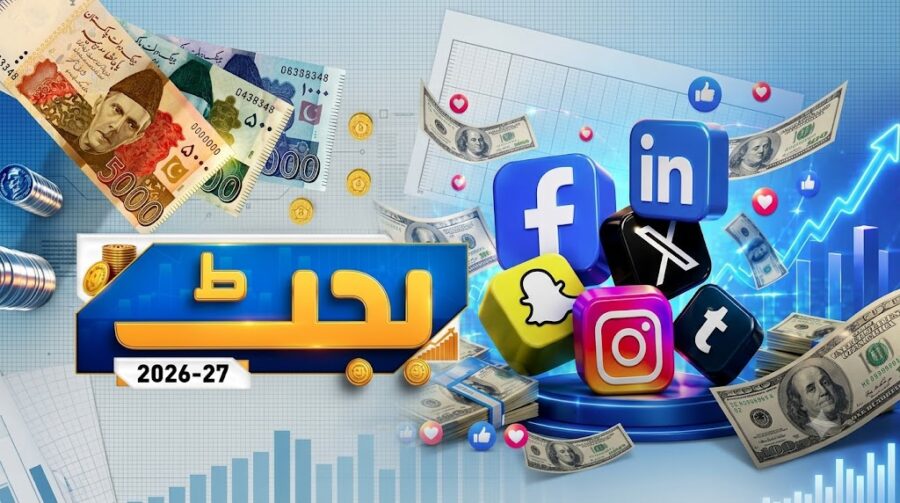
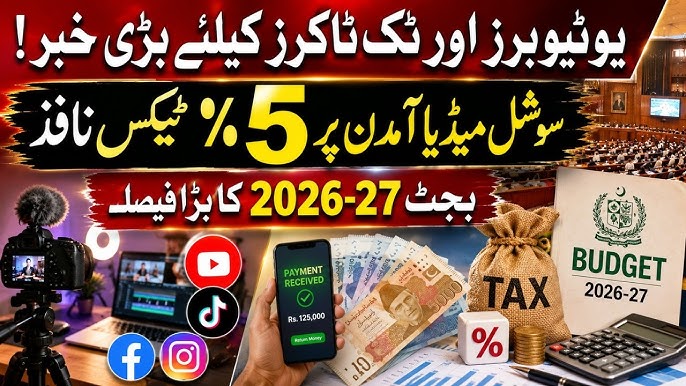
The proposed Social Media Influencer Tax in Pakistan’s Finance Bill 2026 has emerged as one of the most debated digital economy measures in the federal budget. The government plans to impose a 5% withholding tax on revenues earned by content creators and influencers through platforms such as YouTube, Facebook, Instagram and TikTok.
At first glance, the proposal appears to be a straightforward attempt to broaden the tax base and bring a rapidly growing segment of the digital economy into the formal tax system. However, a closer examination reveals a more complex picture involving taxation policy, digital entrepreneurship, international competitiveness, youth employment, technology exports and Pakistan’s long-term digital transformation strategy.
The proposal arrives at a time when Pakistan is seeking to expand its digital economy, increase IT exports and encourage entrepreneurship among its young population. The key question is whether the new tax will support these goals or create additional barriers for one of the country’s fastest-growing economic sectors.
Social Media Influencer Tax and Pakistan’s Creator Economy
The Social Media Influencer Tax would apply to income received through social media platforms by resident and non-resident individuals and entities. Under the proposed framework, banks and financial institutions would deduct 5% withholding tax when payments from social media platforms are credited to accounts.
Over the past decade, social media has evolved from a communication tool into a significant economic sector. Thousands of Pakistanis now earn income through YouTube channels, TikTok content, Facebook monetization, Instagram partnerships, podcasts and digital marketing services.
Unlike traditional businesses, many creators start with limited resources and rely on months or years of content production before achieving sustainable revenue streams.
For Pakistan’s youth, the creator economy has become an alternative pathway to employment in an environment where conventional job opportunities remain limited.
Many content creators invest heavily in cameras, editing software, internet services, studio equipment, travel expenses and professional teams before generating profits.
Critics argue that imposing a withholding tax at the point of payment could reduce available cash flow for creators who are still in the growth phase of their businesses.
Supporters of the proposal, however, maintain that digital income should be treated similarly to other taxable income streams and that tax fairness requires digital entrepreneurs to contribute to national revenues.
How Pakistan Compares with Other Countries
A comparative analysis suggests that Pakistan’s proposed approach differs from policies adopted by several major digital economies.
| Country | Tax Treatment of Influencers | Withholding Tax on Platform Revenue | Creator-Friendly Environment |
|---|---|---|---|
| Pakistan (Proposed) | 5% withholding tax on social media income | Yes (5%) | Moderate |
| United States | Taxed as self-employed/business income | No | High |
| United Kingdom | Standard income tax and self-employment tax | No | High |
| Canada | Business or self-employment income tax | No | High |
| Australia | Taxed under normal income tax system | No | High |
| India | Subject to income tax and certain TDS provisions | Limited withholding mechanisms | Moderate-High |
| United Arab Emirates | Very low tax burden on creators | Generally No | Very High |
| Singapore | Taxed under normal business income rules | No | Very High |
| Malaysia | Taxed as business income | No | High |
In the United States, influencers and creators pay income tax on their earnings, but platforms generally do not deduct a separate withholding tax from domestic creators at the payment stage. Tax obligations are calculated through annual income reporting and filing systems.
In the United Kingdom, content creators are taxed under standard income tax rules applicable to self-employed individuals and businesses. The focus remains on declared profits rather than withholding taxes on gross receipts.
India has taken a more aggressive approach toward the digital economy by introducing Tax Deducted at Source (TDS) provisions for certain online earnings. However, India simultaneously offers extensive digital infrastructure, startup incentives and financing ecosystems that help offset compliance costs.
The United Arab Emirates, which has emerged as a global hub for social media influencers and digital entrepreneurs, generally maintains a more favorable tax environment. The country’s policies have attracted content creators from across the world and contributed to the growth of a thriving digital media industry.
Singapore similarly focuses on encouraging innovation and entrepreneurship while maintaining a transparent taxation framework that prioritizes ease of doing business.
The comparison highlights a broader policy challenge: governments seek to capture revenue from digital activities while avoiding measures that could discourage innovation or drive creators to relocate their operations.
Potential Impact on Pakistan’s Digital Economy
The Social Media Influencer Tax may have implications beyond individual creators.
Pakistan’s digital economy has experienced significant growth in recent years. The rise of e-commerce, freelancing, software exports and online content creation has created new opportunities for income generation.
Many influencers operate as small businesses that employ editors, graphic designers, videographers, marketers and support staff.
A reduction in creator revenues could potentially affect these related sectors as well.
The proposal refarding Social Media Influencer Tax may also influence foreign exchange earnings. Payments from global platforms such as YouTube, Meta and TikTok often represent inflows of foreign currency into Pakistan.
Economic analysts note that content creators effectively export digital services to international audiences. Their revenues are earned from global advertisers and platform monetization programs rather than domestic markets alone.
From this perspective, creators share characteristics with freelancers and IT exporters who already play an important role in Pakistan’s digital export strategy.
Some industry observers question whether the taxation framework should distinguish between large commercial influencers earning millions of rupees annually and smaller creators who are still establishing their businesses.
Impact on Social Media Platforms and Advertising
The proposed Social Media Influencer Tax may also reshape Pakistan’s digital advertising landscape.
Brands increasingly allocate marketing budgets to influencer campaigns because they often provide higher engagement rates than traditional advertising channels.
If creators face higher compliance costs, brands may eventually absorb some of those costs through increased campaign expenditures.
The tax could also accelerate professionalization within the industry.
Larger creators may establish formal business structures, maintain stronger financial records and adopt more sophisticated accounting practices.
However, smaller creators may find compliance requirements more challenging.
Another concern involves potential growth of informal payment channels if some creators seek to avoid deductions by receiving payments through foreign accounts or alternative financial arrangements.
Tax experts frequently emphasize that effective digital taxation requires a balance between enforcement and incentives.
Why the Government Supports the Measure
The government faces significant fiscal challenges, including debt servicing obligations, development spending requirements and revenue collection targets.
Finance Minister Muhammad Aurangzeb presented Budget 2026 with a total outlay of Rs18.771 trillion, including more than Rs8 trillion allocated for debt servicing.
Against this backdrop, policymakers are seeking additional sources of revenue while expanding the documented economy.
Supporters argue that the creator economy has matured sufficiently to contribute to the national tax base. They contend that taxation can enhance documentation, improve transparency and bring greater legitimacy to digital professions.
The proposal also reflects a global trend in which governments increasingly seek to regulate and tax digital economic activities that previously operated with limited oversight.
The Need for a Balanced Approach
The debate surrounding the Social Media Influencer Tax is not about whether creators should pay taxes. Most economists agree that all income-generating sectors should contribute fairly to public finances.
The more important question is how taxation should be designed.
A balanced approach may involve thresholds that protect smaller creators, incentives for digital exports, simplified compliance mechanisms and policies that encourage growth while ensuring tax compliance.
Countries competing for digital talent increasingly recognize that creators, freelancers and technology entrepreneurs represent valuable economic assets.
Pakistan’s long-term objective of becoming a regional digital economy hub will require policies that support innovation, attract investment and encourage young entrepreneurs to build globally competitive businesses.
Conclusion
The proposed Social Media Influencer Tax represents a significant shift in Pakistan’s approach to taxing the digital economy. While the measure could improve documentation and generate additional revenue, it also raises important questions about competitiveness, entrepreneurship and the future growth of the creator economy.
However, before final approval of the Social Media Influencer Tax, policymakers may need to address several important questions:
- Should small creators below a certain income threshold be exempt?
- Should export-oriented digital earnings receive the same treatment as IT exports?
- Could a progressive tax structure be more effective than a flat withholding tax?
- How will creators claim refunds if their actual tax liability is lower?
- Could the measure encourage some creators to receive payments through foreign accounts?
- Will the tax affect Pakistan’s goal of increasing digital exports and foreign exchange earnings?
As Parliament reviews the Finance Bill 2026, the final outcome could shape not only the future of content creators but also Pakistan’s broader ambitions in the digital economy, technology sector and global online marketplace.

Mr. Sabahuddin Qazi is a senior journalist, analyst and researcher based in Islamabad.