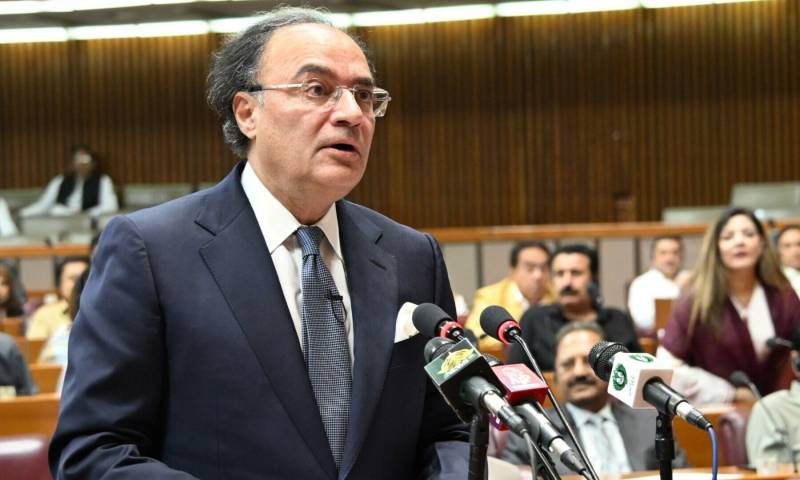
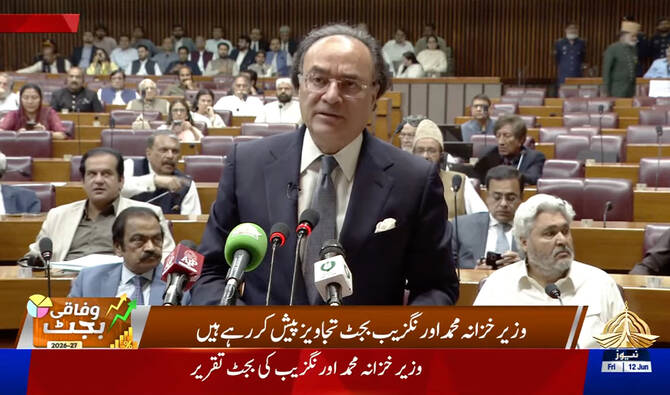
ISLAMABAD (PNP) – Finance Minister Muhammad Aurangzeb has presented the federal budget 2026-27 in the National Assembly session, held on Friday, June 12, 2026. He proposes a wide-ranging package of tax reductions, investment incentives and sector-specific relief measures aimed at stimulating economic activity, supporting businesses and easing the financial burden on households. The proposed measures include lower income tax rates for salaried employees, pension and salary increases for government workers, tax incentives for exporters, significant reductions in property transaction taxes, relief for overseas Pakistanis, support for the IT sector and incentives for digital payments, shipping and refining industries.
According to him, the proposals are designed to strengthen economic growth, encourage investment and improve competitiveness while providing targeted relief to taxpayers across multiple sectors of the economy.
Budget 2026 Provides Relief for Salaried Class and Pensioners
One of the central features of Budget 2026 is the reduction of tax burdens on salaried individuals.
The government has abolished the 10% surcharge previously imposed on higher-income salaried taxpayers. In addition, several income tax slabs have been revised downward.
Individuals earning between Rs2.2 million and Rs3.2 million annually will see their tax rate reduced from 23% to 20%, providing estimated annual savings of approximately Rs65,000.
For taxpayers with annual incomes ranging from Rs3.2 million to Rs4.1 million, the tax rate has been lowered from 30% to 25%, resulting in estimated relief of around Rs102,500.
Those earning between Rs4.1 million and Rs5.6 million annually will benefit from a reduction in tax rates from 35% to 29%, generating estimated savings of nearly Rs170,000.
Taxpayers with annual incomes between Rs5.6 million and Rs7 million will see their tax rate reduced from 35% to 32%, providing estimated relief of approximately Rs236,000.
Although individuals earning above Rs7 million annually will continue to pay the existing tax rate, the abolition of the 10% surcharge is expected to provide relief of around Rs257,000.
The government has also introduced two additional tax slabs between Rs4.1 million and Rs7 million. Previously, individuals crossing the Rs4.1 million threshold immediately entered the 35% tax bracket. Under the new structure, tax rates of 29% and 32% will apply to specific income segments, reducing the abrupt increase in tax liability for middle- and upper-middle-income earners.
In addition, Budget 2026 proposes a 7% increase in salaries and pensions for government employees and pensioners.
Exporters Receive Incentives to Boost Economic Growth
Recognizing exports as a key driver of economic growth, Budget 2026 introduces several measures aimed at improving the competitiveness of Pakistani exporters.
The combined advance and minimum tax applicable to exporters has been reduced from 2% to 1.25%.
The government has also abolished super tax entirely for exporters with annual business turnover up to Rs500 million.
For exporters with turnover exceeding Rs500 million, the super tax rate has been reduced from 10% to 8%.
Economic experts believe these measures could improve cash flow, reduce business costs and support export-led growth, which remains critical for Pakistan’s foreign exchange earnings.
Property Sector Gets Major Tax Relief
The property sector is among the biggest beneficiaries of Budget 2026, with substantial reductions in taxes on both property sales and purchases.
For property sales valued up to Rs50 million, the applicable tax rate has been reduced from 4.5% to 2.75%.
For properties exceeding Rs50 million in value, the tax rate has been lowered from 5% to 2.75%.
The government has also reduced taxes on property purchases.
Properties valued up to Rs50 million will now be subject to a tax rate of 1.25%, down from 1.5%.
For properties valued between Rs50 million and Rs100 million, the tax rate has been reduced from 2% to 1.25%.
Properties worth more than Rs100 million will also be taxed at 1.25%, compared with the previous rate of 1.5%.
Officials expect these measures to encourage investment, stimulate construction activity and support related industries across the economy.
Overseas Pakistanis Receive Long-Awaited Relief
A major proposal in Budget 2026 addresses concerns raised by overseas Pakistanis.
The government has abolished the 1% Capital Value Tax (CVT) on property transactions for overseas Pakistanis, reducing the rate to zero.
The decision fulfills a long-standing demand from overseas communities and is intended to encourage greater investment in Pakistan’s real estate sector.
Officials say the measure recognizes the important contribution made by overseas Pakistanis through remittances, investments and business activity.
IT Sector and Freelancers Benefit from Policy Continuity
The information technology sector continues to receive support under Budget 2026.
The government has decided to retain the concessional income tax rate of 0.25% for IT companies and freelancers.
Industry representatives have repeatedly emphasized the importance of tax stability and policy continuity in attracting investment and expanding exports.
The decision is expected to support software development, digital services, technology startups and Pakistan’s growing freelance workforce.
With IT exports emerging as a significant source of foreign exchange earnings, policymakers view the sector as a key component of future economic growth.
Digital Payments Receive Major Incentive
To promote financial inclusion and digital transactions, Budget 2026 proposes a significant reduction in withholding tax on online payments made through credit and debit cards.
The withholding tax rate has been reduced from 5% to only 0.5%.
The measure aims to encourage cashless transactions, strengthen e-commerce and accelerate Pakistan’s transition toward a digital economy.
Experts believe lower transaction costs could increase the use of digital payment platforms and support the formalization of economic activity.
Shipping Industry Gets Tax Exemption
The shipping and maritime sector has also received a major incentive under Budget 2026.
The government has abolished the 18% sales tax previously imposed on the shipping industry, reducing the rate to zero.
The measure is expected to lower logistics costs, improve competitiveness and support growth in Pakistan’s maritime and transportation sectors.
Industry observers believe the move could contribute to greater efficiency in trade and supply chain operations.
Public Health Measures Included in Budget 2026
The budget also includes relief measures focused on public health and consumer welfare.
The government has eliminated the 18% sales tax on sanitary pads and tampons.
Similarly, the 18% sales tax on condoms and contraceptive medicines has been abolished.
Officials say these measures are intended to improve affordability, support reproductive health and reduce the financial burden on consumers.
Public health experts have welcomed the move, noting that lower costs can improve access to essential health products.
Refining Sector Receives Investment Incentives
To strengthen Pakistan’s energy infrastructure, Budget 2026 introduces incentives for refinery modernization.
The government has abolished the 18% sales tax on imports and equipment associated with brownfield refinery upgrades.
The measure is intended to encourage investment in refining capacity, adoption of modern technologies and improvements in operational efficiency.
Energy analysts believe refinery modernization could contribute to greater energy security and reduce dependence on imported refined petroleum products.
Why Budget 2026 Matters
The proposed reforms reflect the government’s attempt to balance economic growth with fiscal management. During his Budget speech at the National Assembly, the Finance Minister also referred to Pakistan’s broader regional diplomatic role during recent tensions, stating that Pakistan-China relations remained a “key pillar of economic stability”.
Tax relief for the salaried class may increase disposable income and consumer spending. Incentives for exporters could strengthen foreign exchange earnings, while support for property, shipping, refining and IT sectors may encourage investment and job creation.
For overseas Pakistanis, the removal of CVT is expected to improve investor confidence and strengthen economic ties with the country.
Meanwhile, digital payment incentives align with broader efforts to expand financial inclusion and modernize the economy.
Conclusion
Budget 2026 introduces one of the broadest relief packages in recent years, targeting taxpayers, exporters, investors, overseas Pakistanis, technology professionals and businesses. The proposed measures include income tax reductions, salary and pension increases, lower property taxes, incentives for exports and digital payments, and tax exemptions for several strategic sectors.
If approved and effectively implemented, the reforms could support economic activity, encourage investment and strengthen confidence among businesses and consumers while advancing Pakistan’s broader growth objectives.

Mr. Sabahuddin Qazi is a senior journalist, analyst and researcher based in Islamabad.