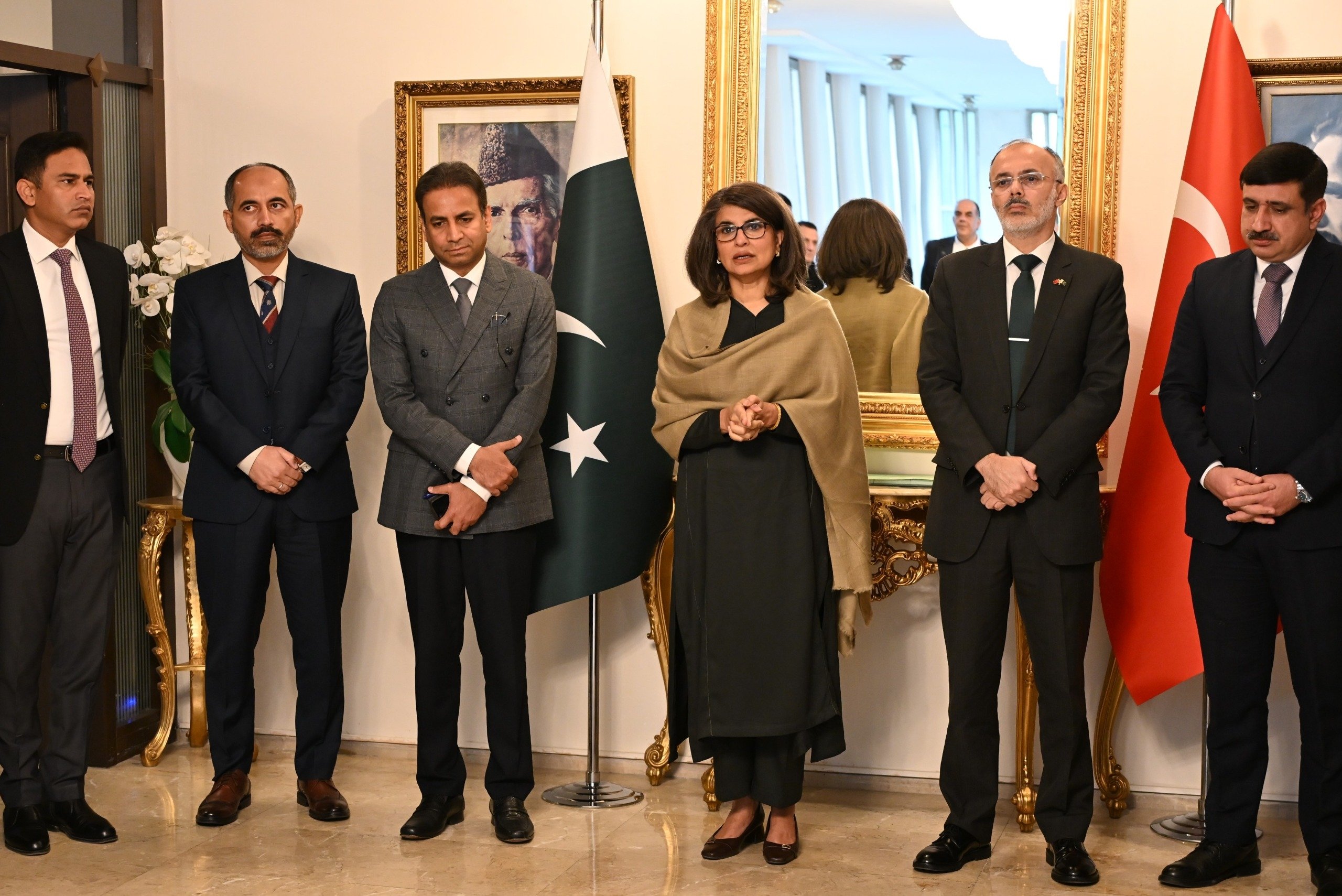
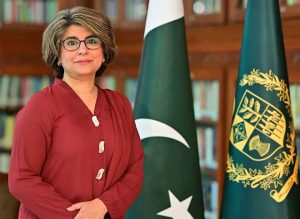
Turkish media have highlighted the appointment of veteran Pakistani diplomat Amna Baloch as Pakistan’s first female ambassador to Türkiye, describing the posting as a historic development in the country’s diplomatic representation in Ankara.
Amna Baloch began her assignment on November 2, according to Turkish media reports. Her appointment marks a milestone for Pakistan’s Foreign Service and comes as Islamabad and Ankara seek to strengthen their longstanding relationship across diplomacy, defence, trade, investment and cultural cooperation.
Among the outlets reporting the development was Istanbul-based Daily Sabah, which published a report on November 2 under the headline “Pakistan appoints first female ambassador to Türkiye.” Turkish digital news platforms, including Haberler, Haber Ankara, Haberport, Ulak Anadolu, Aydınlık and NET HABER, also reported on her appointment and diplomatic background.
Amna Baloch brings more than three decades of diplomatic experience to Ankara. She joined Pakistan’s Foreign Service in 1991, served at several overseas missions and most recently held the position of Pakistan’s foreign secretary before retiring from government service and taking up the ambassadorial assignment.
Her posting carries significance beyond the appointment of a senior diplomat. It places an experienced Pakistani woman at the head of the country’s mission in a strategically important partner state, creating an opportunity to advance bilateral cooperation while demonstrating women’s leadership in international diplomacy.
Turkish Media Coverage Highlights a Historic Diplomatic Milestone
Daily Sabah reported that Pakistan had appointed Amna Baloch as its first female ambassador to Türkiye, emphasising her diplomatic experience and the importance of relations between the two countries. The report outlined her career in Pakistan’s Foreign Service and her previous assignments abroad.
Other Turkish digital outlets also highlighted the historical significance of the appointment.
Haber Ankara published a report headlined in Turkish, “Pakistan’ın Ankara Büyükelçiliği’ne ilk defa bir kadın diplomat atandı,” meaning that a female diplomat had been appointed to Pakistan’s embassy in Ankara for the first time. Haberler similarly reported that Amna Baloch had assumed the ambassadorship, while Haberport and Ulak Anadolu carried coverage of the development. Aydınlık and NET HABER also reported on her appointment and diplomatic career.
The coverage shows that the appointment received attention across several Turkish news websites. However, the available reports do not establish that every major Turkish newspaper or television channel covered the announcement. Nor does the number of published stories, by itself, demonstrate a coordinated media campaign or a particular shift in Turkish public opinion.
For Pakistan, the reporting provides an opportunity to examine how its diplomatic appointments are presented to audiences in an important partner country.
International media coverage can influence the visibility of a diplomatic development, but the quality and significance of that coverage depend on its context. In this case, the central themes are Amna Baloch’s professional experience, the historical nature of her appointment and the continuing importance of Pakistan-Türkiye relations.
Amna Baloch’s Diplomatic Career and Experience
Amna Baloch joined Pakistan’s Foreign Service in 1991 and subsequently served in diplomatic and consular positions in several countries.
According to Daily Sabah, her overseas assignments included Pakistan’s missions in Copenhagen and Colombo, as well as service as consul general in Chengdu, China. She later served as Pakistan’s high commissioner to Malaysia from 2019 to 2023 and ambassador to Belgium from 2023 to 2024. She subsequently became Pakistan’s 33rd foreign secretary.
Her educational qualifications include master’s degrees in history and business administration.
Her appointment to Ankara follows a senior career in which she gained experience in bilateral diplomacy, international engagement and the formulation of foreign policy. That background is relevant to Pakistan’s relationship with Türkiye, which encompasses political consultations, defence cooperation, economic engagement and coordination on international issues.
Pakistan’s Foreign Ministry announced her designation as ambassador to Türkiye before she assumed her new assignment. On October 10, Deputy Prime Minister and Foreign Minister Ishaq Dar met Amna Baloch and expressed confidence that her experience as foreign secretary would contribute to strengthening bilateral relations.
President Asif Ali Zardari also met the ambassador-designate on October 14. According to the Presidency’s statement, he congratulated her on the appointment and emphasised the importance of expanding economic and strategic cooperation between Pakistan and Türkiye.
These official engagements indicate that the appointment forms part of Pakistan’s broader diplomatic agenda rather than being solely a symbolic personnel change.
What the Appointment Means for Pakistan-Türkiye Relations
Pakistan and Türkiye maintain longstanding political and public ties, supported by cooperation in defence, trade, investment, education and cultural exchange.
Both governments have repeatedly expressed their intention to expand the relationship. Yet the extent to which political goodwill translates into measurable economic outcomes remains an important consideration.
During his October meeting with Amna Baloch, President Zardari stressed the goal of achieving a mutually agreed bilateral trade target of $5 billion. He also identified opportunities for greater cooperation in energy, agriculture, livestock, mining, information technology, defence industries and special economic zones.
The proposed expansion of commercial engagement presents an important task for the new ambassador.
Pakistan and Türkiye can build on existing political ties by encouraging business-to-business contacts, supporting investors, facilitating commercial delegations and identifying projects in which firms from both countries can participate.
Potential areas of cooperation include manufacturing, engineering, technology, infrastructure and tourism. However, progress will depend on commercial viability, financing, regulatory conditions and the ability of businesses to convert diplomatic understandings into actual investments and trade.
Amna Baloch’s experience across multiple diplomatic assignments could be valuable in coordinating these efforts with Pakistani institutions and Turkish counterparts.
Defence and security cooperation also form part of the bilateral relationship. Both countries have maintained engagement in defence-related matters, while their broader strategic partnership encompasses political consultation and regional issues.
For Islamabad, the objective is to ensure that this cooperation remains productive across multiple sectors rather than concentrating exclusively on high-level political engagement.
The ambassador’s effectiveness will therefore be assessed not simply through meetings and official statements but also through progress in practical areas of bilateral cooperation.
A Milestone for Women in Pakistani Diplomacy
Amna Baloch’s appointment has a distinct significance for women’s representation in Pakistan’s diplomatic service.
Women have served in Pakistan’s foreign policy institutions for decades, including in senior diplomatic and administrative roles. Baloch’s appointment to Ankara represents a specific milestone: she is the first woman to head Pakistan’s embassy in Türkiye as ambassador.
Senior diplomatic appointments require extensive professional experience, institutional knowledge and the ability to represent national interests in complex international environments.
Amna Baloch’s career demonstrates the progression of a woman diplomat through overseas postings and senior foreign policy responsibilities to the position of foreign secretary and, subsequently, ambassador.
The appointment may also provide a visible example for women pursuing careers in international relations, public service and diplomacy.
Nevertheless, a single appointment should not be taken as proof that gender-related barriers across the wider public sector have been resolved. Broader progress depends on access to professional opportunities, merit-based promotion, institutional support and the representation of women at different levels of decision-making.
From a Pakistani perspective, the significance of the development lies in both its historical dimension and the professional responsibilities attached to the post.
The strongest measure of its long-term importance will be the extent to which experienced women diplomats continue to receive opportunities to serve in senior positions and contribute to the country’s foreign policy.
Turkish Media Attention and Pakistan’s International Image
The reporting by Turkish outlets provides a useful case study of how a diplomatic appointment can become an international news story.
Coverage of Amna Baloch has focused primarily on her gender, career history and role in Pakistan’s diplomatic engagement with Türkiye. These themes are straightforward to communicate to a Turkish audience because they combine a historical first with a bilateral relationship already familiar to policymakers and many observers.
For Pakistan, the next step is to maintain substantive engagement with Turkish journalists, editors, broadcasters and digital publishers.
Such engagement should be based on timely information, access to credible sources and opportunities to understand Pakistan’s policies and society. Regular diplomatic briefings, interviews and exchanges can help international media report developments with greater context.
Television coverage can be particularly useful for reaching audiences beyond readers of online news websites. However, this assessment should not be confused with a claim that major Turkish television channels have already reported on Amna Baloch’s appointment. The sources reviewed for this article establish coverage by several Turkish digital news outlets, but do not independently confirm specific television broadcasts about the appointment.
Pakistan should also avoid judging its international standing solely by the number of headlines generated by individual developments. Sustained media engagement requires a consistent flow of substantive news about policy, economic cooperation, cultural exchange and public affairs.
For an ambassador, effective communication is part of a broader diplomatic responsibility. It must complement direct engagement with government institutions, businesses, educational organisations and the public.
The Road Ahead for Islamabad and Ankara
Amna Baloch assumes her responsibilities at a time when Pakistan and Türkiye are seeking to broaden an already established partnership.
The priorities outlined during her pre-departure meetings provide a clear framework for her assignment: stronger trade and investment, expanded cooperation in strategic sectors, closer educational and cultural links, and effective engagement with Pakistani citizens living in Türkiye.
The economic agenda deserves particular attention. A bilateral trade target of $5 billion provides a stated objective, but achieving it will require sustained efforts by government agencies and private businesses. Trade facilitation, investment promotion and the identification of viable joint projects will be essential.
Consular services are another important responsibility. Maintaining contact with Pakistani students, professionals, entrepreneurs and other members of the diaspora can help the embassy respond to practical concerns while strengthening people-to-people links.
Cultural and educational cooperation can also contribute to the relationship’s long-term resilience. University partnerships, academic exchanges, tourism and cultural programmes offer opportunities to develop connections that extend beyond government-to-government engagement.
For Pakistan, Amna Baloch’s appointment combines a historic first with a demanding diplomatic assignment. For Türkiye, it brings an experienced Pakistani diplomat to a mission central to bilateral engagement.
The attention from Turkish digital media has given the appointment an international profile. Its broader significance, however, will depend on what follows: whether the new ambassador can help translate established goodwill into stronger economic relations, deeper institutional cooperation and more enduring links between the people of Pakistan and Türkiye.
For Islamabad, the challenge is to turn a historic appointment into tangible diplomatic and economic progress.

Mr. Sabahuddin Qazi is a senior journalist, analyst and researcher based in Islamabad.