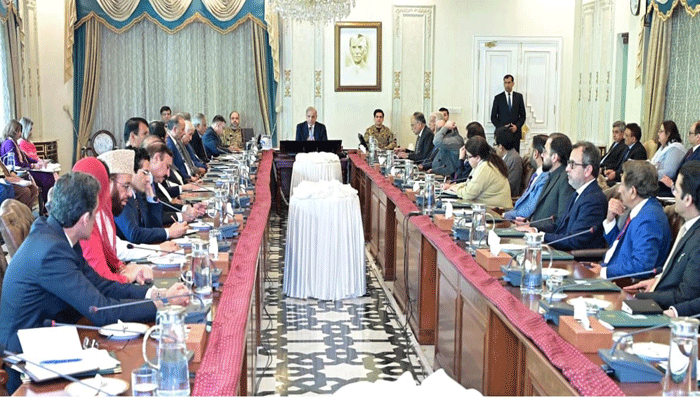
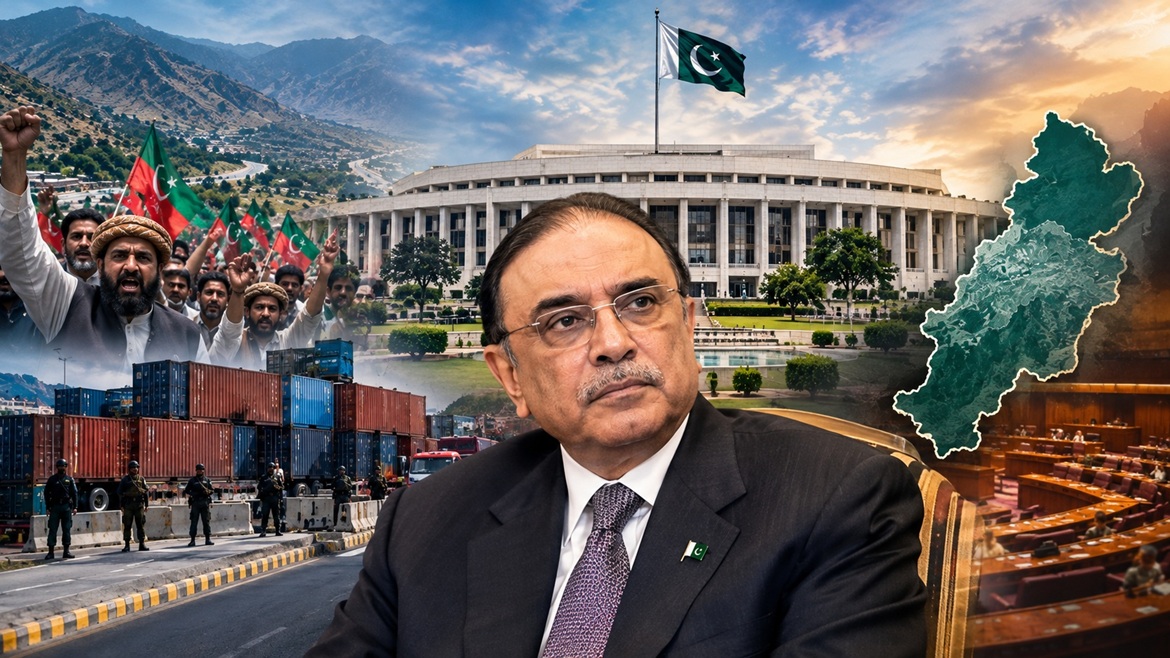
ISLAMABAD – President Asif Ali Zardari has summoned separate sessions of the National Assembly and Senate for Tuesday, October 13, at 6:15 pm at Parliament House in Islamabad, as the federal government moves to secure parliamentary approval for emergency measures in Khyber Pakhtunkhwa (KP).
According to a statement issued by the President’s Media Wing, both houses will meet amid developments surrounding the imposition of emergency and governor’s rule in the province. The proceedings are expected to focus on the constitutional status of the federal government’s measures and the parliamentary procedures required under Articles 232 and 234 of the Constitution.
The parliamentary sessions come after President Zardari approved the emergency-related decision on October 11, following advice from Prime Minister Shehbaz Sharif, according to the supplied report. The measures have placed the relationship between the federal government and the provincial administration under renewed scrutiny.
KP Emergency: Why Parliament’s Approval Matters
The government’s next steps are significant because Pakistan’s Constitution establishes specific procedures for declaring an emergency and for responding to a breakdown of constitutional governance in a province.
Article 232 addresses the proclamation of an emergency when Pakistan’s security, or that of any part of the country, faces a grave threat from war, external aggression or internal disturbances beyond a provincial government’s ability to control.
Article 234, meanwhile, provides for action when the president is satisfied that a province can no longer be governed in accordance with the Constitution. Under that provision, the president may assume certain provincial government functions or direct the governor to exercise them on the president’s behalf.
Although these provisions can permit a greater federal role in provincial administration, they are subject to constitutional safeguards and parliamentary oversight. The precise procedure depends on the legal basis of the proclamation and the orders issued under the relevant article.
The National Assembly and Senate sessions will therefore be important in determining how the federal government proceeds with the required legislative scrutiny.
What Articles 232 and 234 Say About Emergency Rule
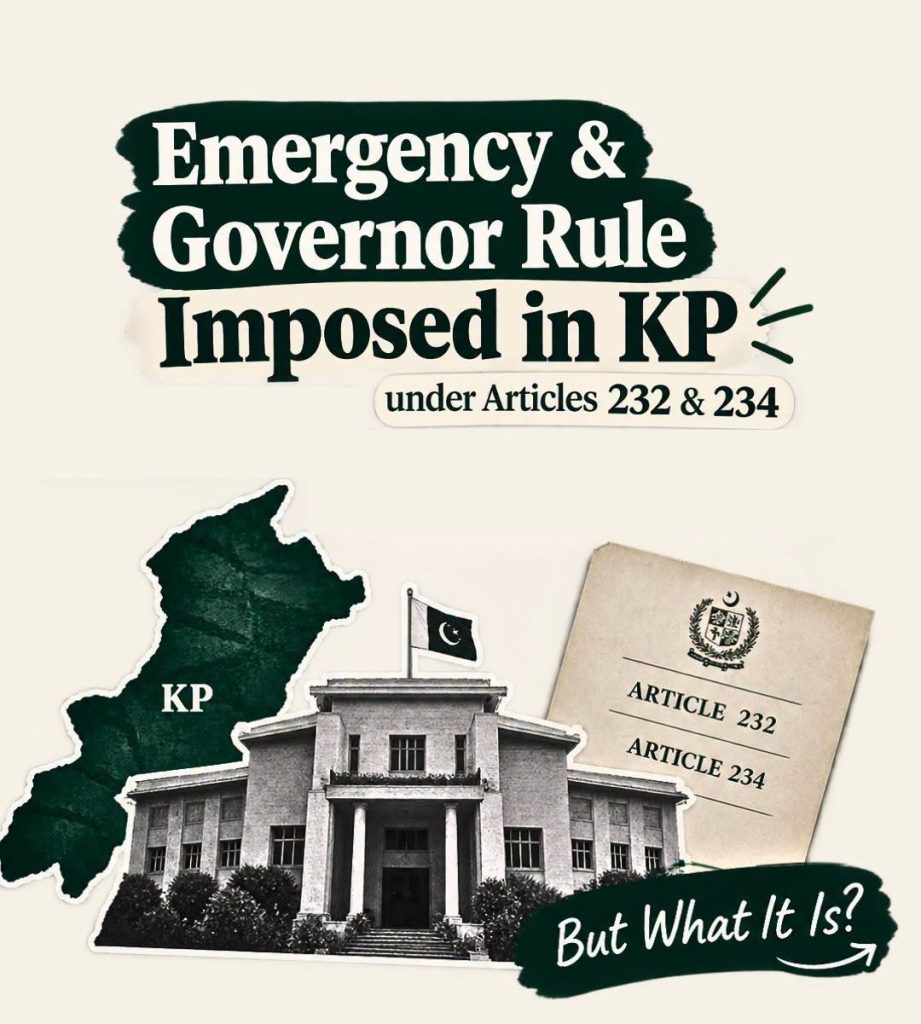
Article 232 contains specific requirements for parliamentary approval when the president issues an emergency proclamation.
Where the president acts on his own authority, the proclamation must be placed before both houses of Parliament for approval by each house within 10 days. The Constitution also requires the proclamation to be presented at a joint sitting, which the president must summon within 30 days of its issuance.
An emergency proclamation ordinarily ceases to remain in force after two months unless it has been approved by a resolution of the joint sitting before that period expires. The Constitution also sets out additional provisions for circumstances in which the National Assembly has been dissolved.
Article 234 establishes a separate process for a failure of constitutional machinery in a province. Under this provision, a proclamation must be placed before a joint sitting and expires after two months unless approved by a resolution of that sitting. It may be extended through further resolutions, for periods of up to two months at a time, but cannot remain in force for more than six months.
These distinctions are important because an emergency proclamation under Article 232 and a proclamation under Article 234 are not identical legal measures. Their approval requirements and constitutional effects must be assessed according to the provisions invoked in the official orders.
The government’s actions in KP have been reported in connection with both articles. The official proclamations and orders will be central to determining which parliamentary approvals are required and the timetable for obtaining them.
Constitutional Powers and Fundamental Rights
Emergency provisions can significantly expand the federal government’s authority, but they do not provide an unrestricted power to disregard the Constitution.
Under Article 232, Parliament may legislate for a province on certain matters outside the Federal Legislative List while an emergency proclamation remains in force. The federal government may also issue directions concerning the exercise of provincial executive authority and, through an order, assume specified provincial government functions or direct the governor to exercise them.
The Constitution places limits on these powers, including protections relating to the functions of high courts.
The suspension of certain fundamental-rights protections also requires careful legal distinction. Article 233 provides a mechanism through which the president may issue orders affecting the right to seek judicial enforcement of specified fundamental rights during an emergency. Such measures should not be described as an automatic suspension of every fundamental right merely because an emergency has been declared.
Parliamentary oversight is therefore a central element of the constitutional framework. The approval process allows elected representatives to examine the legal basis, duration and consequences of exceptional federal measures.
The sessions may also provide a forum for lawmakers to raise questions about provincial administration, public security and the impact of the measures on civil liberties and democratic governance.
Political and Security Implications for Khyber Pakhtunkhwa
The emergency measures have emerged amid deteriorating relations between the federal government and the Pakistan Tehreek-e-Insaf (PTI), which governs KP and is led nationally by supporters of jailed former prime minister Imran Khan.
The federal government has cited security concerns and the provincial administration’s response to militant violence as reasons for its intervention. However, PTI has rejected the move and disputed the federal government’s position, framing the action as an attack on provincial authority.
The developments have also coincided with political tensions surrounding calls for protests and a march towards Islamabad demanding Khan’s release. Reportedly, the emergency situation has heightened tensions between the federal authorities and PTI, while the party has opposed the suspension of its provincial administration.
The dispute carries consequences beyond relations between the two levels of government. Khyber Pakhtunkhwa shares a border with Afghanistan and has faced persistent security challenges, including militant attacks. How the federal and provincial authorities coordinate counterterrorism measures is therefore a matter of national security as well as political accountability.
At the same time, the constitutional process is important for maintaining confidence in civilian institutions. The legal basis for emergency measures, the evidence presented in their support and the role of Parliament are likely to remain central issues in the political debate.
What Happens Next?
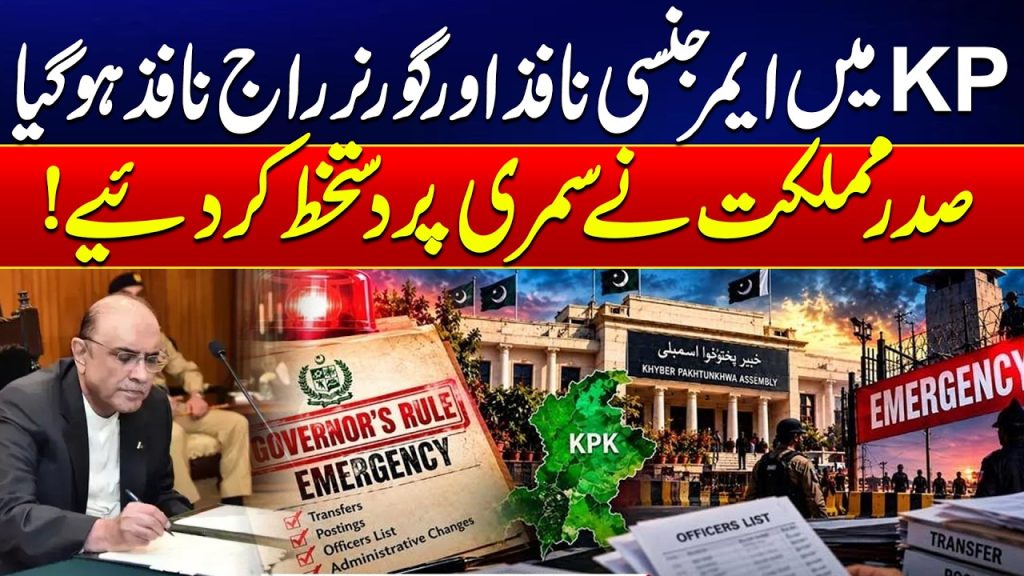
The immediate focus is on the parliamentary proceedings scheduled for Tuesday evening. The government is expected to face scrutiny over the emergency measures and the constitutional process governing their continuation.
The separate meetings of the National Assembly and Senate should not, by themselves, be confused with the joint sitting required under the relevant constitutional provisions. Article 232 specifies approval by each house within 10 days when the president acts on his own, as well as a joint sitting within 30 days. Article 234 sets out its own joint-sitting procedure for a proclamation issued under that article.
The legal effect of the proceedings will consequently depend on the resolutions adopted, the official orders in force and compliance with the applicable constitutional deadlines.
Lawmakers will also have an opportunity to debate the implications for provincial autonomy, the division of powers between Islamabad and Peshawar, and the safeguards governing exceptional federal intervention.
For residents of KP, the key questions concern the administration of public services, the province’s security response and the extent to which normal constitutional governance will be restored or altered under the new arrangements.
Conclusion
President Zardari’s decision to summon the National Assembly and Senate marks an important stage in the constitutional process surrounding emergency measures in Khyber Pakhtunkhwa.
The sessions come amid a wider political dispute over provincial authority and the federal government’s response to security concerns. Their significance will depend not only on the government’s position but also on the resolutions passed, the constitutional provisions invoked and the steps taken to meet parliamentary approval requirements.
The proceedings will be closely watched as Pakistan navigates the balance between national security, provincial autonomy, parliamentary oversight and the protection of constitutional rights.

Mr. Sabahuddin Qazi is a senior journalist, analyst and researcher based in Islamabad.