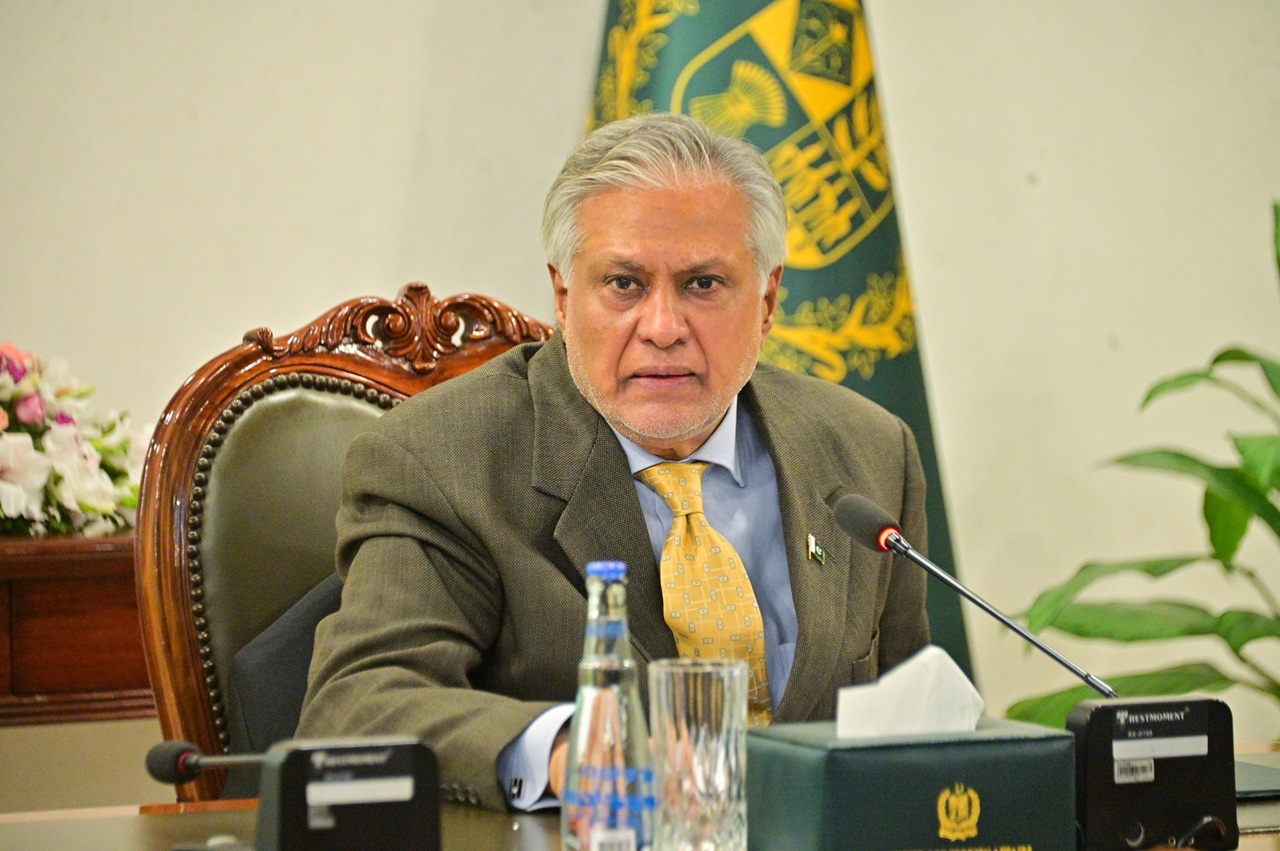
ISLAMABAD: The federal government has extended existing Austerity Measures until June 30, 2026 and approved revised business operating hours, allowing standalone grocery and kiryana stores to remain open until 10pm. The decision was taken during a meeting of the Committee for Monitoring and Implementation of Fuel Conservation and Additional Austerity Measures, chaired by Deputy Prime Minister and Foreign Minister Ishaq Dar in Islamabad.
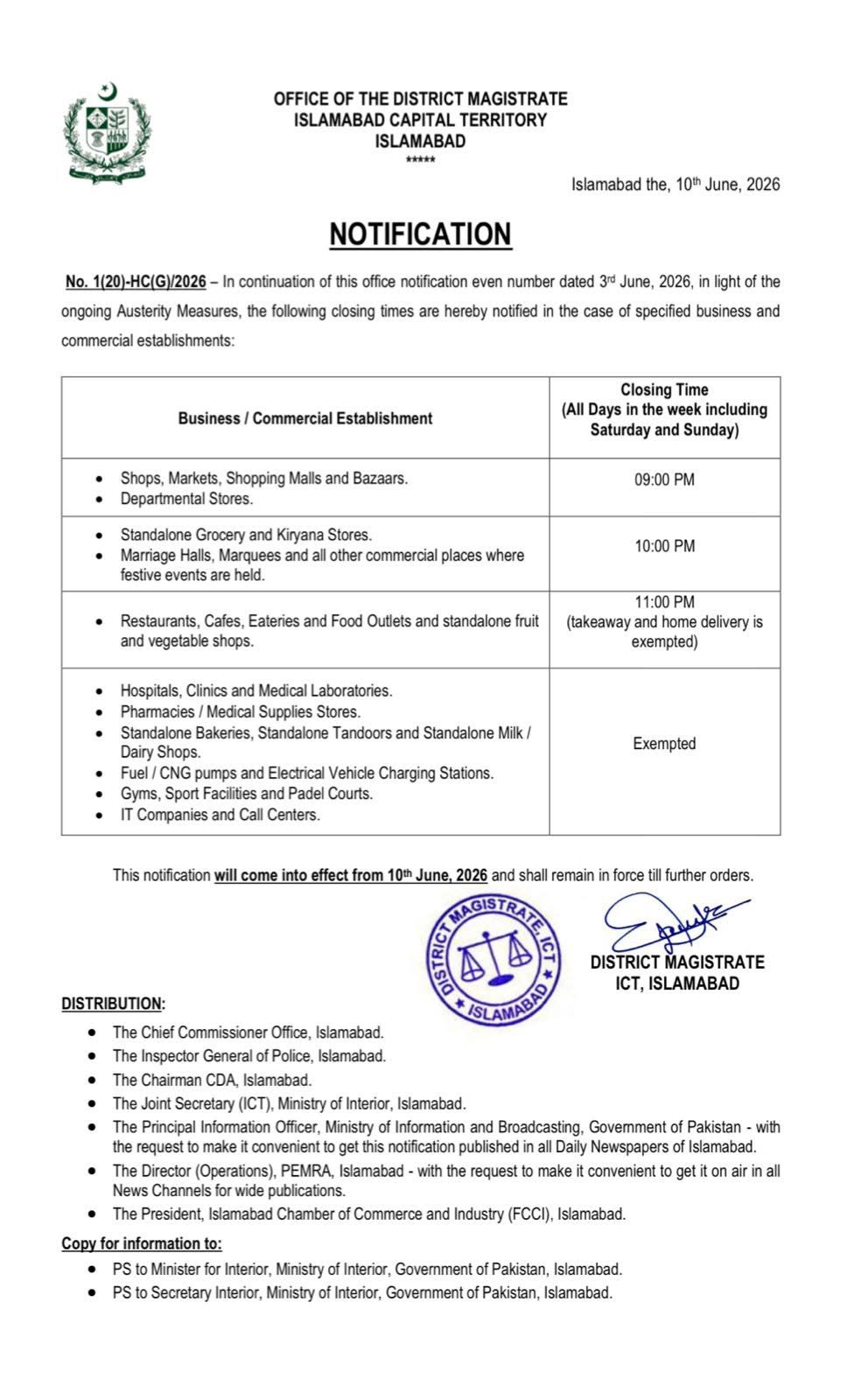
The committee also reviewed austerity initiatives that were scheduled to expire on June 13 and agreed to continue them for the remainder of the month. The latest decision follows the federal government’s June 3 announcement easing business closing hours under revised energy conservation guidelines. Under those measures, shops, markets and shopping malls were permitted to operate until 9pm, restaurants and food outlets until 11pm, while marriage halls and marquees were allowed to remain open until 10pm. Officials said the adjustments were made in view of rising temperatures and extended daylight hours during the summer season.
Austerity Measures to Continue Until June 30
The latest notification confirms that the existing Austerity Measures will remain in force until the end of June. The policy was originally introduced to curb non-essential government spending and improve financial management across federal institutions.
Under the framework, ministries, divisions, departments and state-owned entities have been directed to continue implementing expenditure restrictions. These include limitations on unnecessary official travel, procurement of luxury items, purchase of new vehicles, and other discretionary spending categories.
Officials say the measures are designed to support fiscal consolidation efforts and demonstrate prudent management of public resources during a period of economic adjustment.
The continuation of the policy aligns with broader government initiatives aimed at controlling budget deficits and improving macroeconomic stability. Authorities have repeatedly emphasized the importance of reducing avoidable expenditures while prioritizing essential public services and development projects.
Revised Business Timings Introduced
As part of the updated policy package, the government has also revised business operating hours. Officials stated that the move is intended to support energy conservation efforts and improve efficiency in commercial activity.
According to the revised schedule, businesses across various sectors will be required to comply with updated closing times. Authorities believe that coordinated operating hours can help reduce electricity consumption, particularly during peak demand periods.
Energy conservation has remained a priority for policymakers as Pakistan continues to manage rising energy costs and pressure on the national power system.
Government officials have argued that adjusting business timings can contribute to lower electricity usage, helping reduce the burden on the energy sector while supporting broader economic objectives.
Business associations have previously expressed mixed views regarding such measures. While some stakeholders support efforts to improve energy efficiency, others emphasize the need to balance conservation objectives with commercial activity and consumer convenience.
Economic Context Behind the Decision
The extension of Austerity Measures comes as Pakistan continues implementing fuel saving reforms aimed at strengthening economic fundamentals and maintaining fiscal stability.
Over the past several years, the government has introduced various expenditure-control initiatives in response to budgetary pressures, inflationary challenges, and external financing requirements. Fiscal discipline has remained a central component of economic policy discussions, particularly in the context of efforts to improve public finances.
Economic analysts note that expenditure management plays a critical role in reducing fiscal deficits and enhancing investor confidence. International financial institutions often encourage governments to improve spending efficiency and ensure that public resources are directed toward priority sectors.
The continuation of austerity policies is also linked to broader efforts to increase revenue collection, improve governance, and enhance transparency in public spending.
While expenditure controls can contribute to fiscal stability, economists stress that long-term economic growth also requires investment in infrastructure, education, healthcare and productive sectors of the economy. As a result, policymakers often seek to balance cost-saving measures with development priorities.
Impact on Government Institutions
The extension means that federal ministries and departments will continue operating under expenditure restrictions for the remainder of the current policy period.
Government institutions have been instructed to maintain compliance with spending guidelines and avoid non-essential expenses. Officials are expected to continue monitoring implementation to ensure adherence across departments.
The policy also reflects an effort to set an example of financial discipline within the public sector. Government representatives have argued that expenditure reductions at the administrative level can help improve efficiency and strengthen public confidence in economic management.
Several previous austerity initiatives have included reductions in utility usage, restrictions on ceremonial expenditures, limitations on foreign travel, and reviews of procurement practices.
Implications for Businesses and Consumers
The revised business timings are likely to affect commercial activity in urban centers where retail operations often extend into late evening hours.
Retailers, restaurant operators and service providers may need to adjust staffing arrangements and operating schedules to comply with the new requirements. Consumers may also experience changes in shopping patterns as businesses adapt to revised closing times.
Energy experts suggest that coordinated conservation measures can contribute to reduced electricity demand, particularly during periods of high consumption. However, the overall impact will depend on the level of compliance and the effectiveness of enforcement mechanisms.
For businesses, the changes highlight the continuing interaction between economic policy and energy management. Companies may increasingly explore efficiency measures, alternative energy solutions and operational adjustments to minimize costs and maintain productivity.
Strategic Importance for Pakistan’s Economy
The decision to extend Austerity Measures reflects the government’s broader strategy of maintaining fiscal discipline while navigating economic challenges.
For Pakistan, effective management of public finances remains important for sustaining economic stability, attracting investment and supporting long-term growth objectives. Fiscal responsibility is also closely watched by international investors, development partners and financial institutions.
The continuation of expenditure controls sends a signal that authorities remain focused on budget management and resource optimization. At the same time, policymakers face the challenge of ensuring that austerity measures do not adversely affect economic activity or essential public services.
The effectiveness of the policy will likely be evaluated based on its contribution to expenditure savings, energy conservation and overall fiscal performance.
Conclusion
Pakistan’s government has extended Austerity Measures until June 30 and revised business operating hours as part of ongoing efforts to reduce public spending and improve energy conservation. The move underscores the administration’s commitment to fiscal discipline and resource management during a period of economic adjustment.
As ministries, departments and businesses adapt to the updated requirements, policymakers will continue assessing the impact of these measures on public finances, energy consumption and broader economic performance.

Mr. Sabahuddin Qazi is a senior journalist, analyst and researcher based in Islamabad.