
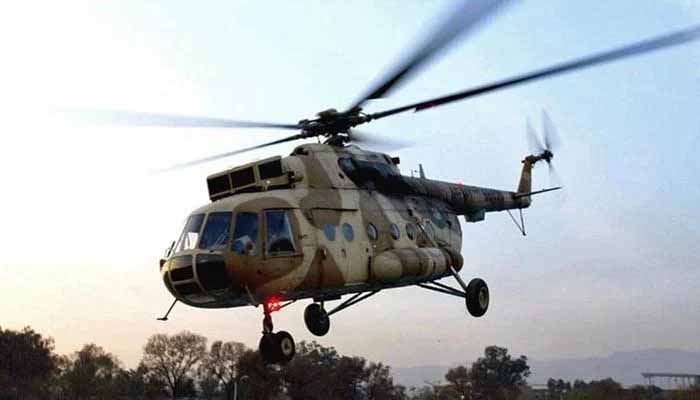
The Pakistan Army helicopter crash Muzaffarabad has claimed the lives of all personnel on board after an MI-17 military aircraft went down due to a reported technical malfunction during take-off, according to the Inter-Services Public Relations (ISPR). The incident, which occurred on Wednesday near Muzaffarabad, has prompted nationwide mourning and a formal board of inquiry to determine the exact cause of the crash.
H2 Heading 1: Pakistan Army helicopter crash Muzaffarabad confirmed by ISPR
The military’s media wing, ISPR, confirmed that an MI-17 helicopter of the Pakistan Army Aviation fleet crashed shortly after experiencing a technical fault during its take-off phase near Muzaffarabad.
According to the official statement, the aircraft encountered a malfunction that led to the accident. Authorities further confirmed that there were no survivors among the personnel on board, all of whom were declared martyred in the line of duty.
Rescue and recovery teams were immediately dispatched to the crash site, where they began securing the area and retrieving remains. The military stated that emergency protocols were activated without delay following the incident.
The ISPR added that a formal board of inquiry has been established to investigate the technical reasons behind the crash. The findings will determine whether mechanical failure, maintenance issues, or other operational factors contributed to the tragedy.
The Pakistan Army helicopter crash Muzaffarabad has once again raised concerns regarding operational risks associated with military aviation in challenging terrain, particularly in mountainous regions like northern Pakistan.
H2 Heading 2: National leadership reacts to Pakistan Army helicopter crash Muzaffarabad
Following the incident, Chief of Army Staff and Chief of Defence Forces Field Marshal Syed Asim Munir expressed profound grief over the loss of military personnel. He extended condolences to the families of the deceased and praised their service and sacrifice for the country.
President Asif Ali Zardari and Prime Minister Shehbaz Sharif also issued separate statements expressing sorrow over the tragedy. Both leaders acknowledged the sacrifices of the armed forces and reaffirmed national solidarity with the bereaved families.
President Zardari stated that the nation stands united in honoring the martyrs who lost their lives in the crash. Prime Minister Shehbaz Sharif paid tribute to the personnel, emphasizing that their sacrifices will always be remembered with respect and dignity.
Both leaders prayed for the elevation of the ranks of the deceased in the hereafter and for strength for their families to endure the loss.
The Pakistan Army helicopter crash Muzaffarabad has drawn widespread attention across the country, with political and military leadership emphasizing the importance of honoring those who serve in high-risk operations, particularly in difficult terrain and emergency response missions.
H2 Heading 3: MI-17 helicopter operations and aviation safety concerns
The MI-17 helicopter involved in the crash is widely used by the Pakistan Army Aviation for transport, logistics, rescue operations, and support missions, especially in mountainous and remote areas where ground access is limited.
These helicopters are considered reliable workhorses in military fleets worldwide, but like all aircraft, they require strict maintenance schedules and operational checks due to the demanding environments in which they operate.
Military aviation in northern Pakistan often involves complex conditions, including unpredictable weather, high-altitude flight paths, and limited landing zones. These factors can increase operational risks even in well-maintained aircraft.
The Pakistan Army helicopter crash Muzaffarabad has prompted renewed focus on aviation safety protocols, particularly in ensuring technical inspections and pre-flight assessments are thoroughly conducted.
In similar past incidents, technical faults have been identified as contributing factors. Notably, in September 2025, five personnel were martyred when a Pakistan Army helicopter crashed in Gilgit-Baltistan’s Diamer district, also attributed to a technical issue.
Conclusion
The Pakistan Army helicopter crash Muzaffarabad represents a significant loss for the armed forces and the nation. With all personnel on board confirmed martyred, the incident has triggered grief across Pakistan and prompted high-level investigations into the technical causes of the crash.
As the board of inquiry begins its work, attention will focus on identifying the precise failure that led to the tragedy and ensuring preventive measures are strengthened for the future. The incident underscores both the critical importance and inherent risks of military aviation operations in Pakistan’s challenging geographic regions.

Naeem Akhtar plays a key role in shaping editorial content and maintaining the highest standards of accuracy and clarity. His dedication ensures that PNP’s coverage remains timely, reliable, and impactful for its readers worldwide.