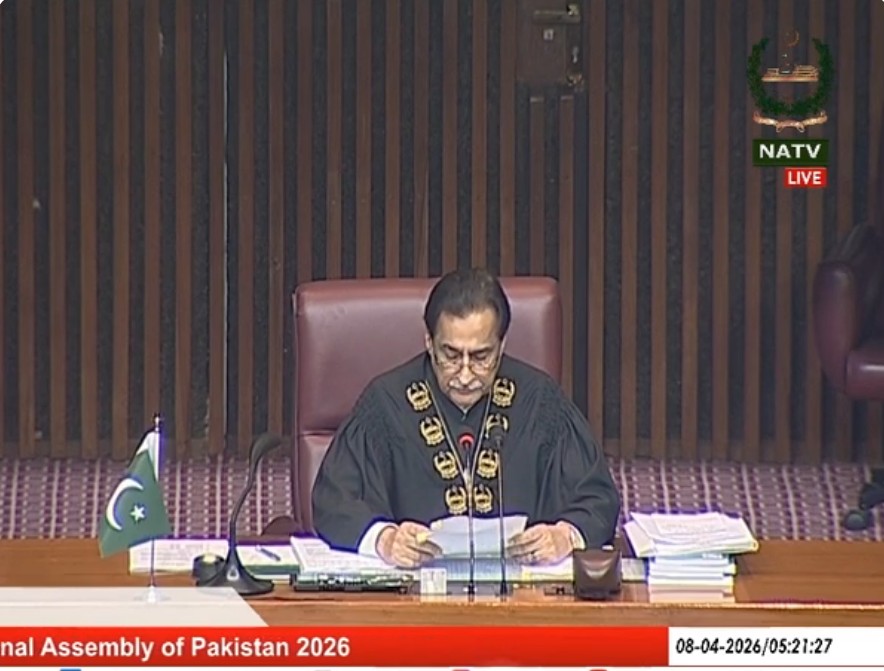
ISLAMABAD (Sabahuddin Qazi / PNP) – Speaker National Assembly Sardar Ayaz Sadiq during the National Assembly session held on 08th April 2026 has started his speech with a powerful acknowledgment of a historic moment for Pakistan. The speech delivered in the National Assembly reflects national pride, diplomatic achievement, and a renewed global image of Pakistan as a responsible peace mediator. The announcement of a ceasefire between the United States and Iran, credited partly to Pakistan’s sincere efforts, has been framed as a defining milestone in the country’s foreign policy success.
Undoubtedly, Pakistan stands today at a defining moment in its diplomatic history, where the successful de-escalation of tensions between global powers reflects not only strategic foresight but also exceptional leadership. At the heart of this achievement lies the visionary guidance of Prime Minister Shehbaz Sharif, Deputy Prime Minister and Foreign Minister Ishaq Dar and the resolute command of Field Marshal Syed Asim Munir. Their coordinated civil-military synergy has demonstrated how unity at the top translates into meaningful outcomes on the global stage.
The speech delivered by Speaker Sardar Ayaz Sadiq is not merely ceremonial—it carries political, diplomatic, and emotional weight. It highlights leadership unity, international recognition, and a call for Muslim unity, making it an important document for analysis in the context of regional geopolitics.
English Transcript of Speech delivered by Speaker National Assembly sardar Ayaz Sadiq (08th April, 2026)
Honourable Members of National Assembly!
For the entire Pakistani nation, this is a historic honor and a moment worthy of pride when Pakistan’s sincere efforts bore fruit and in the Middle East between America and Iran a ceasefire was announced.
This House acknowledges the wisdom and prudence of the leadership on both sides who, giving preference to negotiations over war, paved the way for global peace.
This is a history-making success, and every Pakistani, before the Almighty Lord, with complete humility, bows in prostration that Pakistan’s name is being taken with honor and respect throughout the entire world.
I, here, especially present tribute of appreciation to the Prime Minister of Pakistan, Mr. Muhammad Shehbaz Sharif, the Deputy Prime Minister and Foreign Minister, Mr. Ishaq Dar, and the Chief of Armed Forces, Field Marshal Mr. Syed Asim Munir, for their joint unparalleled diplomacy and tireless efforts. Through these efforts, today Pakistan has gained prominence across the whole world.
Along with this, the entire team of the Ministry of Foreign Affairs is also deserving of our praise for their professional capabilities.
This was a painful war in which, from both sides, it was Muslims who were suffering loss.
Therefore, this is the time that the entire Muslim Ummah, with mutual unity and respect, should come together for the welfare of helpless and oppressed Muslims.
My prayer is that in the coming days, the negotiations beginning under Pakistan’s hosting will be successful and will pave the way for lasting peace and development in this region and across the world.
Context and Background
The speech is rooted in the backdrop of escalating tensions in the Middle East, particularly between the United States and Iran. For months, the region remained on edge due to military confrontations, economic pressures, and geopolitical rivalries. Pakistan’s role as a mediator reflects its evolving foreign policy strategy—balancing relations with global powers while advocating peace in the Muslim world.
The Speaker frames the ceasefire as a “historic honor,” signaling its importance not just diplomatically but also symbolically for Pakistan’s global standing.
Tone and Language Analysis
The tone of the speech is deeply patriotic, appreciative, and optimistic. Several linguistic elements stand out:
- Religious references such as gratitude to Allah emphasize humility and cultural identity.
- Formal parliamentary language reinforces institutional credibility.
- Emotional expressions highlight the human cost of war, especially among Muslims.
The blend of formal and emotional tone makes the speech accessible while maintaining its official stature.
Key Themes in the Speech
1. National Pride and Recognition
The speech opens by declaring the moment as a “historic honor” for Pakistan. This establishes a strong narrative of national achievement and positions Pakistan as a key diplomatic player.
2. Diplomatic Success
A major portion of the speech is dedicated to acknowledging Pakistan’s role in facilitating peace. It emphasizes dialogue over conflict, portraying diplomacy as the ultimate tool for global stability.
3. Leadership Appreciation
The Speaker specifically praises:
- Prime Minister Shehbaz Sharif
- Deputy Prime Minister Ishaq Dar
- Chief of Army Staff Field Marshal Asim Munir
This reflects a unified civil-military leadership, which is often highlighted as a strength in Pakistan’s governance model.
4. Role of Institutions
The Ministry of Foreign Affairs is also credited, showing that institutional efforts—not just individual leadership—played a crucial role.
5. Humanitarian Concern
The speech acknowledges the tragic loss of Muslim lives on both sides of the conflict. This humanitarian angle adds depth and moral urgency to the message.
6. Call for Muslim Unity
A strong appeal is made for unity within the Muslim Ummah, urging collaboration for the welfare of oppressed communities.
7. Hope for Future Peace
The closing lines express optimism for future negotiations hosted by Pakistan, reinforcing its role as a peace facilitator.
Speech Analysis in Diplomatic Context
In diplomatic terms, the speech serves multiple purposes:
- Image Building: It strengthens Pakistan’s global image as a peace-loving nation.
- Soft Power Projection: By emphasizing mediation, Pakistan enhances its influence without military engagement.
- Regional Stability Advocacy: It aligns Pakistan with global calls for de-escalation in conflict zones.
The speech strategically highlights Pakistan’s neutrality and constructive engagement, which are essential for maintaining balanced international relations.
Comparative Perspective
Below is a comparison of key elements of this speech with typical parliamentary speeches on foreign policy:
| Aspect | This Speech | Typical Parliamentary Speech |
|---|---|---|
| Tone | Emotional + Diplomatic | Mostly formal and neutral |
| Religious References | Strong presence | Limited or absent |
| Leadership Praise | Highly emphasized | Moderately included |
| Focus on Peace | Central theme | Often one of many themes |
| Public Appeal | Direct and emotional | Indirect and policy-focused |
| Global Context | Strongly integrated | Sometimes limited |
Political Significance
The speech reflects internal political stability and consensus. By acknowledging both civilian and military leadership, it projects unity at a time when global perception matters most. This unity is crucial for:
- Strengthening Pakistan’s negotiating position
- Building trust with international partners
- Reinforcing domestic confidence in leadership
Religious and Cultural Dimensions
The repeated reference to Allah Almighty, during the speech of NA Speaker Sardar Ayaz Sadiq is not just symbolic. In fact, it frames the diplomatic success as a collective blessing rather than just a political achievement.
This approach:
- Enhances emotional connection with citizens
- Aligns political messaging with cultural values
- Reinforces humility in success
Impact on Pakistan’s Global Image
This speech contributes significantly to shaping Pakistan’s international narrative. Key impacts include:
- Recognition as a Mediator: Pakistan is seen as a bridge between conflicting powers.
- Positive Media Coverage: Such speeches often influence how global media frames a country’s role.
- Strengthened Alliances: Diplomatic success opens doors for future cooperation.
Conclusion
The Speaker National Assembly Speech reveals a carefully crafted message that blends diplomacy, emotion, and national pride. It highlights Pakistan’s emerging role as a peace broker in global conflicts and underscores the importance of unity—both domestically and within the Muslim world.
He has rightly highlighted that Pakistan’s recent diplomatic success is a testament to the strength of its top civil and military leadership working in harmony. The tireless commitment demonstrated by Prime Minister Shehbaz Sharif and Deputy Prime Minister / Foreign Minister Ishaq Dar to promote dialogue and peace, alongside Field Marshal Syed Asim Munir’s unwavering efforts, has set a powerful example of national unity and strategic clarity.
Their combined peace efforts have not only earned Pakistan international respect but have also instilled renewed confidence among its citizens. As the country moves forward, this model of cohesive leadership will remain essential in navigating complex global challenges and sustaining Pakistan’s role as a champion of peace and stability.
By celebrating diplomatic success while calling for continued efforts toward peace, the speech sets a forward-looking agenda. It not only marks a historic moment but also positions Pakistan as a responsible and influential player on the global stage.
In essence, this speech is more than a statement—it is a narrative of hope, unity, and strategic diplomacy that resonates far beyond the walls of the National Assembly.
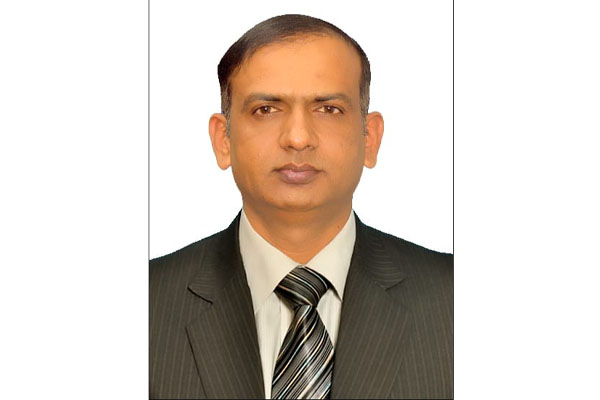
Mr. Sabahuddin Qazi is a senior analyst based in Islamabad.