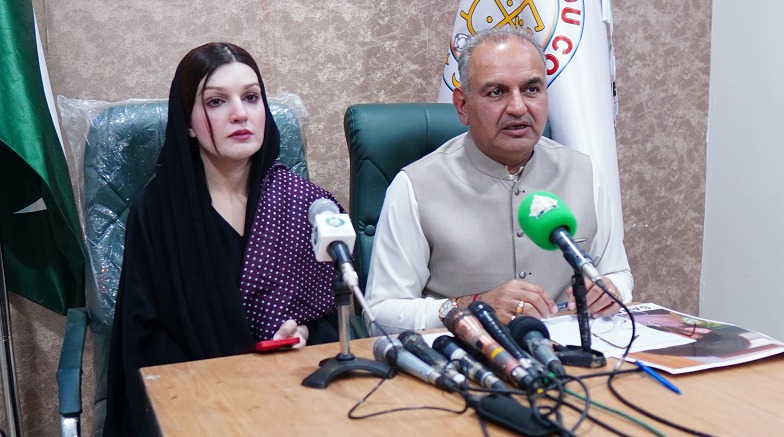
The campaign for the release and protection of jailed Kashmiri leader Yasin Malik gained fresh momentum when his wife, Mrs. Mushaal (Mishal) Hussein Mullick, accompanied by her sister Sabeen Malik and 13-year-old daughter Razia Sultan, visited the Pakistan Hindu Council Secretariat in Karachi for a comprehensive meeting with the prominent Pakistani Hindu parliamentarian and Patron-in-Chief of Pakistan Hindu Council, Dr. Ramesh Kumar Vankwani, followed by a joint press conference. Mushaal said Pakistani Hindus were not “minorities,” but rather the country’s pride just as the moon and star on the national flag.
This rare and powerful display of interfaith solidarity among representatives of two vulnerable oppressed communities carries deep symbolic, social, and diplomatic significance. It not only broadens the narrative around Kashmir but also strengthens the moral posture of the “Save Yasin Malik” campaign.
1. A Milestone Moment: Mushaal Malik’s Visit to the Pakistan Hindu Council
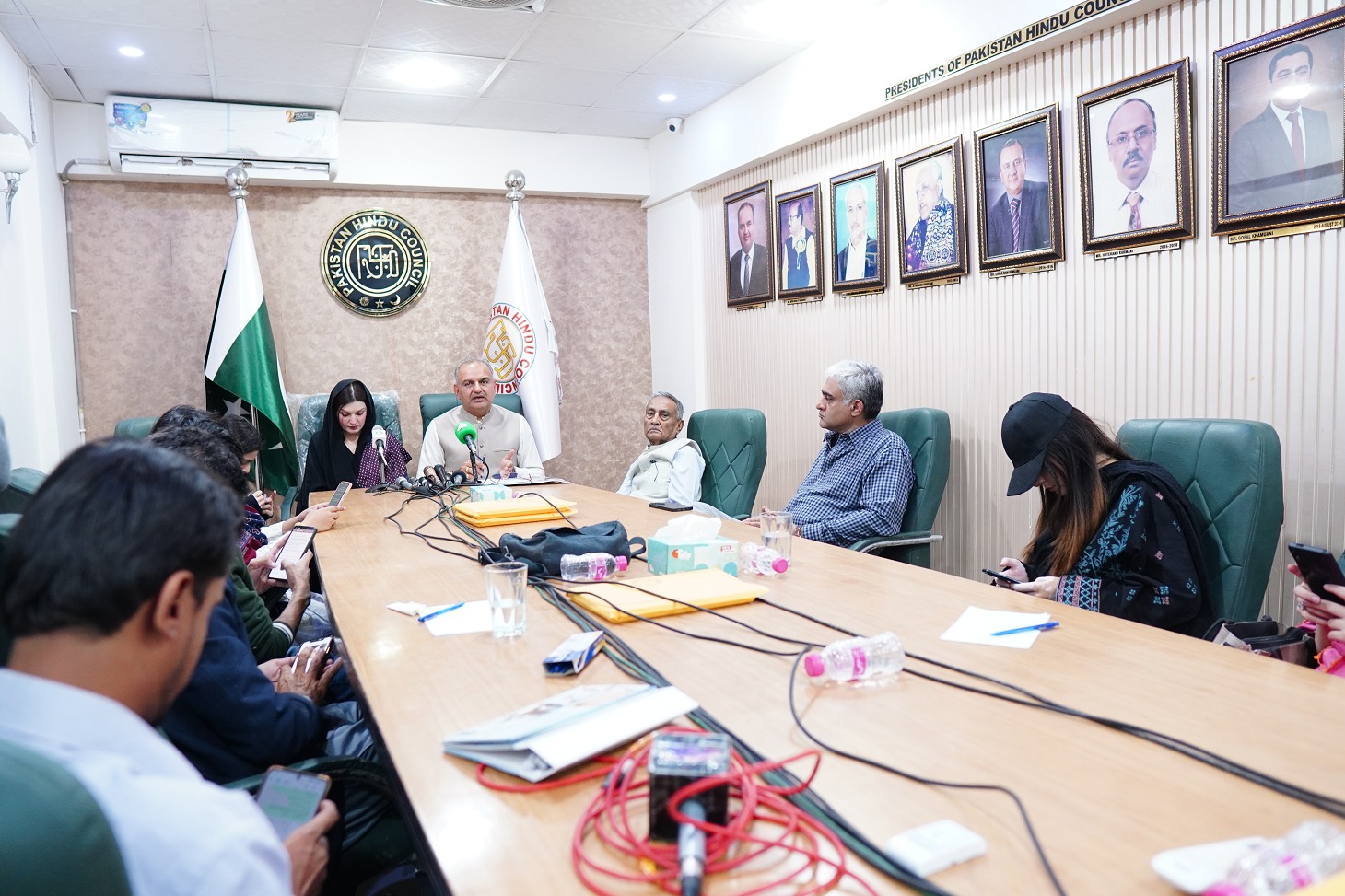
Mushaal Malik recently visited the Pakistan Hindu Council Secretariat, where she held a detailed meeting and a joint press conference with Dr. Ramesh Kumar Vankwani. The meeting was marked by a strong message: the struggle for Kashmiri rights transcends religion and political divisions, and it is fundamentally a fight for justice, dignity, and peace.
During the press briefing, Dr. Vankwani reaffirmed his firm commitment to support all humanitarian causes, including the rightful struggle of Kashmiris facing suppression. He emphasized that Pakistani Hindus see the Kashmir issue as a question of humanity, not a religious or geopolitical siding. His remarks echoed the PHC’s decades-long advocacy for peace, minority rights, and interfaith harmony.
Mushaal expressed gratitude to the Hindu community for standing with her during this challenging time. She highlighted that solidarity from Pakistan’s non-Muslim citizens sends a strong message to the world: the campaign for fair treatment of Kashmiri detainees, including Yasin Malik, is a universal moral cause.
Undoubtedly, this joint appearance — a Muslim Kashmiri woman and a Hindu Pakistani parliamentarian joining hands — created a powerful and unique visual of unity that redefines the Kashmir discourse inside Pakistan.
2. Expanding the Narrative Beyond Religious Identity
Support from Pakistani Hindus helps reshape how the issue is perceived domestically and internationally. Traditionally, Kashmir is framed as a Muslim-majority dispute. But when Hindu citizens in Pakistan stand publicly with a detained Kashmiri Muslim leader, it reframes the struggle into one focused on:
-
Human rights,
-
Due process,
-
Justice, and
-
Human dignity,
Mushaal’s call for multi-faith prayers for Yasin Malik — where mosques, temples, and churches participated — only strengthened this interfaith momentum. This broad-based solidarity makes it clear that the cause resonates across communities.
3. Symbolism and Moral Strength: Minority Support in a Muslim-Majority State
Minority voices supporting a national humanitarian cause carry profound weight.
Why it matters:
-
It demonstrates Pakistan’s internal social cohesion on issues of global human rights.
-
It proves that the nation’s minority citizens are not only included but are active stakeholders in human-rights discourse.
-
It undermines attempts to dismiss the Kashmir cause as purely Islamic or politically motivated.
-
It highlights Pakistan’s commitment to interfaith harmony.
Dr. Vankwani’s stature as both a parliamentarian and international minority leader amplified this effect. His presence alongside Mushaal added diplomatic depth and moral legitimacy to her campaign.
4. Strengthening the “Save Yasin Malik” Campaign’s Reach
The Save Yasin Malik campaign has always been strong among civil society, youth, academia, and rights groups. But support from the Pakistan Hindu Council and its leadership has expanded the audience in meaningful ways:
a) Cross-Community Legitimacy
Minority endorsement gives the campaign greater national unity, reducing the perception that it is aligned with only one religious group or political faction.
b) Broadening Domestic Mobilization
The PHC has networks across Pakistan, especially in Sindh. Their involvement opens doors for community outreach, humanitarian events, social media amplification, and educational programs.
c) A Powerful Message to India and the World
India often propagates that Pakistan’s minorities are excluded or suppressed. Interfaith cooperation on the Kashmir issue creates a counter-narrative demonstrating inclusivity, harmony, and shared civic values.
5. A New Chapter in Interfaith Solidarity
Mushaal’s joint press conference with the Patron-in-chief of Pakistan Hindu Council reinforces a wider truth: the cause of Jammu & Kashmir is not a Muslim-exclusive concern. When a Hindu-led organization steps forward to support Kashmiri Muslim leader Yasin Malik, it shapes a new language of solidarity built on humanitarian values.
This alliance can encourage:
-
More interfaith dialogues,
-
Peace-focused think tanks,
-
Joint statements at international forums, and
-
Humanitarian awareness campaigns led by diverse groups.
This is exactly what Mushaal’s campaign has sought — taking the issue beyond borders of faith and geography.
6. Diplomacy and Global Human Rights Advocacy
During her press conference, Mushaal called for taking Yasin Malik’s case to the United Nations and engaging global civil society. Support from minorities strengthens the narrative because:
-
International rights organizations place high value on pluralistic national advocacy.
-
Minority-included campaigns show moral seriousness.
-
Interfaith solidarity provides a compelling humanitarian argument in diplomatic forums.
When the Pakistani Hindu Council joins the call for justice, it resonates far more strongly at platforms like the UN Human Rights Council, Amnesty International, or global interfaith conferences.
7. Implications for Detained Kashmiri Leaders
Warm welcome of Mushaal Malik by the Pakistan Hindu Council does not just symbolically help the image of the campaign — it materially strengthens efforts for detained leaders in several ways:
-
It puts pressure on India by highlighting contradictions in its “secular democracy” narrative.
-
It reinforces international advocacy by demonstrating national consensus.
-
It gives families of Kashmiri prisoners stronger moral backing and media presence.
-
It energizes civil society movements within Pakistan.
The combined presence of Mushaal and Dr. Vankwani sent a message that the fate of Yasin Malik — and all Kashmiri detainees — is not a matter of religious politics but a fundamental human rights imperative.
Conclusion: A United Front for Justice
Mushaal Malik’s visit to the Pakistan Hindu Council and her joint press conference with Dr. Ramesh Kumar Vankwani mark a historic moment in the Kashmir struggle’s humanitarian campaign. It shows that justice transcends religion, caste, and class — and that diverse citizens of Pakistan can stand together for oppressed communities beyond their own borders.
Pakistani Hindus’ support for detained Kashmiri leaders strengthens the moral foundation of the “Save Yasin Malik” movement, broadens its reach, and reinforces its international legitimacy. Most importantly, it sends a message of unity, compassion, and shared human dignity — values that lie at the heart of all great human rights struggles.