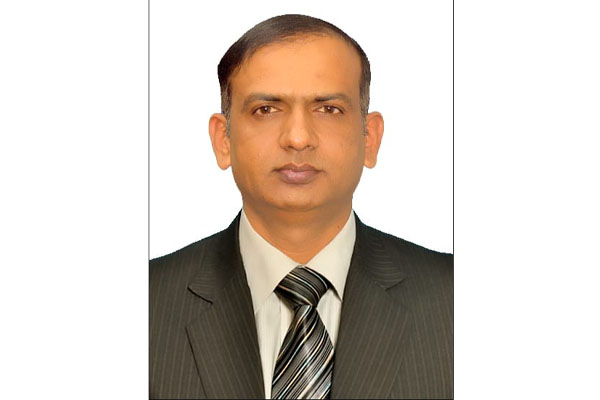
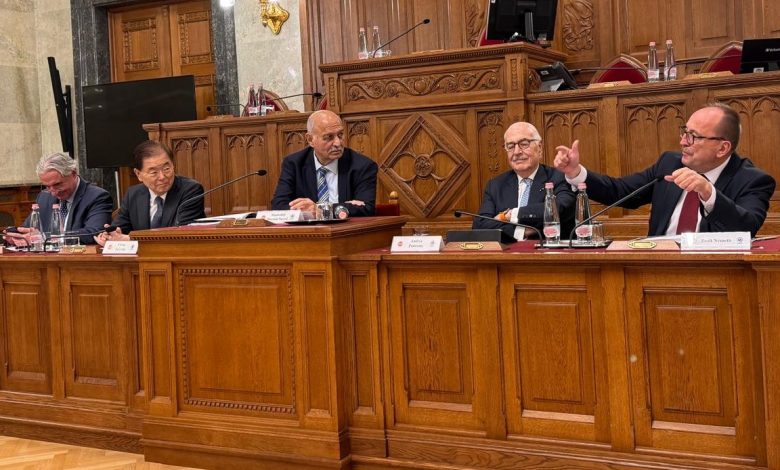
Prominent Pakistani politician, intellectual and analyst Senator Mushahid Hussain Sayed, in a significant development for intercontinental Eurasian political cooperation, has been unanimously elected as the new Chairman of the Asia-Europe Political Forum (AEPF). The decision came at the Forum’s annual conference held in Budapest, Hungary — a gathering that drew parliamentarians, political leaders and think-tank representatives from across Asia and Europe.
What is the AEPF — and why this matters
The AEPF is a unique bi-continental, non-governmental institution that brings together political representatives, public intellectuals, and think tanks from Asia and Europe. It serves as a bridging platform — alternating between host cities in Asia and Europe — to foster dialogue, understanding and cooperation across Eurasia.
While the broader region is witnessing growing geopolitical competition, the AEPF offers a space for voices beyond government corridors — enabling cross-regional engagement that may not always follow official diplomatic channels. Having a Pakistani politician at the helm signals recognition of Pakistan’s role and a potential opportunity for stronger Asia–Europe engagement under South Asia’s representation.
The Election in Budapest
The 2025 Eurasian annual conference, themed “Peace and Democracy in Eurasia,” was hosted in Budapest by Hungary’s ruling party. Among the attendees were 35 parliamentarians, political figures and thinkers from 25 countries (15 from Asia and 10 from Europe).
At the conference’s conclusion, the AEPF members unanimously elected Mushahid Hussain Sayed as Chairman for a two-year term. On the European side, former Hungarian Deputy Foreign Minister Zsolt Nemeth was elected Co-Chairman to represent Europe.
In his acceptance remarks, Senator Mushahid expressed gratitude to the participants, emphasising the AEPF’s distinct identity as the only nongovernmental forum that links Eurasian policymakers, intellectuals and think tanks.
What Mushahid Aims to Do — Pakistan as a Bridge

During his statement at the conference, Mushahid Hussain laid out a vision that positions Pakistan not merely as a participant, but as a pivotal bridge between East and West. He underscored that, given its geography and history, Pakistan is “an ideal bridge between the East and the West,” capable of facilitating connectivity across Eurasia — from South Asia to Central Asia and beyond.
He highlighted that emerging geoeconomic and geopolitical dynamics demand strengthened inter-regional cooperation, and the AEPF can play a meaningful role in knitting together Eurasian ties.
Specifically, Mushahid pointed to multilayered connectivity frameworks — referencing major intercontinental economic corridors — as crucial channels through which Asia and Europe can deepen their interaction in trade, infrastructure, and strategic partnership.
Moreover, he stressed the importance of collaboration beyond economy: trade, investment, education, science & technology — and fostering inter-faith and intercultural understanding, which he argued are foundational for long-term stability in Eurasia.
Mushahid also rejected the idea of a renewed Cold War or confrontational global politics, advocating instead for diplomacy, dialogue and mutual respect among nations.
Wider Eurasian Context: Why This Election Resonates
Electing Mushahid Hussain as Chairman of AEPF at a time when the global order, especially Eurasian, appears to be recalibrating is significant on several counts:
-
Elevating Pakistan’s Role in Eurasia: With Pakistan’s geographic location and recent strategic engagements, its leadership of AEPF underscores a growing recognition of its potential role in connecting South Asia, Central Asia, and Europe.
-
Civil-Society / Think-Tank Diplomacy: Given AEPF’s non-governmental status, the forum offers an alternative — and perhaps more flexible — space for soft diplomacy, dialogue, and cooperation beyond rigid state frameworks.
-
Bridging East and West Amid Global Shifts: As power dynamics, economic links, and security alignments evolve globally, forums like AEPF could help recalibrate Eurasian partnerships — helping reinforce connectivity, mutual understanding, and sustainable cooperation.
-
Potential for Multi-dimensional Engagement: From trade and investment to science, education, and cultural-interfaith exchange — under Mushahid’s chairmanship, the AEPF may widen its scope and relevance, reflecting regional needs and global transformations.
Challenges & Opportunities Ahead
Mushahid’s chairmanship also comes with challenges. Some of them include:
-
Diverse Interests: Asia and Europe are vast regions with widely varying political systems, economic situations, and strategic priorities. Aligning them under common AEPF initiatives will be difficult.
-
Geopolitical Tensions: With rising great-power contests, security dilemmas, and polarizing regional conflicts, non-governmental forums like AEPF may struggle to stay neutral or effective.
-
Sustainability & Follow-through: Vision and speech-format cooperation is one thing; actual policy influence, implementation, and cross-regional projects are another. The AEPF will need sustained commitment, resources, and follow-up to translate ideas into impact.
At the same time, opportunities include:
-
Leveraging Connectivity Projects: There is scope to channel Eurasian trade, infrastructure, and energy linkages through AEPF’s network. If properly leveraged, this can bring economic opportunities not only to Pakistan but across Eurasia.
-
Soft Power & Dialogue: AEPF can become a platform for intercultural exchange, conflict resolution, and building mutual understanding — especially in an increasingly polarized world.
-
Youth, Think Tanks, Intellectual Exchange: By engaging research institutions, civil society, and academia, AEPF can incubate new ideas, research collaborations, and cultural ties — going beyond politics.
What This Means for Pakistan
For Pakistan, Mushahid Hussain’s new role opens several potential avenues related to Eurasian ties:
-
It gives the country a voice in shaping Eurasian narratives — especially regarding connectivity, integration, trade corridors, and intercontinental dialogue.
-
It highlights Pakistan’s strategic position between South Asia, Central Asia and Europe — at a time when global powers are rethinking supply-chains, trade routes and alliances.
-
Through AEPF, Pakistan could expand its diplomatic and soft-power outreach beyond traditional bilateral channels — tapping into think-tank networks, civil society, academia and multilateral dialogue.
-
This role may also help diversify Pakistan’s foreign policy — adding more leverage and options beyond classical alliances and zero-sum geopolitical dynamics.
Conclusion
The election of Senator Mushahid Hussain Sayed as Chairman of the Asia-Europe Political Forum marks a timely and potentially impactful moment for Eurasian political-intellectual cooperation. In a world where intercontinental linkages — economic, cultural, political — increasingly matter, the AEPF under Mushahid’s leadership could become an important platform for dialogue, cooperation and constructive engagement across Asia and Europe.
However, whether this opportunity will translate into concrete outcomes — greater connectivity, meaningful collaboration, and strengthened Eurasian ties — depends on the forum’s ability to navigate geopolitical complexities, bridge divergent regional interests, and follow through with action beyond rhetoric. For Pakistan, this represents a moment to potentially redefine its place in Eurasia — as a bridge between East and West, not just geographically, but politically and economically as well.
Sabahuddin Qazi is a journalist, researcher, and socio-political analyst with a special focus on governance, minorities’ rights, and regional geopolitics. His writings explore Pakistan’s evolving political landscape and its role at regional & global levels.