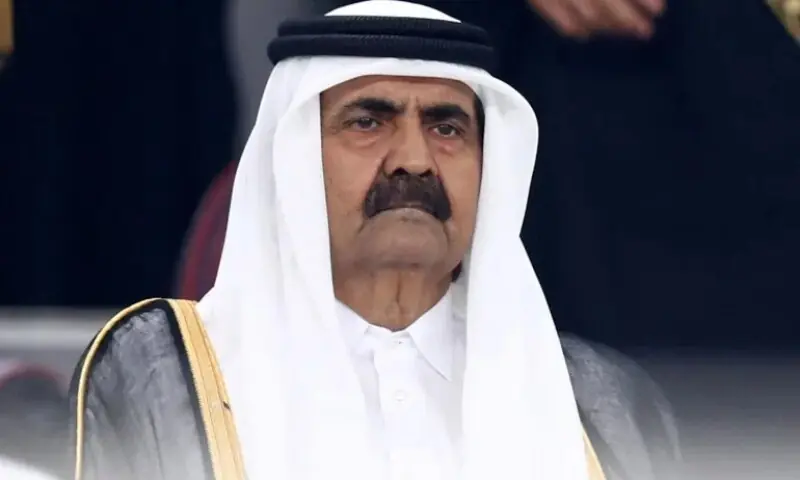
Dubai (PNP) Former Qatari Emir and “Father Emir,” Sheikh Hamad bin Khalifa Al Thani, has passed away at the age of 74. His death was announced on Sunday by the Amiri Diwan of Qatar.
According to Arab broadcaster Al Jazeera, the Amiri Diwan said in a statement posted on X that, “With faith in Allah’s will and decree, the Amiri Diwan expresses its deep sorrow over this great loss to the nation. May Allah have mercy on the Father Emir, Sheikh Hamad bin Khalifa Al Thani, who passed away this morning.”
Sheikh Hamad ruled Qatar from 1995 to 2013. During his reign, the country experienced remarkable economic, social, and cultural development, significantly strengthening its global standing.
He is widely regarded as one of the principal architects of modern Qatar. Under his leadership, the country’s energy sector—particularly natural gas production—expanded dramatically, helping Qatar become one of the world’s wealthiest nations and elevating its international influence.
During his tenure, Qatar also expanded its political and diplomatic influence across the Middle East, North Africa, and Asia.
In 2022, Qatar hosted the FIFA World Cup, the world’s most-watched sporting event. Sheikh Hamad received a standing ovation from fans when he attended the tournament’s opening match.
In 2013, Sheikh Hamad handed over power to his son, Sheikh Tamim bin Hamad Al Thani, who was 33 years old at the time.
Even after stepping down, Sheikh Hamad remained a prominent figure in Qatar’s political and social life.
His passing has cast the country into mourning, with Qatar’s leadership and people paying tribute to his legacy and decades of service.
How Sheikh Hamad bin Khalifa Al Thani Transformed Qatar
Former Qatari Emir Sheikh Hamad bin Khalifa Al Thani, who has died at the age of 74, is widely credited with transforming Qatar into one of the world’s richest and most influential countries.
According to Al Jazeera, Sheikh Hamad assumed power in 1995 and launched ambitious development projects that reshaped the country. By capitalizing on Qatar’s vast natural gas reserves, he introduced sweeping reforms in the economy, education, politics, and social sectors, fueling rapid economic growth.
Official figures show that Qatar’s Gross Domestic Product (GDP) increased more than 24-fold during his rule. As production from the North Field expanded, Qatar became the world’s largest exporter of liquefied natural gas (LNG) by 2006, with annual LNG production capacity reaching 77 million tonnes.
His reign also saw the establishment of several landmark institutions and initiatives. These included the launch of Al Jazeera in 1996, the creation of the Qatar Foundation, the introduction of Qatar’s first permanent constitution in 2004, and municipal elections that granted women the right to vote and run for office.
Under his leadership, Qatar won the right to host the 2022 FIFA World Cup, making it the first Arab nation to stage football’s biggest tournament.
Sheikh Hamad was born in Doha in January 1952. He graduated from the Royal Military Academy Sandhurst in the United Kingdom and later became commander of Qatar’s armed forces. In 1977, he was appointed Crown Prince and Minister of Defense before assuming power as Emir on June 27, 1995.
In 2013, he voluntarily transferred power to his son, Sheikh Tamim bin Hamad Al Thani, in what was widely viewed as a rare and peaceful political transition in the region.
During his abdication speech, Sheikh Hamad said:
“The future lies before you, children of the nation. You are moving toward a new era in which a younger generation will carry the country’s flag.”
Sheikh Hamad also positioned Qatar as a key player in international diplomacy. During his rule, the country mediated several regional conflicts, including the Darfur conflict in Sudan, Lebanon’s political crisis, and disputes between the Palestinian factions Hamas and Fatah.
Qatar also played a significant role in Afghanistan. During the final years of Sheikh Hamad’s rule, the country allowed the Taliban to open a political office in Doha, paving the way for negotiations between the United States and the Taliban that eventually led to the 2021 agreement on the withdrawal of U.S. and NATO forces from Afghanistan.
During the Arab Spring, Qatar was among the few countries that openly supported popular protest movements. Al Jazeera continued covering demonstrations in Egypt despite restrictions imposed by the authorities.
Regarding Syria, Qatar initially urged President Bashar al-Assad to halt the crackdown on protesters and step down. It later severed diplomatic ties with the Syrian government.
In Libya, Qatar supported the NATO-led military intervention, which ultimately resulted in the downfall of long-time ruler Muammar Gaddafi.
The Palestinian cause remained especially important to Sheikh Hamad. One of his final official visits was to Gaza, making him the first head of state in more than a decade to visit the territory.
Sheikh Hamad bin Khalifa Al Thani’s death is being regarded as a major event not only for Qatar but for the wider Middle East. His economic reforms, political modernization, and diplomatic initiatives played a defining role in shaping Qatar’s modern identity and global stature.
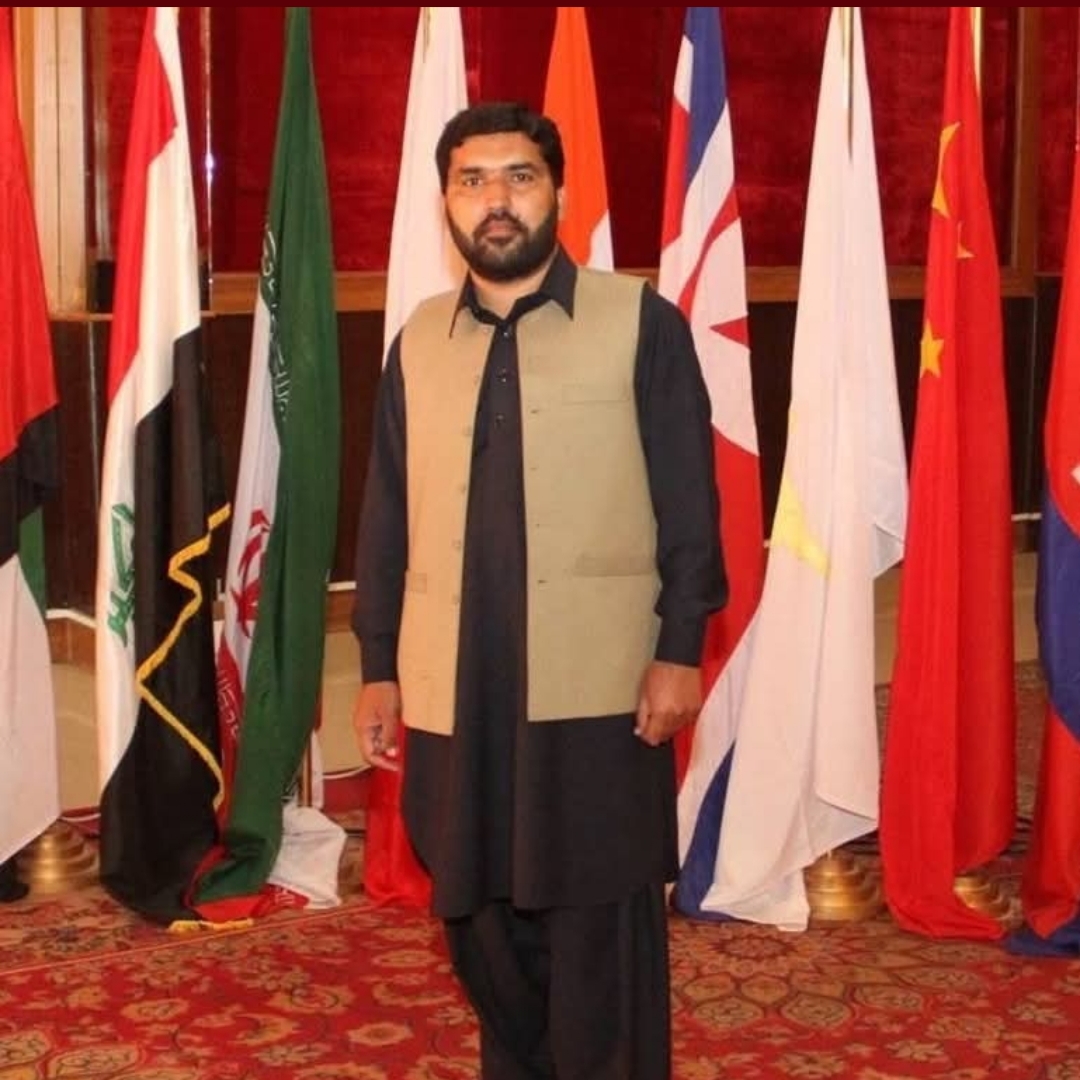
Naeem Akhtar plays a key role in shaping editorial content and maintaining the highest standards of accuracy and clarity. His dedication ensures that PNP’s coverage remains timely, reliable, and impactful for its readers worldwide.