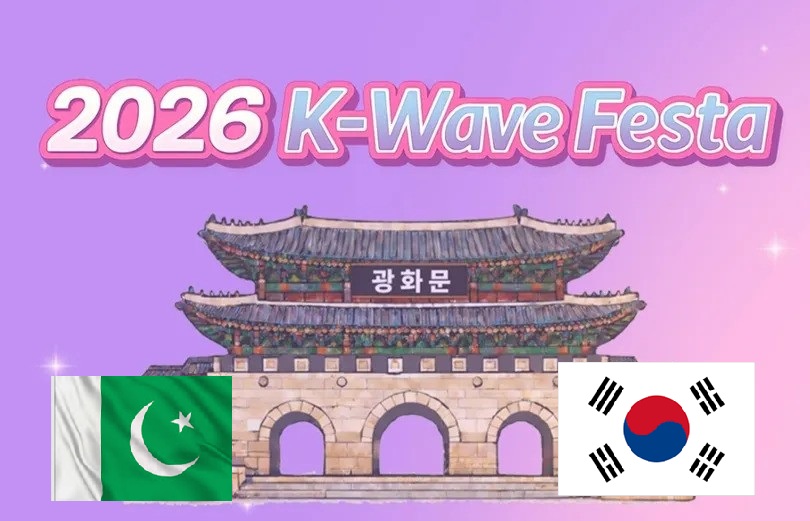
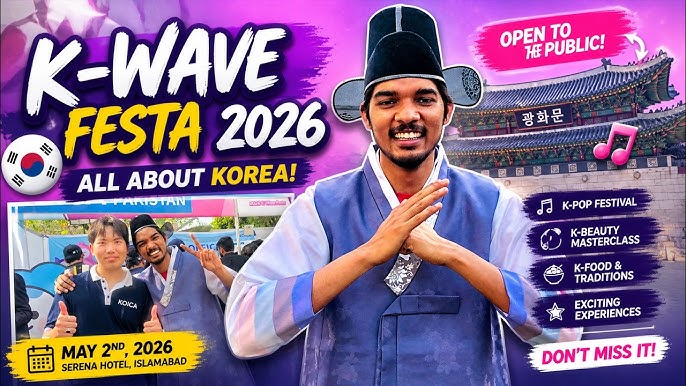
ISLAMABAD (Sabahuddin Qazi / PNP): The recent Korean cultural festival K-Wave Festa 2026 in Islamabad, organized by the Embassy of the Republic of Korea, have faced logistical challenges, but it revealed something far more significant: the extraordinary rise of Korean Culture in Pakistan.
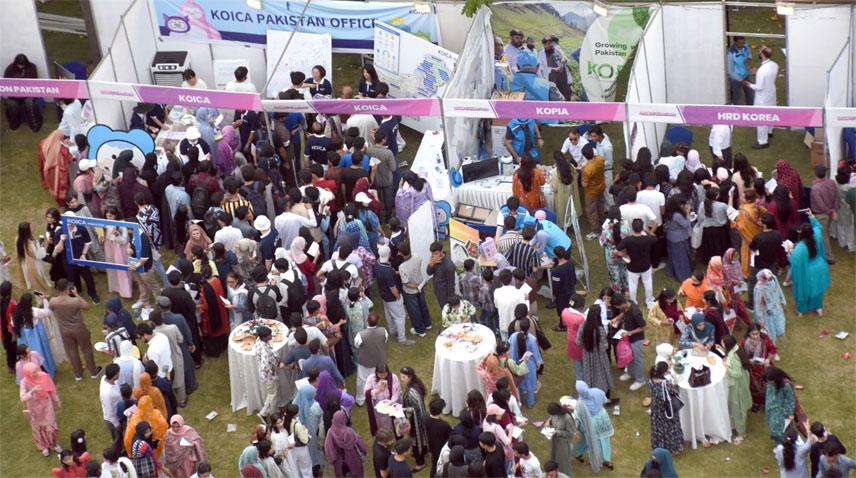
While some media reports focused on overcrowding and the early closure of the event, a deeper and more meaningful reality emerged—thousands of young Pakistanis showed up with unmatched enthusiasm, energy, and emotional connection to Korean culture. This overwhelming turnout was not accidental; it was the result of years of cultural engagement, digital exposure, and storytelling that resonates deeply with Pakistani society.
In essence, the event did not fail—it exceeded expectations.
A Mismanaged Event or an Overwhelming Success?
The festival was intended as a vibrant celebration of Korean cuisine, music, arts, and K-pop culture. However, thousands of attendees—far exceeding capacity—gathered at the venue, leading to overcrowding and eventual shutdown.
While some critics labeled the event as mismanaged, this perspective misses a crucial point:
👉 The scale of turnout itself was the real headline.
- Thousands of young Pakistani people, including women and children, showed up, many traveling long distances
- Social media buzz amplified interest through influencers
- Families, students, and K-pop fans created an unprecedented crowd
Even the embassy acknowledged that the public’s love for Korean culture was “beyond words” and pledged better arrangements in future events.
This was not merely an event—it was a cultural phenomenon.
From Pandemic Escape to Cultural Identity
The journey of Korean Culture in Pakistan began quietly. During the COVID-19 pandemic, many young Pakistanis turned to Korean dramas (K-Dramas) as a source of entertainment and emotional escape. What started as casual viewing soon transformed into something much deeper.
Today, Korean content is no longer just entertainment—it is shaping:
- Emotional understanding
- Social awareness
- Personal identity
Experts believe Korean storytelling allows youth to explore themes such as love, identity, class differences, and resilience in ways that feel both fresh and familiar.
Korean dramas portray family values, life struggles, and soft romantic narratives in a way that strongly resembles Pakistani societal realities. This relatability has made Korean dramas appealing not just to youth but across generations.
Why Korean Stories Feel So Close to Home
One of the most powerful drivers behind the rise of Korean Culture in Pakistan is cultural relatability.
Despite differences in language and religion, both societies share:
- Strong family systems
- Respect for elders
- Emotional depth in relationships
- Social values centered around honor and dignity
Korean dramas often explore themes like:
- Class inequality
- Family honor
- Forbidden love
- Personal struggle and growth
These themes are deeply embedded in Pakistani society, making Korean content feel less foreign and more like a mirror reflecting shared human experiences.
A New Language of Youth Culture
The influence of Korean Culture in Pakistan is now visible in everyday life.
Words like:
- Kimchi
- Ramyeon
- Saranghae
have entered casual conversations, especially among students and urban youth.
This linguistic shift is more than a trend—it represents a cultural transformation. Young Pakistanis are not just consuming Korean content; they are living it, expressing it, and integrating it into their identities.
Beyond Screens: The Rise of a Cultural Economy
The growing popularity of Korean Culture in Pakistan has also given rise to a new cultural and economic ecosystem.
1. Food & Lifestyle Trends
Korean cuisine is gaining popularity in major cities, with restaurants offering authentic dishes attracting young customers eager to experience Korean culture firsthand.
2. Academic Expansion
Several Pakistani universities are witnessing a surge in demand for Korean language courses.
What once started as diploma programs has now expanded into full-fledged degree programs, reflecting long-term academic and professional interest.
3. Scholarships & Global Mobility
Programs such as Global Korea Scholarship are opening doors for Pakistani students to pursue higher education in South Korea.
4. Career Opportunities
Students are increasingly exploring careers in:
- Translation and interpretation
- Cultural research
- International business
- Overseas employment programs
Inspired by K-Dramas, Driven by Ambition

The personal stories behind this cultural shift are equally powerful.
Many students report that their interest in Korean culture began with a single drama episode. Over time, this curiosity evolved into:
- Learning the Korean language
- Following Korean music
- Understanding Korean traditions
For example, Pakistani students often cite Korean dramas as their initial inspiration. Many popular Korean drama are available in Urdu dubbing on the internet streaming sites, such as Youtube.
The global popularity of artists like BTS has further accelerated this trend, making Korean culture more accessible and aspirational.
Representation That Resonates
Another reason behind the rise of Korean Culture in Pakistan is the unique portrayal of characters in Korean media.
- Women are depicted as strong, independent, yet compassionate
- Men are portrayed as emotionally intelligent, respectful, and supportive
This balanced representation offers something different from traditional global media narratives.
For Pakistani audiences, especially youth, this feels like a refreshing and meaningful alternative, filling a long-standing gap in emotional storytelling.
The Islamabad Event: A Turning Point
The Korean cultural festival in Islamabad should be viewed as a turning point rather than a setback.
Yes, there were logistical challenges. But more importantly:
🔥 The event attracted an unexpectedly massive crowd
🔥 It demonstrated the immense popularity of Korean Culture in Pakistan
🔥 It highlighted the need for larger, more structured cultural platforms
Few cultural events in Pakistan generate such intense public interest. The overwhelming turnout itself is a measure of success.
Lessons for the Future
The Islamabad experience offers valuable insights for future cultural initiatives:
1. Scale Matters
Future events must anticipate high demand and choose larger venues.
2. Digital Management
Pre-registration systems and ticketing can help manage crowds efficiently.
3. Nationwide Expansion
Hosting events in Lahore, Karachi, and other cities can distribute participation.
4. Institutional Partnerships
Collaboration with universities and cultural bodies can improve organization and outreach.
Cultural Diplomacy at Its Best
The Embassy of the Republic of Korea in Islamabad has played a pivotal role in promoting Korean Culture in Pakistan.
Through initiatives like:
- Korea Week (K-Wave Festa)
- Cultural exhibitions
- Music and food festivals
- Language and academic collaborations
The Korean embassy has successfully transformed diplomacy into people-to-people connection.
This is a classic example of soft power in action—where culture becomes a bridge between nations.
Conclusion: A Tribute to Korea’s Cultural Vision in Pakistan
Undoubtedly, the Embassy of the Republic of Korea in Islamabad deserves heartfelt appreciation for its vision, dedication, and cultural leadership.
Despite the operational challenges faced during the recent festival, the embassy achieved something far more valuable:
✨ It created unprecedented excitement around Korean Culture in Pakistan
✨ It brought together thousands of young people under one cultural platform
✨ It strengthened emotional and cultural ties between Pakistan and South Korea
The sheer scale of public response proves that these efforts have not only succeeded—they have reshaped cultural engagement in Pakistan.
Creating such massive hype is not easy. Sustaining it requires consistency, creativity, and commitment—all of which the Korean Embassy has demonstrated effectively.
In the world of cultural diplomacy, success is not measured by perfect logistics but by lasting impact. And by that standard, the Korean Embassy in Islamabad has delivered a remarkable success story.
Looking ahead, with improved planning and expanded outreach, future events have the potential to become flagship international cultural festivals in Pakistan.
Korean Culture in Pakistan is no longer a niche interest—it is a powerful cultural movement, and the Korean Embassy in Islamabad deserves full credit for leading this transformation with excellence.

Mr. Sabahuddin Qazi is a senior journalist, analyst and researcher based in Islamabad.