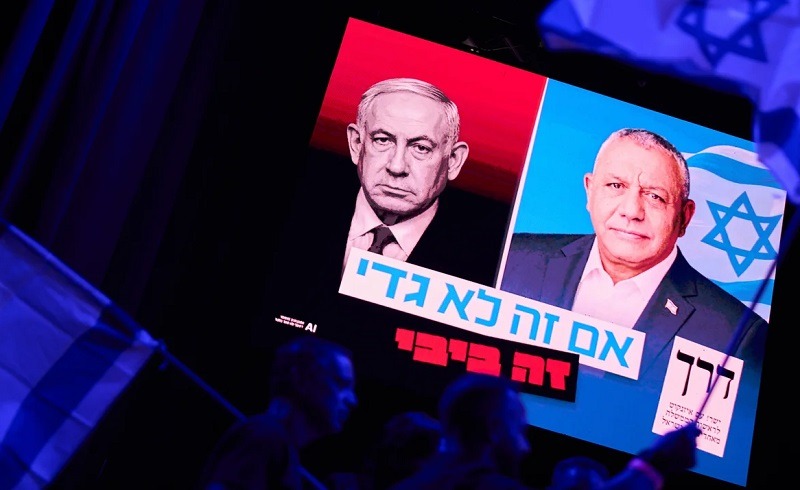
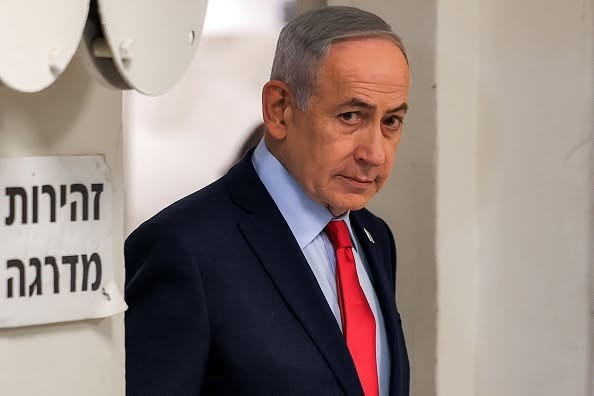
TEL AVIV: Preliminary results of Israel’s general elections have raised serious questions about Prime Minister Benjamin Netanyahu’s political future, with his electoral alliance appearing unlikely to secure a simple majority in parliament.
With 90 percent of the votes counted, Netanyahu’s bloc appears to be falling short of a parliamentary majority, while opposition parties and Arab political groups could play a decisive role in forming the next government.
According to the preliminary results, Netanyahu’s bloc is expected to win 53 seats in the 120-member Israeli parliament, while the opposition alliance could secure 48 seats. The United Arab List (Ra’am) and the Joint List are projected to win seven and 12 seats, respectively. Their combined 19 seats could prove crucial in determining the formation of the next government, although both major political blocs are reluctant to include Arab parties in their respective coalitions.
Netanyahu’s Likud Party has emerged as the largest single party, with 26 seats. However, the parties of his far-right allies, Itamar Ben-Gvir and Bezalel Smotrich, appear to have suffered losses. The two parties held a combined 20 seats in the previous parliament, but their representation is now projected to fall to 13 seats. Both leaders have strongly supported Israel’s military operations in Gaza.
On the opposition side, Yashar, the new party led by former Israeli army chief Gadi Eisenkot, is projected to win 21 seats. Parties associated with Yair Lapid and former prime minister Naftali Bennett are expected to secure a combined 12 seats.
Voter turnout in the elections stood at 78 percent. Arab citizens of Israel also participated in large numbers, strengthening the parliamentary position of Arab political parties. In 2021, Naftali Bennett included an Arab party in his governing coalition. However, political obstacles to including Arab parties in the next government remain significant.
Opposition leader Gadi Eisenkot has claimed that the public mandate is against Netanyahu. He also warned the prime minister against further attempts to use the Israeli military for political purposes.
Israel follows a proportional representation electoral system, under which voters cast ballots for political parties rather than individual candidates. Parliamentary seats are allocated according to the proportion of votes received by each party.
In light of the preliminary results, Netanyahu’s Likud Party may have emerged as the largest party but remains short of the numbers needed to secure a parliamentary majority. The final political outcome will depend on negotiations and decisions by potential coalition partners.
Naeem Akhtar plays a key role in shaping editorial content and maintaining the highest standards of accuracy and clarity. His dedication ensures that PNP’s coverage remains timely, reliable, and impactful for its readers worldwide.