
In recent years, SMS charges by Pakistani banks have become one of the most controversial and widely criticized issues in the country’s financial sector. What was once considered a minor service fee has now turned into a multi-billion rupee burden on consumers. The issue has gained national attention after revelations that banks collectively generate approximately Rs18.7 billion annually from SMS alerts.
At a time when digital banking is expanding and technology costs are declining, the continuation of such charges raises serious ethical, economic, and regulatory questions.
The Shocking Numbers Behind SMS Charges by Pakistani Banks
Recent reports presented before the Senate Standing Committee on Finance regarding the SMS charges by Pakistani banks highlight the magnitude of this issue. Banks in Pakistan collect around Rs18.7 billion per year from customers through SMS charges, while paying approximately Rs25.6 billion to telecom operators, resulting in a gap of nearly Rs7 billion.
Moreover, SMS charges have increased drastically over time. Banks are now charging customers up to Rs3.40 per SMS, compared to just Rs0.40 per message in 2021.
This exponential rise clearly indicates that SMS charges by Pakistani banks are not aligned with technological realities or consumer affordability.
Senate Raises Serious Concerns
The issue has triggered strong reactions at the parliamentary level. Members of the Senate have openly questioned the justification for these charges, calling them excessive and unfair.
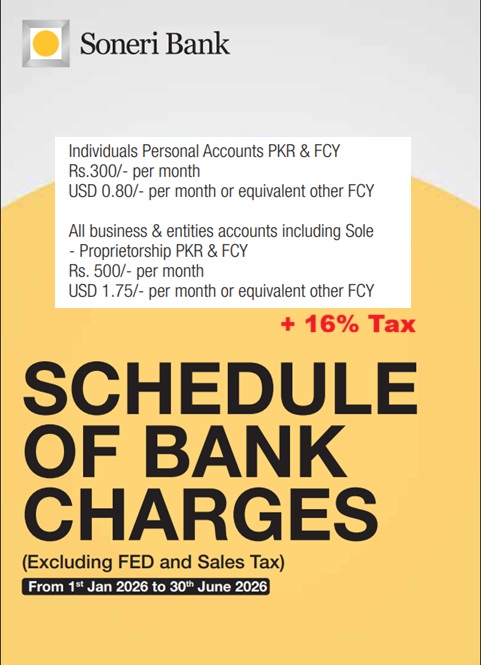
The meeting of the Senate Standing Committee on Finance and Revenue was primarily focused on rising complaints about SMS charges by Pakistani banks on customers. The session, chaired by Saleem Mandviwalla, turned into a detailed inquiry into the pricing structure, responsibilities, and transparency of these charges.
Senator Anusha Rahman pointed out that the actual cost of sending an SMS is as low as one to two paisas, yet customers are charged multiple rupees per message.
The Senate committee did not reach a final decision but made it clear that SMS charges by banks are under serious scrutiny. Lawmakers signaled that reforms may be introduced after reviewing detailed submissions, with a strong focus on protecting consumers from unjustified costs.
Such a massive disparity between cost and price strongly suggests inefficiency—or worse, exploitation.
Banks vs Telecom Companies – Passing the Blame
One of the most concerning aspects of this issue is the ongoing blame game between banks and telecom companies.
- Banks claim they are incurring losses and simply passing on costs
- Telecom companies argue banks are overcharging customers
- Both rely on third-party aggregators, adding complexity and opacity
According to officials, telecom operators charge banks significantly higher rates than ordinary consumers, sometimes five times more, which contributes to the cost burden.
However, this explanation does not justify why consumers ultimately bear the brunt of these inefficiencies.
A Burden on Ordinary Consumers
For the average Pakistani, these charges are not negligible. With multiple transactions per day, monthly SMS charges can exceed Rs300–400 per customer.
In a country already struggling with inflation, rising fuel prices, and economic instability, such additional costs are deeply unfair.
Even more troubling is the fact that many customers are automatically enrolled in SMS alert services without clear consent, raising serious concerns about transparency and consumer rights.
Digital Banking Alternatives Exist
One of the strongest arguments against SMS charges by Pakistani banks is the availability of free digital alternatives.
Mobile banking apps provide:
- Real-time notifications
- Enhanced security
- Zero cost to users
In fact, banking officials themselves admitted that a large percentage of customers now rely on digital platforms instead of SMS alerts.
This raises a critical question: Why continue charging for an outdated service when free alternatives exist?
Ethical Concerns – Exploitation or Necessity?
From an ethical standpoint, SMS charges by Pakistani banks are highly questionable.
Banks in Pakistan earn hundreds of billions in profits annually, making it unreasonable to justify passing relatively minor operational costs onto customers.
Charging customers for essential security alerts—many of which are mandatory under regulatory requirements—is particularly unethical.
If these alerts are required by law, they should be provided free of cost, not monetized.
Lack of Transparency and Regulation
Another major issue is the lack of transparency in how these charges are calculated.
- No clear breakdown of costs
- No standardized pricing across banks
- No effective regulatory cap
The Senate Parliamentary Committee has already directed authorities to provide detailed data of previous years on SMS pricing structures, indicating that even regulators lack full visibility into the system.
This opacity creates an environment where overcharging can continue unchecked.
Why This Practice Must Be Condemned
There are several reasons why SMS charges by Pakistani banks should be strongly condemned:
1. Disproportionate Pricing
Charging Rs3.40 for something that costs mere paisas is unjustifiable.
2. Forced Charges
Customers often cannot opt out of mandatory alerts.
3. Double Charging
Consumers indirectly pay telecom companies and banks.
4. Outdated Model
SMS is no longer the primary mode of banking communication.
5. Lack of Accountability
No clear regulatory oversight or consumer protection.
The Way Forward
To address this issue of SMS charges by Pakistani banks, following immediate reforms are need of time:
- Abolish SMS charges for mandatory alerts
- Introduce transparent pricing mechanisms
- Encourage free digital alternatives
- Enforce strict regulatory oversight
- Ensure explicit customer consent
The State Bank of Pakistan (SBP) and Pakistan Telecommunication Authority (PTA) must play a proactive role in protecting consumers.
Conclusion
The controversy surrounding SMS charges by Pakistani banks is not just a financial issue—it is a matter of ethics, transparency, and consumer rights.
While banks and telecom companies continue to shift blame, the reality remains that millions of Pakistanis are paying unnecessary charges for a service that is both outdated and inexpensive.
In an era of digital transformation, continuing this practice is not only unjustified but also highly condemnable.
If Pakistan aims to build a fair and inclusive financial system, eliminating such exploitative charges should be a top priority.
Czechangez Khan Jadoon is a senior journalist based in Islamabad. He is also president of Patriotic Journalists of Pakistan (PJP) Media Forum.