
The National Assembly of Pakistan marked International Women’s Day 2026 by adopting a landmark resolution reaffirming the country’s commitment to protecting and promoting the rights of women and girls. The resolution moved by the Secretary Women’s Parliamentary Caucus, Dr. Shahida Rehmani, Member of National Assembly of Pakistan acknowledges International Women’s Day 2026, observed under the theme “Rights. Justice. Action. for All Women and Girls,” and celebrates the invaluable contributions of women and girls to the country’s social, political, and economic development.
International Women’s Day is observed around the world every year on March 8 as a reminder of the achievements of women and the challenges that still remain in ensuring equal rights and opportunities. The global theme for 2026, “Rights, Justice, Action,” calls upon governments and societies to move beyond symbolic gestures and take concrete steps toward empowering women.
In Pakistan, the National Assembly through the Women’s Day resolution aimed to send a clear message that women’s rights and gender equality remain key priorities for the country’s democratic institutions.
Recognizing the Role of Women in Pakistan
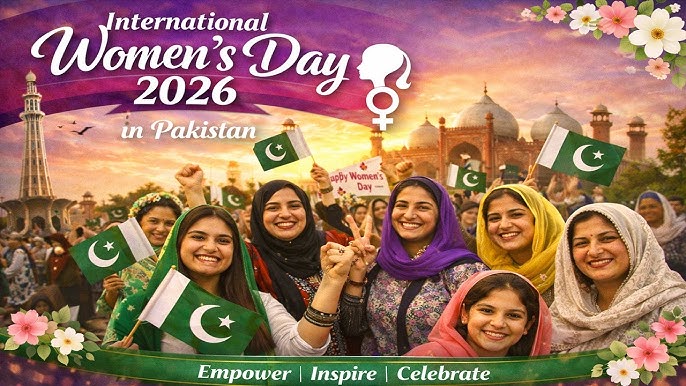
The resolution begins by acknowledging the vital role played by women and girls in Pakistan’s social, political, and economic development. Women in Pakistan have contributed in various fields including education, healthcare, public service, entrepreneurship, agriculture, and community leadership.
Despite these contributions, many women still face barriers that limit their access to opportunities and resources. The resolution therefore emphasizes the importance of creating an environment where women can fully participate in national life without discrimination or exclusion.
The House reaffirmed that empowering women is essential not only for social justice but also for the overall progress and stability of the country.
Progress in Women’s Political Representation
The Women’s Day resolution also recognizes the progress Pakistan has made in increasing women’s representation in political institutions. Constitutional provisions and legislative measures have enabled women to participate more actively in governance, particularly through reserved seats in legislatures.
Over the years, women parliamentarians have played an important role in shaping policies related to social protection, education, healthcare, and gender equality.
However, the National Assembly acknowledged that further efforts are needed to ensure that women’s voices are fully heard in decision-making processes at all levels of government.
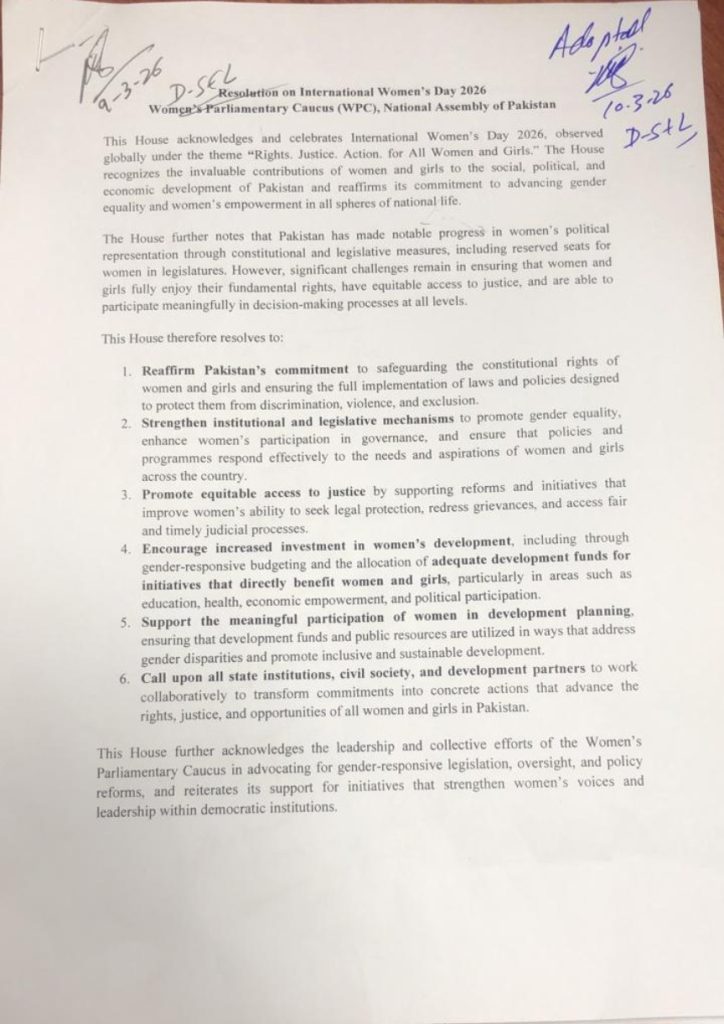

Key Commitments of the Resolution on Women’s Day
The resolution outlines several important commitments aimed at improving the status of women and girls in Pakistan. These commitments highlight the need for legal, institutional, and policy reforms to achieve meaningful progress to mark the Women’s Day in Pakistan in a meaningful way.
1. Reaffirming Constitutional Rights
The National Assembly reaffirmed Pakistan’s commitment to safeguarding the constitutional rights of women and girls. The resolution stresses that laws and policies designed to protect women must be implemented effectively to prevent discrimination, violence, and exclusion.
Ensuring that women can fully exercise their rights is fundamental to building a just and democratic society.
2. Strengthening Institutional and Legislative Frameworks
Another key point of the resolution is the need to strengthen institutional and legislative mechanisms that promote gender equality.
The House emphasized that government institutions must work together to develop policies that address the needs and aspirations of women and girls across the country. Strong oversight and effective governance can help ensure that gender equality remains a central part of national development strategies.
3. Promoting Access to Justice
Access to justice is an essential component of protecting women’s rights. The Women’s Day resolution calls for reforms and initiatives that improve women’s ability to seek legal protection and resolve grievances.
Many women face difficulties in navigating legal systems due to lack of awareness, financial constraints, or social pressures. By improving legal aid services and ensuring fair judicial processes, Pakistan can create a system where women can seek justice without fear or barriers.
4. Increasing Investment in Women’s Development
The resolution highlights the importance of greater investment in women’s development programs. Gender-responsive budgeting and targeted development funds can help address inequalities and improve the quality of life for women and girls.
Investment in sectors such as education, healthcare, economic empowerment, and political participation can create new opportunities and strengthen the role of women in society.
Education in particular is considered a powerful tool for empowerment. When girls receive quality education, they gain the knowledge and confidence needed to pursue careers, participate in civic life, and contribute to economic growth.
5. Encouraging Women’s Participation in Development Planning
The resolution stresses that women should not only benefit from development initiatives but also actively participate in planning and decision-making processes.
Ensuring women’s involvement in development planning helps create policies that are more inclusive and responsive to the needs of communities. When women have a voice in shaping development priorities, the outcomes are often more equitable and sustainable.
6. Collaboration Among Institutions and Stakeholders
Another important aspect of the Women’s Day resolution is the call for collective action. The National Assembly urged state institutions, civil society organizations, and development partners to work together to translate commitments into concrete actions.
Achieving gender equality requires coordinated efforts at multiple levels. Government agencies, community leaders, advocacy groups, and international partners all have a role to play in advancing women’s rights and opportunities.
Role of the Women’s Parliamentary Caucus
The resolution also acknowledges the leadership of the Women’s Parliamentary Caucus, which has been instrumental in promoting gender-responsive legislation and policy reforms within the parliament.
The caucus serves as an important platform for women parliamentarians from different political parties to collaborate on issues affecting women and girls.
Through advocacy, legislative initiatives, and policy discussions, the Women’s Parliamentary Caucus continues to strengthen women’s voices in Pakistan’s democratic institutions.
Turning Commitments into Action
The adoption of the International Women’s Day resolution reflects the National Assembly’s commitment to advancing gender equality in Pakistan. However, the true impact of the resolution will depend on how effectively its commitments are implemented.
Ensuring equal opportunities for women requires continuous efforts to improve education, expand economic opportunities, strengthen legal protections, and promote inclusive governance.
The theme “Rights, Justice, Action” highlights the need to move beyond declarations toward meaningful progress. Governments, institutions, and communities must work together to create a society where women and girls can live with dignity, security, and equal opportunities.
A Step Toward an Inclusive Future
By adopting the Women’s Day resolution, moved by the Secretary Women’s Parliamentary Caucus, Dr. Shahida Rehmani, the National Assembly of Pakistan has reaffirmed that women’s empowerment is central to the nation’s development agenda. The commitments outlined in the resolution provide a roadmap for strengthening gender equality and ensuring that women’s rights are protected.
International Women’s Day serves as a reminder that the progress of any society depends on the empowerment of its women. As Pakistan continues to move forward, sustained efforts will be needed to transform commitments into real improvements in the lives of women and girls across the country.
Dr. H. Zafar is a distinguished writer and analyst associated with Press Network of Pakistan as Associate Editor. With a strong academic background and years of research experience, she brings depth, clarity, and analytical rigor to her writings.