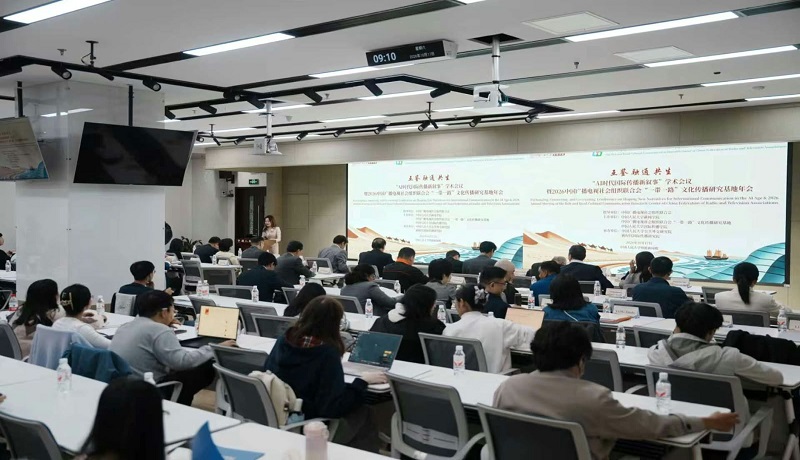
BEIJING (PNP) An international academic conference at Renmin University of China (RUC) has highlighted the role of media, artificial intelligence (AI) and cross-cultural dialogue in shaping global perceptions of China and the United States.
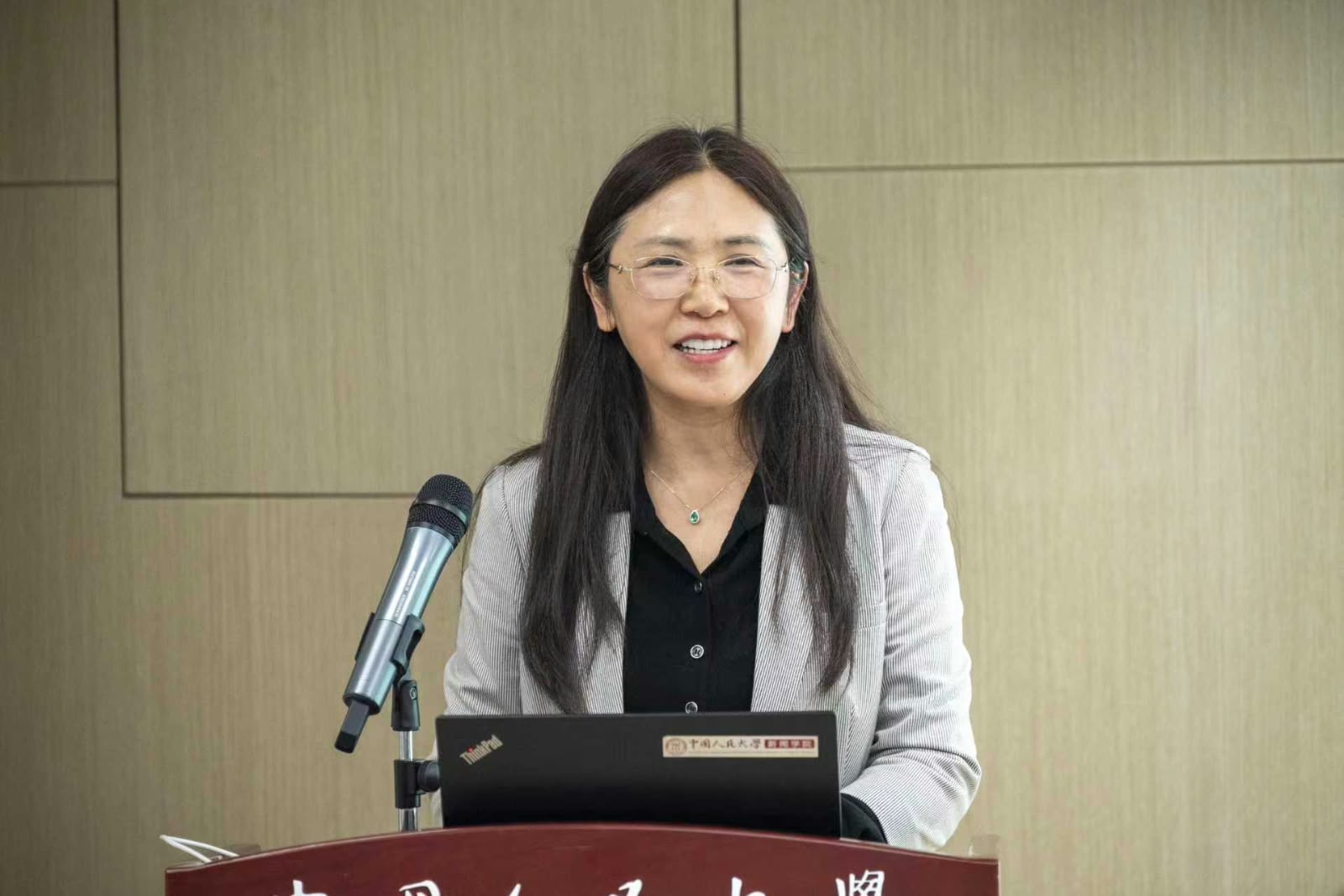
Held on October 17, the conference, titled “Exchanging, Connecting, and Co-creating: Shaping New Narratives for International Communication in the AI Age,” was combined with the 2026 Annual Meeting of the Belt and Road Cultural Communication Research Center of the China Federation of Radio and Television Associations. It was the research center’s first major international academic conference since its establishment.
Lars Willnat, a professor at RUC’s School of Journalism and Communication and the John Ben Snow Endowed Research Professor at Syracuse University’s S.I. Newhouse School of Public Communications, presented findings from a survey conducted in 30 countries. The report was co-authored with Zhang Di, director of RUC’s Department of International Journalism and Communication, and other researchers.
Titled “The Framed Presentation of Great-Power Images: International News, the Use of Artificial Intelligence, and Global Perceptions of China and the United States,” the report explores the factors influencing international public opinion toward the two countries.
The findings indicate that perceptions vary by country and issue, with geographical proximity and historical experience often providing stronger explanations than per-capita gross domestic product (GDP).
Media exposure was found to play an important role in shaping national images. In some contexts, entertainment media can influence public perceptions more strongly than international news outlets.
Exposure to China Global Television Network (CGTN) was associated with more favorable views of China, while exposure to Japan’s NHK was linked to more positive views of the United States and less favorable views of China.
The report found that domestic media use had a weaker association with favorable perceptions, while AI use currently had limited predictive power in explaining attitudes toward the two countries.
Willnat also highlighted a “two-way effect” between media consumption and public opinion. Media exposure can shape perceptions, but people who already hold favorable views of a country may also be more likely to seek out its media, suggesting that media influence and audience preferences interact.
The conference also saw the release of the Chinese and English editions of The Path of Friendship: Perspectives from Journalists Along the Belt and Road, authored by Zhong Xin, a professor at RUC’s School of Journalism and Communication and deputy director of the university’s Public Diplomacy Research Center and the Belt and Road Cultural Communication Research Center.
Zhong, who chaired the conference, described the book as the product of 12 years of engagement with journalists participating in the China International Press Communication Center (CIPCC). She said it also represents a collaborative educational achievement involving more than 70 students and documents the Belt and Road Initiative (BRI) through the experiences of journalists from 17 countries.
Since 2014, Zhong has led a journalist exchange programme jointly organized by CIPCC and RUC’s School of Journalism and Communication. The programme has expanded from an initial group of 10 African journalists to more than 100 journalists annually from Asia, Africa, Latin America, Central and Eastern Europe, and other regions.
To promote interaction between Chinese media students and international journalists, Zhong and undergraduate, master’s and doctoral students have interviewed participants in the exchange programme.
Their efforts produced the video interview series “Belt and Road Journalists on China” in 2018, marking the BRI’s fifth anniversary, followed by another series in 2023 to mark its 10th anniversary. These interviews contributed to the book, which was published in June 2026 after a three-year collaborative effort involving more than 70 students.
The publication presents firsthand accounts of the BRI’s impact and China’s engagement with partner countries. A Pakistani journalist described how China listened to Pakistan’s concerns and helped address its energy crisis. A Lao journalist highlighted the benefits and convenience provided by the China-Laos Railway.
A Nigerian journalist argued that whether a loan constitutes a “debt trap” depends on how the borrowed funds are used, describing debt-trap allegations as a narrative promoted by Western media.
Zhong stressed that public diplomacy begins with listening and urged readers to pay close attention to journalists who have experienced the BRI firsthand.
She said the exchange of perspectives and dialogue among conference participants were particularly meaningful, emphasizing the importance of mutual understanding in international communication.
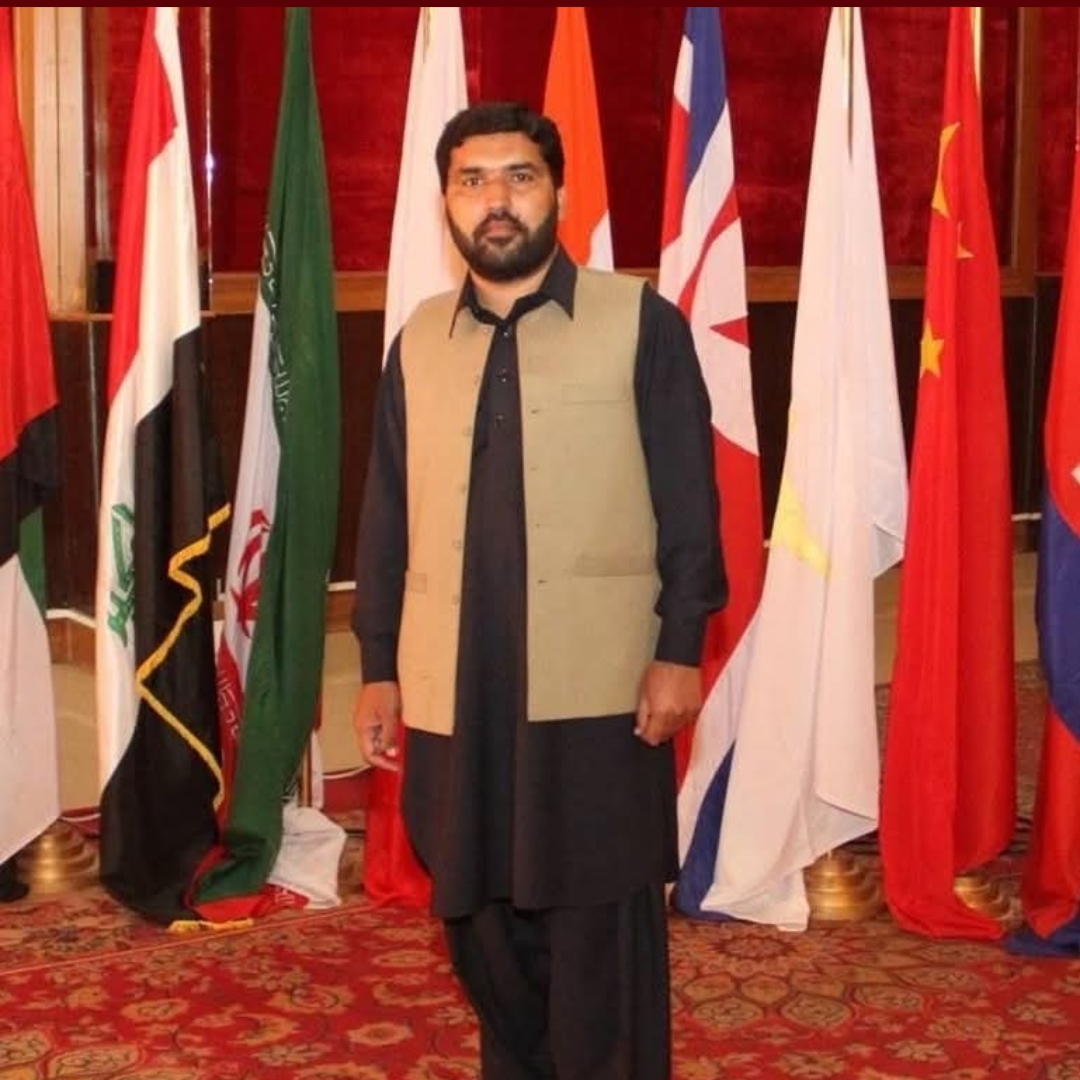
Naeem Akhtar plays a key role in shaping editorial content and maintaining the highest standards of accuracy and clarity. His dedication ensures that PNP’s coverage remains timely, reliable, and impactful for its readers worldwide.