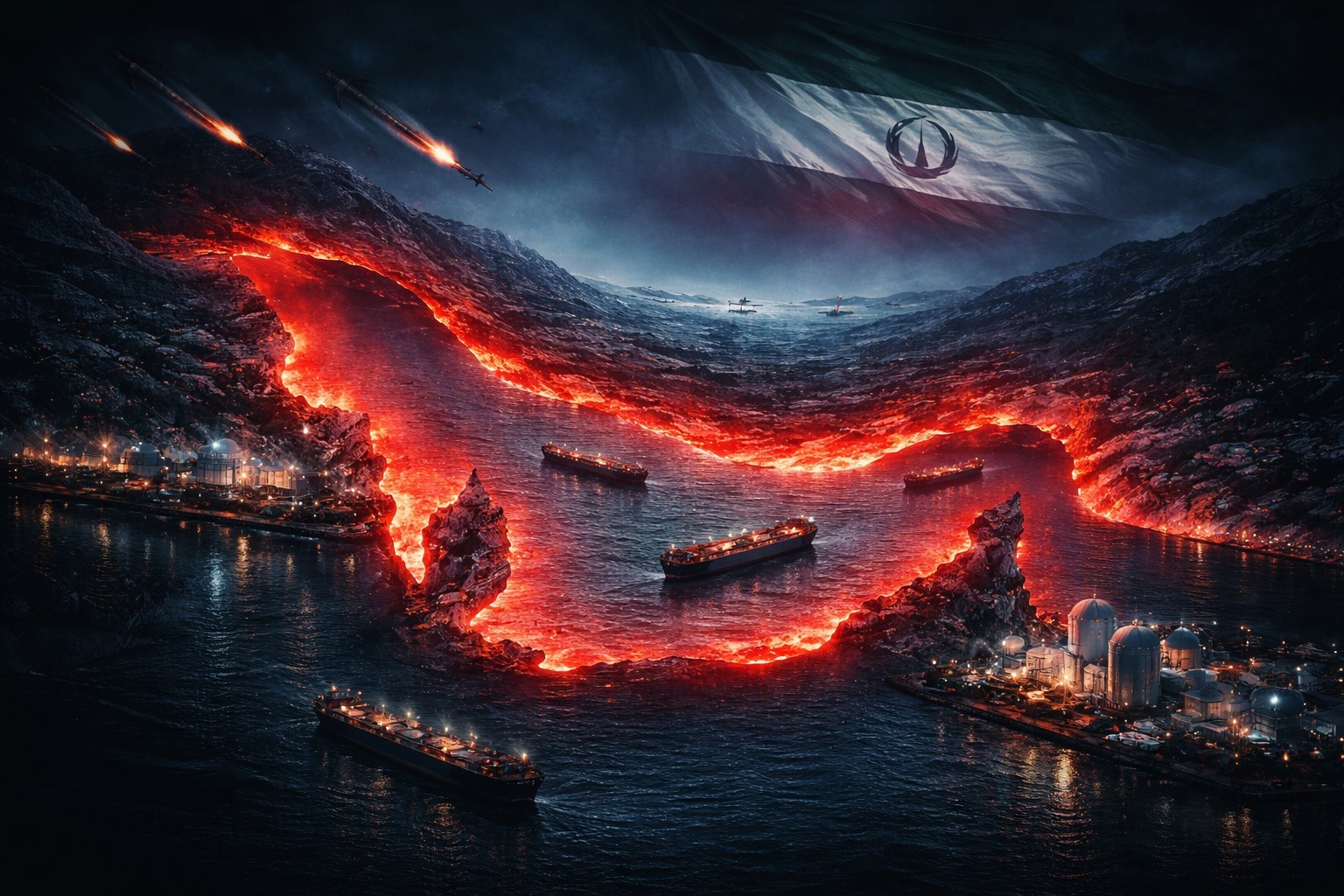
Iran Water Strategy has emerged as a defining feature of Tehran’s modern defense doctrine, combining control of critical waterways with the growing weaponization of water infrastructure. As tensions escalate in the Middle East in 2026, Iran is increasingly leveraging both geography and resource vulnerability—especially in the Strait of Hormuz—to strengthen its strategic position.
This evolving approach is not only military but also economic and psychological, impacting global energy markets and regional stability.
Understanding Iran Water Strategy
The Iran Water Strategy revolves around two key pillars:
-
Control of maritime chokepoints
-
Targeting water infrastructure as strategic leverage
Iran’s geographic position gives it dominance over the Strait of Hormuz, through which nearly 20% of the world’s oil supply passes . This alone makes water a central element of its defense planning.
Military Capabilities Supporting Iran Water Strategy
The effectiveness of the Iran Water Strategy is deeply rooted in the country’s asymmetric military capabilities. Unlike conventional naval powers, Iran has focused on developing tactics that maximize disruption with limited resources.
Key military elements include:
-
Fast attack boats capable of swarming larger vessels
-
Naval mines that can block or damage shipping lanes
-
Anti-ship missiles positioned along the coastline
-
Drones and surveillance systems for monitoring maritime activity
Iran’s naval doctrine emphasizes guerrilla-style maritime warfare, allowing it to exploit the narrow geography of the Strait of Hormuz. Even a limited deployment of mines or missile threats can create panic in global shipping markets.
This strategy reduces the need for direct confrontation with stronger navies while still achieving strategic objectives. It also enhances Iran’s ability to enforce selective access to the strait, a key pillar of the Iran Water Strategy.
Strategic Importance of Strait of Hormuz
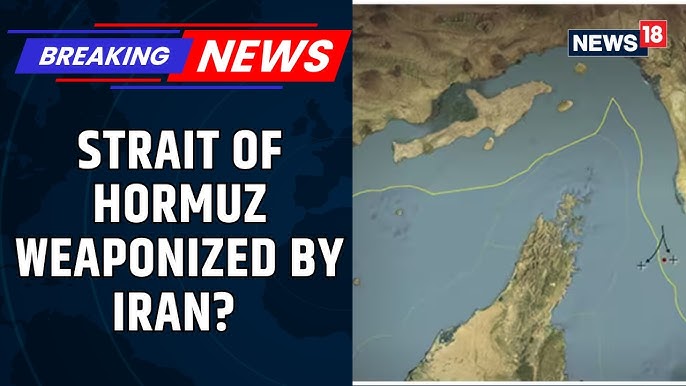
The Strait of Hormuz is one of the most critical waterways in the world. It connects the Persian Gulf to global markets and is vital for oil and gas exports.
Key facts:
-
Handles one-fifth of global oil shipments
-
Narrow maritime passage, easy to control militarily
-
Essential for Gulf economies and global energy security
Iran has repeatedly demonstrated its ability to disrupt this route by:
-
Blocking or restricting passage
-
Attacking vessels
-
Deploying naval mines
Recent developments indicate that Iran allows only “non-hostile” ships to pass, reinforcing its control over the strait .
Iran Water Strategy in Action
Iran’s approach is no longer hypothetical—it is actively being implemented.
1. Selective Blockade
Iran has enforced a partial closure of the Strait of Hormuz, allowing only approved vessels to transit .
2. Maritime Pressure
Reports indicate:
-
Ships being attacked or delayed
-
Thousands of vessels stranded
-
Insurance costs skyrocketing
3. Military Threats
Iran has warned it may completely shut down the strait if its infrastructure is attacked .
Weaponization of Water Infrastructure
Iran Water Strategy and Water Warfare
A critical dimension of the Iran Water Strategy is the targeting of water infrastructure.
Iran Water Strategy and Water Warfare
Iran has threatened Gulf countries with “irreversible destruction” of water facilities, especially desalination plants .
Why is this significant?
-
Gulf countries rely heavily on desalination
-
Some nations depend on it for 70–90% of water supply
-
Water reserves often last only a few days
This makes water infrastructure a high-impact, low-cost strategic target.
Why Water Is Becoming a Weapon
Globally, water is increasingly used as a tool of war. Experts highlight:
-
Infrastructure vulnerability
-
Civilian dependency
-
Economic disruption potential
Targeting water systems can:
-
Cripple cities within days
-
Halt industrial production
-
Trigger humanitarian crises
As highlighted in global analyses, water is shifting from a lifeline to a strategic weapon in modern conflicts.
Impact on Gulf Countries
| Country | Water Dependency on Desalination | Risk Level |
|---|---|---|
| Saudi Arabia | High (70%+) | Severe |
| UAE | Very High | Severe |
| Kuwait | Extremely High (90%) | Critical |
| Qatar | Very High | Severe |
| Bahrain | High | Severe |
The destruction of desalination plants could:
-
Shut down hospitals
-
Disrupt electricity production
-
Cause mass shortages within days
Environmental Risks of Iran Water Strategy
While the Iran Water Strategy is primarily geopolitical, it also carries serious environmental consequences that could affect the entire region.
Potential environmental risks include:
-
Oil spills from damaged tankers
-
Destruction of marine ecosystems in the Persian Gulf
-
Contamination of desalination intake systems
-
Long-term damage to fisheries and coastal livelihoods
The Persian Gulf is a relatively enclosed body of water, meaning pollution spreads quickly and takes longer to dissipate. Any military escalation involving oil tankers or infrastructure could lead to an ecological disaster.
Moreover, damage to desalination plants would not only disrupt water supply but also release chemicals and pollutants into the sea. This would further complicate recovery efforts and increase humanitarian risks.
Thus, the Iran Water Strategy is not just a security issue—it is also an environmental threat with potentially irreversible consequences.
Economic and Global Consequences
The Iran Water Strategy has far-reaching implications:
1. Energy Markets
Oil prices have surged due to disruptions in the Strait of Hormuz .
2. Shipping Crisis
-
War risk insurance has increased dramatically
-
Shipping companies are avoiding the region
3. Global Inflation
Energy disruptions are driving inflation worldwide.
Geopolitical Significance
Iran’s strategy sends a clear message:
-
It can disrupt global trade
-
It can target critical civilian infrastructure
-
It holds leverage over regional adversaries
This has led some officials to describe the weaponization of the Strait of Hormuz as “economic warfare” .
Future of Iran Water Strategy
Looking ahead, Iran is likely to:
-
Maintain control over Hormuz transit
-
Expand use of asymmetric tactics
-
Continue leveraging water infrastructure threats
The development of a “vetting system” for ships indicates a shift toward controlled access rather than total blockade .
Global Response to Iran Water Strategy
The international community has been closely monitoring the developments surrounding the Iran Water Strategy, particularly due to its implications for global trade and security.
United States and Western Allies
Western powers have increased naval patrols in the region to ensure freedom of navigation. There is also growing discussion about forming multinational coalitions to protect shipping lanes.
Gulf Cooperation Council (GCC) Countries
Countries like Saudi Arabia and the UAE are:
-
Investing in alternative water sources
-
Expanding strategic water reserves
-
Strengthening infrastructure protection systems
China and Asian Economies
As major importers of Gulf oil, Asian countries are particularly vulnerable. China and India are exploring:
-
Diversified energy routes
-
Strategic oil reserves
-
Diplomatic engagement with Iran
International Organizations
Global bodies are raising concerns about:
-
The legality of targeting civilian infrastructure
-
Humanitarian consequences of water disruption
-
Need for international regulations on water warfare
Conclusion
Iran Water Strategy represents a new phase in modern warfare—where geography, resources, and infrastructure intersect. By combining control of the Strait of Hormuz with threats to water systems, Iran has created a powerful strategic tool that affects not just the Middle East but the entire world.
With such additional dimensions, the Iran Water Strategy becomes even more complex and far-reaching. It is no longer limited to military tactics in the Strait of Hormuz but extends to environmental risks and global geopolitical responses.
As nations adapt to this evolving strategy, one thing is clear: water, once considered a basic necessity, is now at the center of modern strategic competition. In a region where water is scarce and energy is abundant, the fusion of these elements into a single strategy marks a dangerous and transformative shift in global conflict dynamics.
Dr. Mohammad Arif is a distinguished writer, researcher, and analyst specializing in global water issues.