
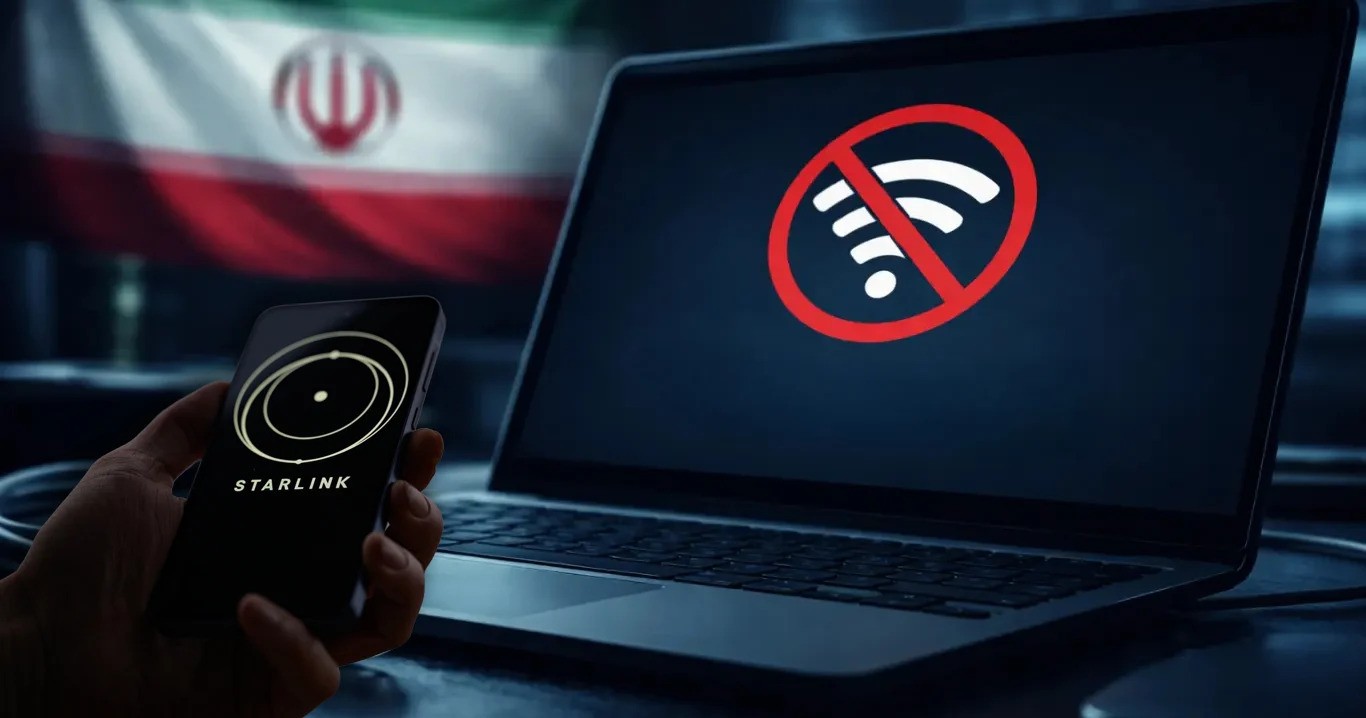
Iran has taken an unprecedented step in modern digital control — it is actively jamming and restricting access to Starlink satellite internet, a technology that had emerged as one of the only avenues for Iranians to communicate with the outside world after a nationwide internet shutdown.
From late December 2025 into January 2026, as millions of Iranians marched in the streets against economic hardship and political suppression, authorities cut off nearly all traditional internet and communication networks. This digital blackout was so total that mobile data, landlines, and domestic broadband were almost entirely disabled.
However, Starlink — the constellation of low-Earth-orbit satellites operated by Elon Musk’s SpaceX — offered a digital lifeline. As traditional infrastructure went dark, satellite internet began to connect Iranians in protest hotspots with the wider world.
What Starlink Is and Why It Matters
Starlink is designed to provide high-speed internet independent of local ground infrastructure. Instead of relying on fiber-optic cables, cell towers, or national telecom systems, it links user terminals directly to satellites orbiting about 550 kilometers above Earth. Because of this architecture, many hoped it would be immune to national-level censorship and shutdowns.
In practice, this meant that wherever a Starlink dish was installed and powered, people could still send and receive internet traffic even when local networks were cut. Reports suggest that more than tens of thousands of Starlink units have been smuggled into Iran over recent years and were in use during earlier protests as well.
In the current crisis, activists have used these devices to share real-time footage, organize demonstrations, and send updates abroad — vital tools in a climate where state media tightly controls information.
Iran’s Jamming Strategy: Beyond a Simple Block
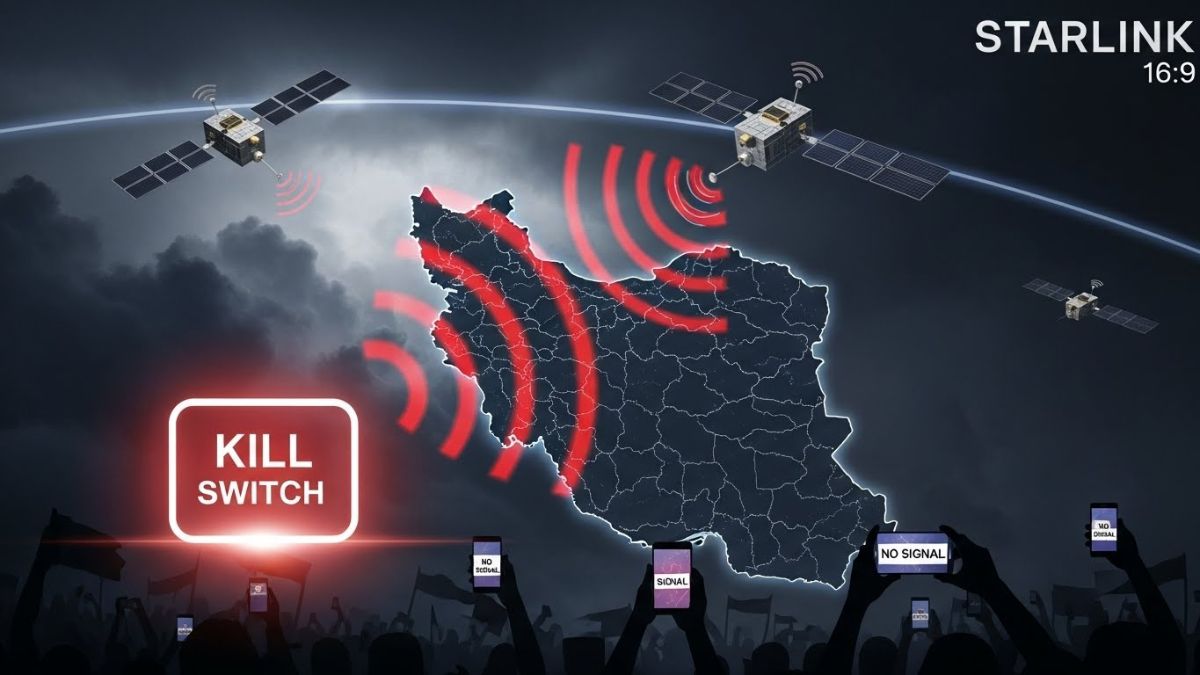
Faced with this challenge, Iranian authorities did not merely declare the service illegal; they moved to actively jam Starlink signals. According to the France24 report and technical analysis, the government has been deploying radio-frequency-based jamming equipment in key urban areas to interfere with Starlink’s ability to communicate reliably with satellites.
Starlink terminals normally rely on GPS signals to determine their location and orient antennas toward satellites. By disrupting GPS — a classic method of jamming — authorities can destabilize the connection link and significantly reduce data reliability.
Experts told France24 that one newer software mode in Starlink can allow terminals to estimate satellite positions without GPS and keep working, although in a less mobile and more constrained way. This allows some continuity of service even when GPS signals are jammed, but it is not a perfect solution.
Confiscation & Enforcement
Iran has also reportedly taken a more hands-on approach: authorities have been searching for and seizing Starlink dishes installed on rooftops, particularly in neighborhoods where protests are active. These seizures are often portrayed by state media as actions against “espionage equipment.”
The combined strategy — jamming, legal penalties, and hardware confiscation — points to a broader goal: to eliminate all independent channels of communication that bypass state control. It marks a significant escalation from past internet blackouts.
Starlink’s Countermeasures and Adaptations
Starlink and its supporters have not remained passive. In response to Iran’s digital repression, SpaceX reportedly made the service available free to users inside Iran, eliminating subscription fees temporarily in an attempt to widen access. This followed negotiations and coordination aimed at keeping connectivity possible despite government attempts to block it.
This free provision appears to have been rolled out quickly and quietly in early January 2026, after Starlink firmware updates and backend adjustments were made to help devices better cope with interference. Usage data suggests that the effectiveness of jamming fluctuates, and connectivity remains spotty but still possible in many areas.
How People Are Trying to Bypass the Blockade
In addition to Starlink’s built-in adaptations, Iranian users and technology activists have employed several grassroots tactics to keep access alive:
-
Smuggling and camouflage: Many Starlink dishes entered Iran covertly before the current crisis, often hidden or disguised to avoid detection. As authorities hunt for them, users experiment with physical concealment and relocated setups to escape confiscation.
-
Alternative power and positioning: Because Starlink depends on clear sky views, some users place the terminals in unconventional locations or use creative power solutions to keep them running during outages. These ad-hoc fixes have helped maintain connections where possible.
-
Technical workarounds: The GPS-independent mode and updated firmware allow some terminals to establish satellite links even under interference — a sort of “cat-and-mouse” workaround that evolves as jamming technology adapts.
Despite these efforts, access remains uneven and risky. Possessing satellite internet equipment in Iran can carry legal penalties, and the government’s surveillance capabilities make covert use dangerous.
International Implications

According to western media, Iran’s attempt to jam a global satellite service represents a new frontier in digital repression. It signals that authoritarian governments are investing in and deploying sophisticated electronic controls that extend beyond traditional internet censorship to include radio and satellite system interference. This has broader implications for global digital rights and the future of unfettered connectivity.
In response, some European leaders have discussed opportunities to provide alternative satellite terminals — such as those from Eutelsat — to help circumvent internet blackouts, highlighting growing international concern over digital freedom in Iran.
Conclusion
The clash between Iran’s government and satellite internet services like Starlink underscores an emerging battleground in the digital age. As authoritarian states refine methods to block and jam even satellite communication, activists and tech companies respond with adaptive technologies and countermeasures.
From Tehran’s standpoint, unregulated satellite internet services operating beyond state oversight represent not merely a communications tool, but a strategic vulnerability. When foreign-operated digital platforms are used for organizing unrest, spreading disinformation, or conducting psychological operations, governments view such networks as part of a broader information warfare strategy rather than neutral technology. In this context, Iran’s efforts to jam Starlink and regulate satellite communications can be seen as a defensive response to what it perceives as external interference in its internal affairs.
Moreover, Iran’s technical ability to disrupt a global satellite internet service underscores its growing capacity in electronic warfare and cyber defense. This development sends a clear message to adversaries that modern states are no longer passive recipients of foreign digital influence, but active players capable of asserting control over their information environment.
Ultimately, the situation in Iran highlights a broader global trend: governments worldwide are rethinking how to balance connectivity with security. As technology increasingly shapes political and social outcomes, states will continue to prioritize stability and control over unrestricted digital access. Whether welcomed or criticized internationally, Iran’s response reflects a reality that many nations may soon confront—the need to defend not only physical borders, but digital ones as well.
Czechangez Khan Jadoon is a senior reporter based in Islamabad. He also heads Patriotic Journalists of Pakistan (PJP) media forum.