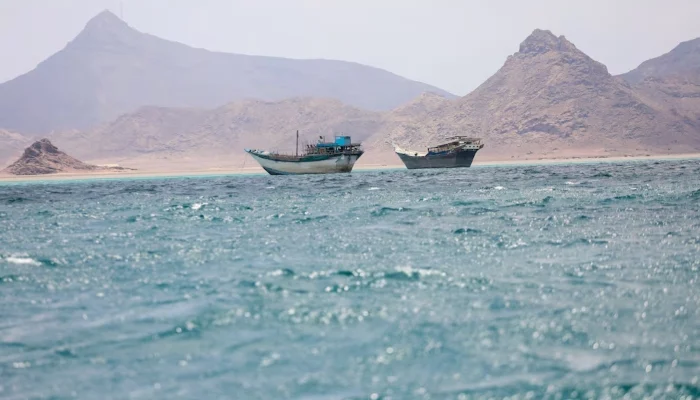
ISLAMABAD: (PNP) Pakistan has issued a strong warning over the security of an oil tanker stranded near Saudi Arabia’s East-West pipeline, saying any attack on the vessel would be treated as an “act of war” as Islamabad considers ways to protect its fuel supplies amid growing disruption in regional energy routes.
Petroleum Minister Ali Pervaiz Malik said the tanker would eventually have to be moved, although Saudi authorities had asked Pakistan to keep the vessel on standby for the time being. He made the remarks while speaking to a private television channel, according to Bloomberg.
The warning comes as conflict around the Red Sea and the Arabian Peninsula continues to disrupt important energy and shipping routes. Pakistan is also facing increasing pressure over diesel availability, with Malik warning that existing stocks cover only the current month and the following month if crude supplies are interrupted.
Pakistan oil tanker warning amid Saudi pipeline disruption
The stranded tanker has become a key concern for Islamabad because of the disruption affecting Saudi Arabia’s East-West pipeline, a major route designed to transport crude from the kingdom’s eastern oil-producing areas to the Red Sea while avoiding the Strait of Hormuz.
The pipeline has faced disruption following attacks in the region and could remain out of service for an extended period. Reuters reported this week that the damage has heightened concerns over Saudi export capacity and global oil supplies.
Malik said Pakistan was examining several options for dealing with the tanker.
One possibility is to keep the vessel near the pipeline until operations are restored. Another option would be to sail the tanker back toward Pakistan through routes involving Oman or the United Arab Emirates.
Pakistan could also seek alternative crude supplies from other producers, including Libya, according to the petroleum minister.
“We will have to move it one way or another,” Malik said, while noting that Saudi authorities had requested that the vessel remain on standby for now.
The security warning reflects the wider risks facing commercial shipping in waters surrounding the Arabian Peninsula, where attacks and military operations have increased in recent weeks.
Diesel reserves emerge as immediate concern
The more immediate concern for Pakistan is the potential effect of prolonged disruption on refined fuel availability.
Malik warned that a reduction in crude supplies could result in a diesel shortage because Pakistan’s available stocks are sufficient only for the current and following month.
Diesel is particularly important to Pakistan’s economy because it is widely used by the transport, agricultural, industrial and logistics sectors. Any prolonged supply disruption could therefore affect freight movement, farm operations and the cost of transporting goods.
The situation is unfolding against a backdrop of elevated international energy prices and concerns over supply security. Reuters reported on September 16 that Saudi Arabia was increasing crude exports through ship-to-ship transfers near Oman’s Sohar port to mitigate the impact of suspended loadings from the Red Sea port of Yanbu.
The development illustrates the growing importance of alternative routes as traditional oil-export channels face security threats.
For Pakistan, maintaining reliable crude and refined-product supplies is particularly important because the country remains dependent on imported energy to meet a substantial share of domestic requirements.
Red Sea and Bab el-Mandeb risks widen
The tanker issue is linked to a broader deterioration in security around the Red Sea and Bab el-Mandeb, a strategic maritime chokepoint connecting the Red Sea with the Gulf of Aden and the wider Indian Ocean.
Houthi forces in Yemen have intensified military activity in the region, while Saudi Arabia has carried out strikes against Houthi positions. Reuters reported that the escalation has included drone and missile attacks and has raised concerns about shipping and energy infrastructure.
The disruption has implications well beyond the Middle East because the Red Sea and Bab el-Mandeb are important routes for international trade and energy shipments.
Recent attacks on Saudi infrastructure have also raised concerns about the vulnerability of alternative routes designed to reduce dependence on the Strait of Hormuz. Reuters reported that Saudi Arabia’s East-West pipeline had previously provided a way to bypass Hormuz and had been moving millions of barrels of oil a day before the latest disruption.
This means that disruptions affecting multiple routes could place additional pressure on global crude and refined-product markets.
Pakistan weighs energy security options
Pakistan’s options are becoming more closely linked to developments in the wider Gulf and Red Sea region.
The government could seek alternative crude supplies and shipping routes if the Saudi pipeline disruption continues. However, alternative arrangements may involve longer voyages, additional freight costs and increased security risks.
Saudi Arabia has already begun using alternative methods to maintain exports. Reuters reported that additional Saudi crude was being moved through ship-to-ship transfers near Oman as the kingdom sought to offset disruptions at Yanbu.
For Islamabad, securing adequate diesel supplies will remain an important consideration as the regional conflict continues.
The government will also have to balance commercial shipping requirements with the security risks surrounding the tanker. The petroleum minister’s warning indicates that any attempt to move the vessel would need to take into account the possibility of further attacks.
Pakistan reaffirms support for Saudi Arabia
The energy crisis is also unfolding alongside Pakistan’s expanding security relationship with Saudi Arabia and Türkiye.
Prime Minister Shehbaz Sharif has reiterated Pakistan’s support for Saudi Arabia and condemned the reported drone attack targeting Makkah, according to a statement from his office.
Pakistan, Saudi Arabia and Türkiye signed the Makkah Joint Defence Agreement on August 7, and the framework has subsequently been institutionalised as the Makkah Defence Alliance. The three countries held the alliance’s first Strategic Political and Defence Committee meeting in Istanbul on August 31.
Pakistan is set to provide the alliance’s first secretary general for an initial three-year term, while its permanent secretariat is to be established in Riyadh.
The latest security developments therefore come at a time when Pakistan and Saudi Arabia are deepening institutional cooperation in defence and regional security.
The Director General of Inter-Services Public Relations, Lieutenant General Ahmed Sharif Chaudhry, said on September 16 that the Makkah Defence Alliance was intended for collective deterrence and defence and had no “regional aspirations.”
Global energy markets remain under pressure
The disruption to Saudi energy infrastructure has added another layer of uncertainty to international oil markets already affected by conflict and shipping risks.
The East-West pipeline was intended to provide Saudi Arabia with an alternative export route when maritime traffic through the Strait of Hormuz becomes difficult. Its disruption demonstrates the difficulty of completely insulating global energy supplies from regional security developments.
For Pakistan, the immediate priority is ensuring that crude and diesel supplies remain available while the government evaluates the safest route for the stranded tanker.
With the petroleum minister warning that current diesel stocks cover only the present and following month, the duration of the regional disruption could become a significant factor for Pakistan’s energy security and wider economic activity.
Conclusion
Pakistan’s warning over the stranded oil tanker highlights the growing security risks surrounding energy shipments in the Red Sea and Arabian Peninsula. Islamabad is considering several options, including waiting for Saudi pipeline operations to resume, returning the tanker through an alternative route or securing crude from other suppliers.
The government’s immediate challenge will be to maintain adequate fuel supplies while managing the security risks created by the wider regional conflict. Developments around the Saudi East-West pipeline, Bab el-Mandeb and alternative export routes are likely to remain important factors for Pakistan’s energy planning in the weeks ahead.

Naeem Akhtar plays a key role in shaping editorial content and maintaining the highest standards of accuracy and clarity. His dedication ensures that PNP’s coverage remains timely, reliable, and impactful for its readers worldwide.