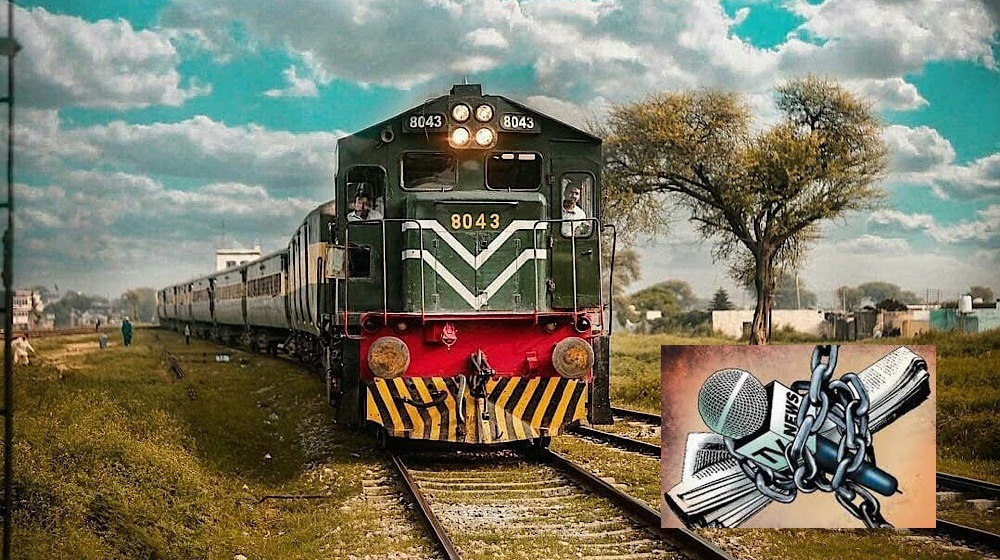
The recent decision by Pakistan Railways to drastically revise its concession policy has triggered serious concerns across the media landscape. By reducing the concession for journalists from 80% to 50% and, more critically, limiting its usage to just 10 single journeys per year, the move is being widely viewed as an unnecessary and disproportionate restriction. More alarmingly, it is increasingly being interpreted as an indirect attack on press freedom.
At a time when the role of journalism is vital in ensuring transparency, accountability, and public awareness, imposing such constraints on the mobility of journalists raises fundamental questions about priorities and governance.
Journalist Travel Restrictions: A Direct Blow to Press Freedom
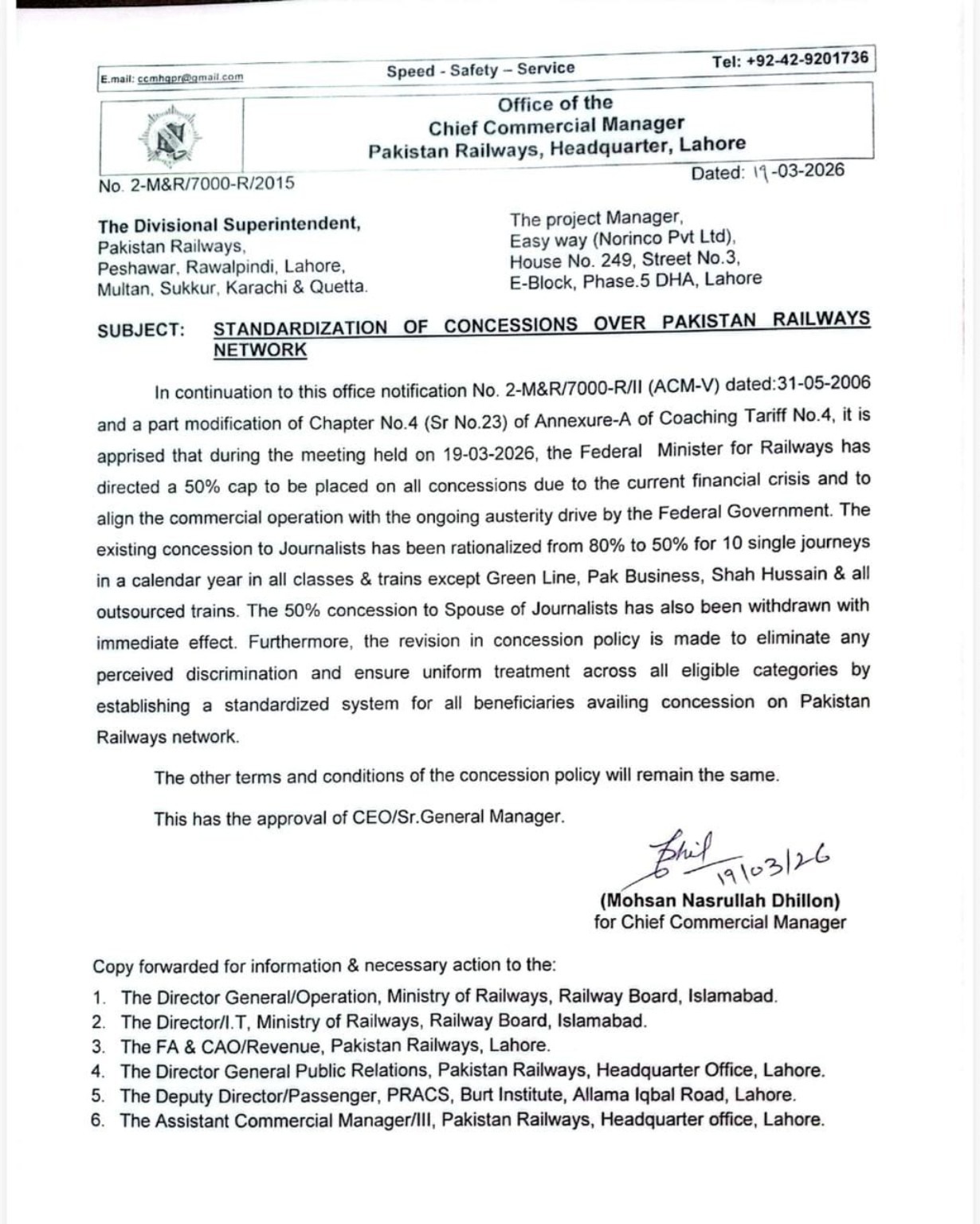
Journalism is not a desk-bound profession. It requires constant movement—covering breaking news, political developments, natural disasters, court proceedings, and public events across cities and provinces. By limiting concessional travel to only 10 trips annually, Pakistan Railways has effectively placed a cap on how frequently journalists can perform their duties affordably.
This restriction is not just administrative—it strikes at the core of press functionality. Limiting travel opportunities means limiting access to information, voices, and ground realities. In effect, such a policy risks shrinking the operational space of journalists, which can have a chilling effect on independent reporting.
Freedom of the press is not merely about the right to publish—it also depends on the ability to gather news. Any measure that restricts that ability must be carefully scrutinized.
A Policy That Ignores Ground Realities
The decision appears disconnected from the practical realities of journalism in Pakistan. Many reporters, especially those working for regional outlets or freelance platforms, rely heavily on concessional travel to sustain their work. With limited salaries and increasing costs of living, expecting journalists to absorb higher travel expenses is unrealistic.
Moreover, the cap of 10 journeys per year is arbitrary and insufficient. A journalist covering national affairs could easily exceed this limit within a single month. By setting such a low threshold, the policy fails to recognize the dynamic and demanding nature of the profession.
Critical Analysis of the New Policy
| Policy Element | Previous System | New System (2026) | Critical Impact |
|---|---|---|---|
| Discount Rate | Up to 80% | 50% | Increased financial burden |
| Annual Travel Limit | Flexible | 10 journeys/year | Severe mobility restriction |
| Spouse Concession | 50% | Abolished | Additional hardship |
| Access to Key Trains | Available | Restricted | Reduced efficiency |
The data clearly shows that the policy is not merely a revision—it is a substantial rollback of support for journalists.
Selective Austerity or Misplaced Priorities?
Pakistan Railways has justified the move under the umbrella of financial austerity and uniformity. However, critics argue that such measures appear selective and misdirected. Instead of addressing deeper structural inefficiencies, revenue leakages, or administrative costs, the burden is being shifted onto journalists—a group that already operates under financial and professional pressures.
Austerity, when applied without nuance, can lead to unintended consequences. In this case, it risks undermining a profession that plays a crucial role in democratic accountability.
Withdrawal of Spouse Concession: An Unnecessary Step
The complete withdrawal of spouse concessions further compounds the issue. While it may seem minor from a financial perspective, it reflects a broader pattern of insensitivity in policymaking. Journalists often travel with family due to the nature of assignments or personal constraints. Removing this facility without consultation or phased implementation adds to their difficulties.
Implications for Media and Society
The implications of this policy extend beyond individual journalists. A restricted press ultimately means a less informed public. When journalists cannot travel freely, stories go uncovered, voices remain unheard, and critical issues may never reach the public domain.
Media is often described as the fourth pillar of the state, and any action that weakens it—directly or indirectly—must be reconsidered.
A Call for Immediate Revision
There is a growing consensus within media circles that this decision must be revisited urgently. A more balanced approach could include:
-
Increasing the annual travel limit to a realistic number
-
Retaining higher concession rates for journalists
-
Restoring spouse concessions, at least partially
-
Engaging with journalist bodies before implementing such policies
Constructive dialogue between policymakers and media representatives is essential to arrive at a fair and sustainable solution.
Conclusion
The policy introduced by Pakistan Railways is more than just a financial adjustment—it has far-reaching implications for press freedom and the functioning of journalism in Pakistan. By limiting concessional travel to 10 journeys per year, the organization risks curbing the very mobility that journalism depends upon.
Such a move, whether intentional or not, sends a troubling signal about the value placed on independent reporting. It is imperative that Pakistan Railways reconsiders this harsh decision and adopts a more thoughtful, inclusive, and balanced approach.
The strength of a society lies in the freedom of its press—and that freedom must be facilitated, not restricted.
Mohammad Iqbal Harper is a senior journalist based in Lahore. He is also President of Pakistan Sports Federation.