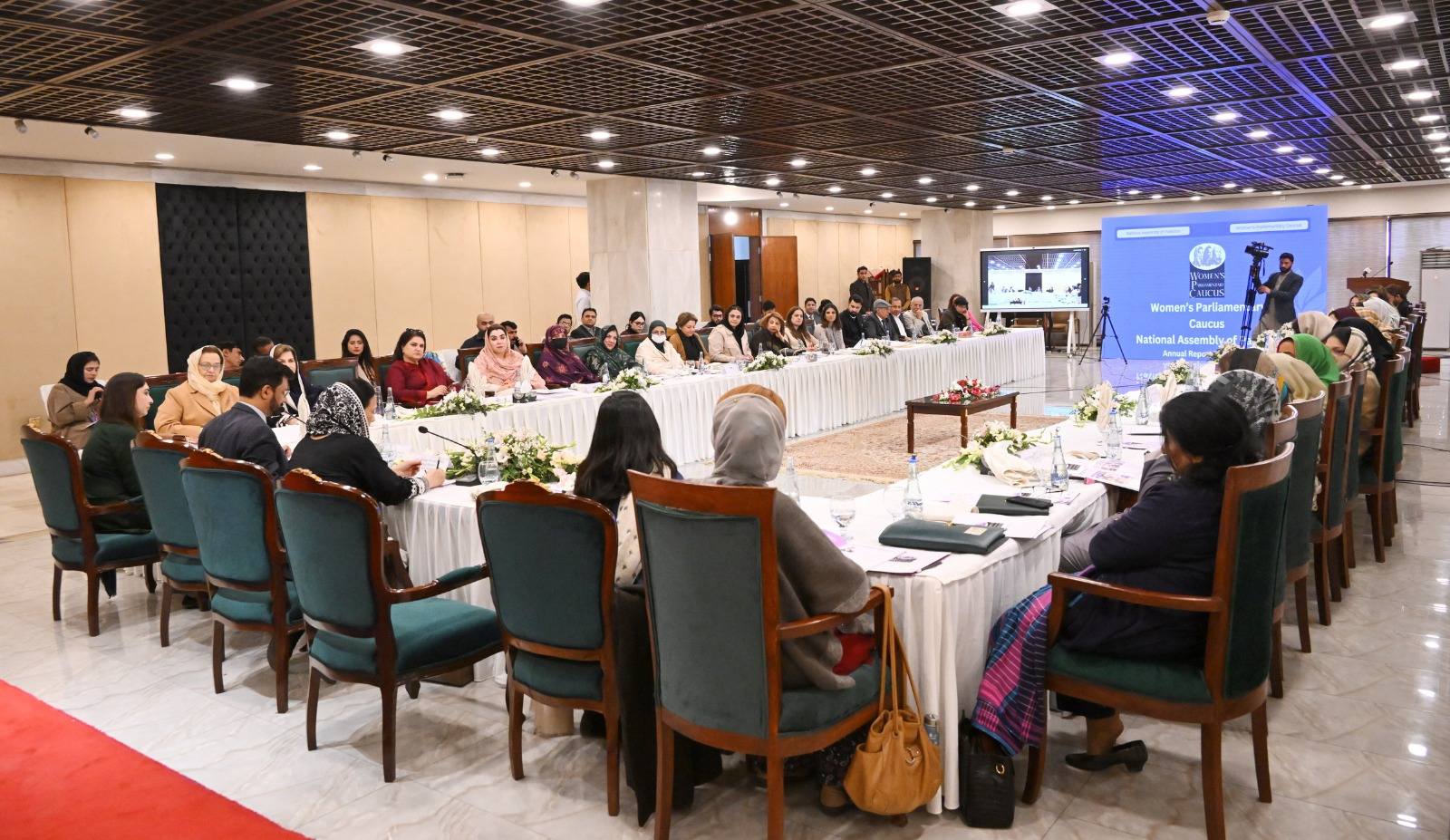
Undoubtedly, the Women Parliamentary Caucus (WPC) of Pakistan has, over the years, emerged as one of the most consequential yet understated institutional mechanisms within the parliamentary system. The Annual Report 2024–25 provides concrete evidence that the WPC is no longer a symbolic forum but a policy-influencing, capacity-building, and nationally networked institution contributing meaningfully to democratic governance and gender equality. A critical analysis grounded in documented achievements demonstrates that the WPC’s impact is both structural and strategic.
Institutional Maturity and Strategic Direction
Established in 2008 through a National Assembly resolution, the WPC has steadily evolved into a cross-party institutional platform uniting women parliamentarians from both treasury and opposition benches. According to the Annual Report 2024–25, the Caucus operated under a clear strategic vision led by its Working Council, convening nine General Assembly meetings and multiple Working Council sessions during the year. These meetings addressed substantive policy areas such as cybercrime against women, inheritance rights, population growth, and gender-based violence, underscoring the Caucus’s role as a forum for informed parliamentary discourse rather than rhetorical advocacy.
The leadership of the WPC, particularly under Secretary Dr. Shahida Rehmani (MNA), reflects a shift toward institutional consolidation, strategic planning, and measurable outcomes—an essential marker of democratic maturity.
National Women’s Convention 2025: A Landmark Achievement
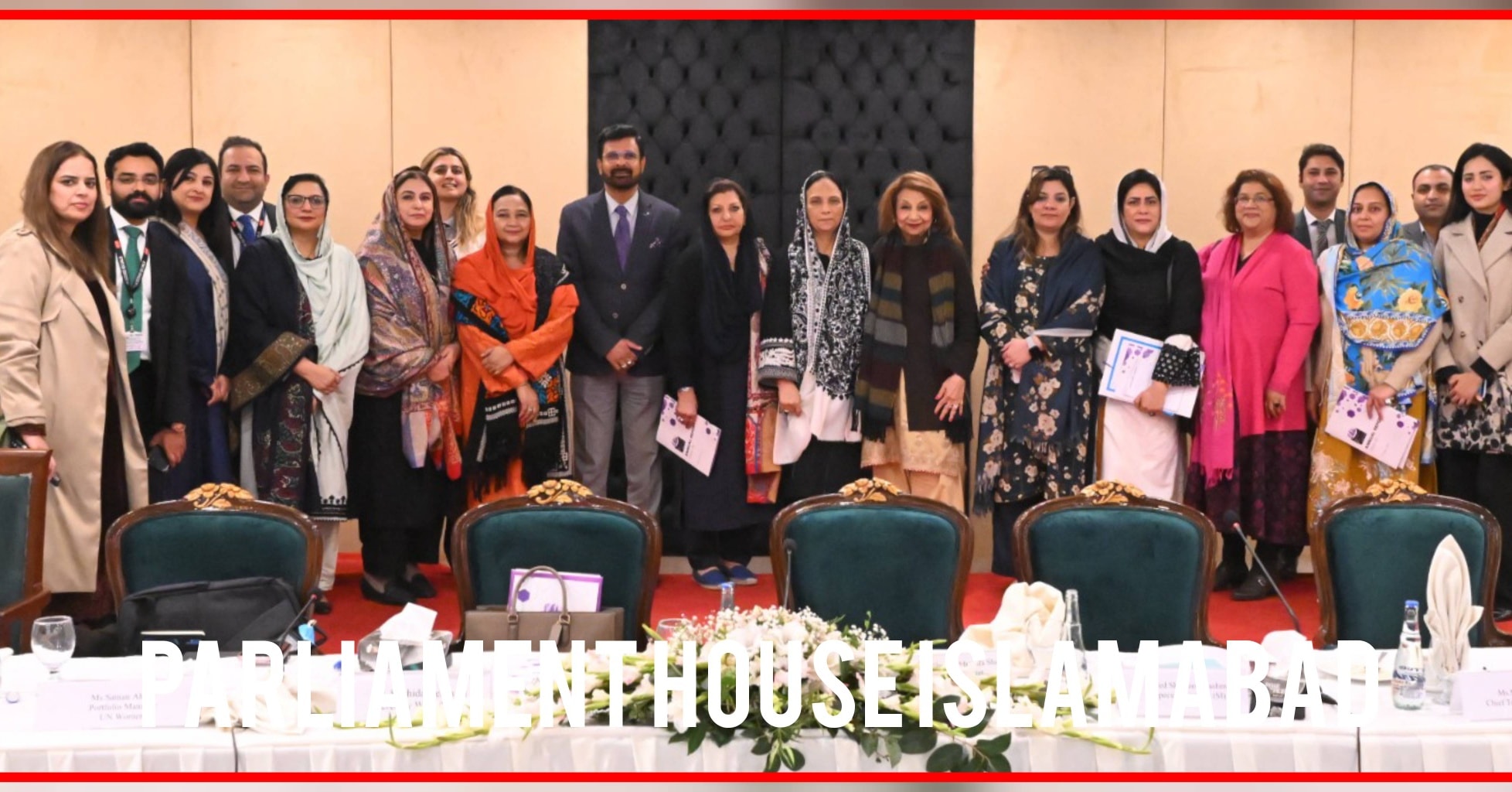
Among the most significant achievements highlighted in the Annual Report is the National Women’s Convention 2025, held on 12–13 February 2025 in Islamabad. This historic gathering brought together federal and provincial WPCs from Punjab, Sindh, Balochistan, Khyber Pakhtunkhwa, and Gilgit-Baltistan.
The Convention culminated in the development of a Joint Action Plan 2025, focusing on:
-
Gender-sensitive legislative reforms
-
Women’s economic empowerment
-
Political participation
-
Combating gender-based violence
-
Institutional strengthening of WPCs
From a critical perspective, this achievement marks a transition from isolated advocacy to federated policy coordination, aligning national and provincial legislative priorities for the first time in WPC history.
Major Achievements of Women Parliamentary Caucus (WPC) – 2025
| Sr. No. | Achievement | Description / Impact |
|---|---|---|
| 1 | National Women’s Convention 2025 | Held on 12–13 February 2025 in Islamabad, bringing together federal and provincial Women Parliamentary Caucuses for the first time to align legislative priorities and collective action. |
| 2 | Joint Action Plan 2025 | Development and adoption of a unified Joint Action Plan focusing on women’s political participation, economic empowerment, gender-based violence, and institutional strengthening. |
| 3 | Institutional Strengthening of Provincial WPCs | Capacity-building and learning exchanges conducted with Sindh, Balochistan, and Punjab Assemblies, enhancing coordination between national and provincial caucuses. |
| 4 | Launch of Punjab Women Parliamentary Caucus | Formal launch and facilitation of the Punjab WPC in January 2025, expanding institutional representation of women legislators at the provincial level. |
| 5 | Gender-Responsive Budgeting Advocacy | High-level policy roundtables analyzing the federal budget through a gender lens, producing recommendations to improve allocations for health, education, and women’s economic inclusion. |
| 6 | 16 Days of Activism Against Gender-Based Violence | Parliamentary roundtables and advocacy sessions evaluating existing laws on GBV and highlighting gaps in implementation and survivor protection. |
| 7 | International Commonwealth Women Parliamentarians Workshop | Pakistan hosted its first international workshop on gender-sensitive legislation, strengthening parliamentary diplomacy and global policy learning. |
| 8 | International Parliamentary Engagements | Participation in global forums, including representation at international women parliamentarians’ events, enhancing Pakistan’s democratic and gender equality profile. |
| 9 | Policy Dialogues on Poverty and Women | Thematic session titled “Poverty Has a Woman’s Face,” linking economic inequality with structural violence and social exclusion of women. |
| 10 | Public Outreach and Social Engagement | Awareness visits and engagements with healthcare institutions and entrepreneurship platforms to connect parliamentary advocacy with grassroots realities. |
Strengthening Provincial WPCs: From Concept to Reality
A major institutional breakthrough documented in 2024–25 is the systematic strengthening and institutionalization of Provincial Women Parliamentary Caucuses. The National WPC conducted landmark learning exchanges and capacity-building initiatives in:
-
Balochistan Assembly (30–31 October 2024)
-
Sindh Assembly (15 November 2024)
-
Launch of Punjab Women Parliamentary Caucus (22 January 2025)
These initiatives, carried out in collaboration with UN Women, focused on peer learning, Rules of Business, post-legislative scrutiny, and institutional autonomy. This effort directly addresses a long-standing critique that women’s parliamentary engagement remains centralized and disconnected from provincial realities. The 2024–25 initiatives demonstrate that the WPC has moved decisively toward horizontal institutional integration.
Gender-Responsive Budgeting: Policy Influence Beyond Legislation
One of the most policy-relevant achievements of the year was the WPC’s leadership on Gender-Responsive Budgeting (GRB). The Caucus organized two high-level roundtables (1 June 2024 and 12 June 2025) analyzing the federal budget through a gender lens.
These sessions produced actionable recommendations addressing systemic inequalities in:
-
Education
-
Healthcare
-
Employment and economic opportunities
Critically, the WPC’s engagement with budgetary processes reflects an advanced understanding of governance—recognizing that resource allocation is as important as legislation in achieving gender equality.
Combating Gender-Based Violence: Legislative Oversight and Advocacy
The Annual Report documents the WPC’s sustained focus on gender-based violence (GBV), particularly during the 16 Days of Activism Against Gender-Based Violence. On 4 December 2024, the Caucus convened a roundtable evaluating Pakistan’s legislative framework on GBV, emphasizing:
-
Stronger enforcement mechanisms
-
Survivor-centric justice systems
-
Improved coordination between institutions
Additionally, the WPC hosted a thematic discussion titled “Poverty Has a Woman’s Face” (20 December 2024), linking economic injustice with structural violence against women—an approach that reflects analytical depth rather than issue fragmentation.
International Engagement and Parliamentary Diplomacy
The WPC’s role in enhancing Pakistan’s international parliamentary standing is another notable achievement. The Caucus hosted Pakistan’s first International Commonwealth Women Parliamentarians Workshop (14–15 December 2024) in Islamabad, focusing on gender-sensitive legislative drafting and regional best practices.
Furthermore, WPC delegations represented Pakistan at global gender equality forums, including an international event in Qatar, positioning Pakistan as an active participant in global parliamentary gender discourse. Such engagements contribute to policy learning while strengthening Pakistan’s democratic image internationally.
Outreach, Awareness, and Social Engagement
Beyond formal parliamentary work, the WPC conducted national outreach visits, including to:
-
NOR I Hospital for breast cancer awareness
-
National Incubation Center to support women’s entrepreneurship
These initiatives demonstrate that the Caucus understands representation as a two-way process, linking parliamentary advocacy with social realities.
Strategic Partnerships and Sustainability
The Annual Report highlights strengthened partnerships with UN Women, UNDP, Friedrich Ebert Stiftung (FES), and other stakeholders. These collaborations support capacity building, research-based advocacy, and evidence-driven policy engagement—essential components for institutional sustainability.
Conclusion: From Advocacy to Governance
In a political landscape historically dominated by men, the Women Parliamentary Caucus (WPC) of Pakistan stands out as a rare and necessary institutional innovation. Established as a cross-party platform for women legislators, the WPC has gradually evolved into one of the most effective parliamentary forums advocating gender-sensitive legislation, inclusive governance, and women’s empowerment. While critics often question its tangible outcomes or term it symbolic, a closer and more critical analysis reveals that the WPC has played a substantive and transformative role within Pakistan’s parliamentary democracy.
A critical analysis rooted in the Annual Report 2024–25 leads to a clear conclusion: the Women Parliamentary Caucus of Pakistan has transitioned from a symbolic platform to a governance-relevant parliamentary institution. Its achievements—ranging from the National Women’s Convention and Joint Action Plan to provincial institutionalization, budgetary advocacy, and international engagement—demonstrate measurable progress.
While challenges remain in implementation and visibility, these are challenges of institutional growth, not relevance. Strengthening the WPC is therefore not merely a women’s rights agenda; it is an investment in inclusive democracy, better legislation, and responsive governance in Pakistan.
Dr. H. Zafar is a distinguished writer and analyst associated with Press Network of Pakistan as Associate Editor. With a strong academic background and years of research experience, she brings depth, clarity, and analytical rigor to her writings.