The Gulf Crisis unfolding across Middle Eastern countries of Saudi Arabia, the UAE, Qatar, Kuwait, Bahrain, and Oman is not just a temporary geopolitical event—it is a transformative moment that could permanently reshape the economic and strategic mindset of these nations. What once seemed like a stable security framework backed by global alliances is now showing cracks, exposing vulnerabilities that were previously ignored.
For decades, these Gulf nations believed that hosting foreign military bases—especially those of the United States—would guarantee their security. However, recent developments suggest that these same bases may now be increasing their exposure to attacks and regional instability. The Gulf Crisis is forcing a harsh reassessment of long-standing assumptions.
Gulf Crisis: Strategic Investments and Political Realities
Over the years, Gulf countries have invested heavily in the U.S. economy. Saudi Arabia alone invested around $371 billion, while the UAE contributed $282 billion and Kuwait approximately $456 billion. Combined, these investments exceed $1 trillion.
During the recent political developments involving Donald Trump, Gulf nations announced even more ambitious investment plans to strengthen ties with Washington. Reportedly, Saudi Arabia pledged an additional $1.4 trillion, the UAE announced $1.4 trillion, and Qatar committed up to $1.2 trillion in new investments. In total, nearly $3.6 trillion was promised in a single diplomatic push.
Qatar even went as far as gifting a luxury Boeing 747 valued at $400 million to the U.S. president, reflecting the extent of efforts made to secure strategic favor.
Despite these gestures, the reality appears stark: U.S. foreign policy continues to prioritize Israel, led by Benjamin Netanyahu, over Gulf allies. This imbalance lies at the heart of the ongoing Gulf Crisis.
Impact of Gulf Crisis on Regional Economy
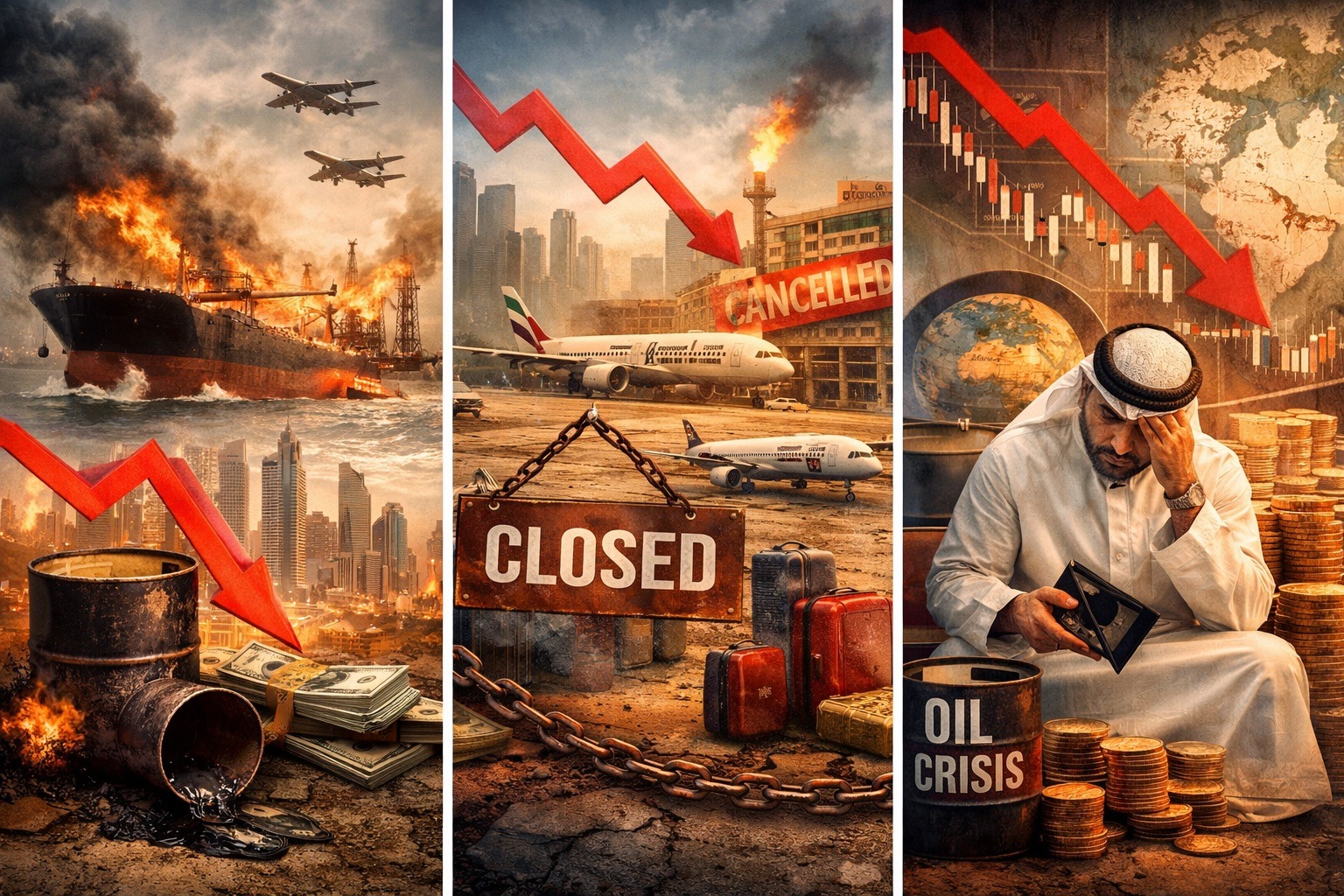
The ongoing Gulf Crisis has triggered a wave of economic disruption across the Middle East, affecting key sectors that once drove regional prosperity. From oil export challenges at the Strait of Hormuz to the sharp decline in tourism and aviation led by airlines like Emirates and Qatar Airways, the crisis is reshaping economic stability. Massive revenue losses, rising unemployment, and declining foreign investments are putting immense pressure on Gulf economies. At the same time, global energy dynamics are shifting, with competitors gaining advantage while the region faces uncertainty. The long-term impact of this crisis may permanently alter the economic landscape of the Middle East.
| # | Impact | Description |
|---|---|---|
| 1 | Oil Export Disruptions | Instability around the Strait of Hormuz has reduced oil and gas exports significantly |
| 2 | Massive Revenue Losses | Gulf economies are losing billions in oil and gas income, straining budgets |
| 3 | Tourism Industry Collapse | Sharp decline in international visitors, hotel bookings, and travel demand |
| 4 | Aviation Sector Crisis | Airlines like Emirates and Qatar Airways facing cancellations and grounded fleets |
| 5 | Investment Uncertainty | Foreign direct investment slowing due to geopolitical risks |
| 6 | Financial Hub Slowdown | Dubai’s global financial status weakening as banks reduce operations |
| 7 | Energy Infrastructure Damage | Oil and gas facilities damaged, reducing long-term production capacity |
| 8 | Rising Unemployment | Job losses increasing across tourism, aviation, and services sectors |
| 9 | Decline in Remittances | Countries like Pakistan facing reduced inflows from overseas workers |
| 10 | Global Energy Shift | Russia and others gaining market share as Gulf exports decline |
Oil, Gas, and the Strait of Hormuz Blockade
A major driver of the Gulf Crisis is the disruption of oil and gas exports due to tensions involving Strait of Hormuz. This critical route handles a significant portion of the world’s energy supply.
Qatar has halted LNG shipments, and its largest gas field has suffered damage, reducing capacity by 17% for up to five years. UAE oil production has dropped by more than half, while Saudi Arabia is struggling to reroute exports through the Red Sea—an alternative that cannot match previous volumes.
Kuwait, Bahrain, and Iraq have also experienced severe supply disruptions. According to estimates, over $11 billion worth of oil and gas shipments are currently stranded due to the blockade.
Tourism Collapse and Aviation Crisis
Another devastating dimension of the Gulf Crisis is the collapse of tourism—a sector valued at approximately $370 billion across the region.
Where once there were long queues of tourists entering Gulf countries, now there are lines of people trying to leave. Airlines such as Emirates, Qatar Airways, and Etihad Airways have grounded a large portion of their fleets.
Daily passenger traffic, which once reached 500,000 travelers, has nearly vanished. Flights are being canceled at unprecedented rates, and airports are operating far below capacity.
Dubai alone has seen over 200,000 hotel bookings canceled since the beginning of the conflict. The Gulf Crisis is turning one of the world’s most vibrant tourism hubs into an economic casualty.
Financial Markets and Trade Disruptions
Dubai, long considered a global financial hub, is also feeling the heat. International banks are shutting down branches, and gold trading—a cornerstone of Dubai’s economy—is being severely disrupted due to halted flights.
The Gulf Crisis has exposed how interconnected and fragile these economies are. Financial inflows are slowing, and investor confidence is declining rapidly.
Daily losses in tourism alone are estimated at $600 million, while total losses in oil and gas revenues have already exceeded $15 billion. These figures highlight the scale of economic damage unfolding across the Gulf.
Global Winners and Losers
While Gulf nations struggle, other global players are benefiting from the Gulf Crisis.
Russia is reportedly earning an additional $50 million daily due to increased demand for its oil. Meanwhile, U.S. oil companies are expected to gain up to $63 billion this year as global prices rise.
Countries like India, European nations, and South Korea are increasingly turning to Russian oil, further shifting global energy dynamics.
This redistribution of economic advantage underscores how the Gulf Crisis is not just regional—it is reshaping global markets.
Impact on Pakistan and Remittances
The consequences of the Gulf Crisis extend beyond the Middle East. Countries like Pakistan, which rely heavily on remittances from Gulf workers, are at significant risk.
As economic activity slows and job losses increase in Gulf countries, remittance flows are expected to decline sharply. This could have serious implications for Pakistan’s economy, increasing financial instability and unemployment at home.
Security Illusions and Changing Alliances
For decades, Gulf countries allowed U.S. military bases on their soil, believing it would ensure their protection. However, recent events suggest otherwise.
Despite repeated attacks on Gulf territories, including incidents involving U.S. bases in Qatar, Washington has shown limited response. Even after defense agreements were announced, security guarantees appear uncertain.
The Gulf Crisis is exposing the illusion of security that these nations relied upon, forcing them to reconsider their alliances and defense strategies.
A Turning Point for the Middle East
The ongoing conflict is more than just a temporary disruption—it is a turning point. As noted by Bloomberg, tensions with Iran are likely to permanently alter the Gulf region’s political and economic landscape.
The Gulf Crisis may ultimately lead to a shift away from overdependence on external powers toward more self-reliant and diversified strategies.
Conclusion
The Gulf Crisis represents a defining moment for the Middle East. From massive financial losses and disrupted trade to shifting geopolitical alliances, the impact is profound and far-reaching.
What began as a regional conflict has evolved into a global economic and political phenomenon. As Gulf nations grapple with these challenges, the lessons learned will likely shape their policies for decades to come.
The question now is not whether the region will change—but how deeply the Gulf Crisis will redefine its future.