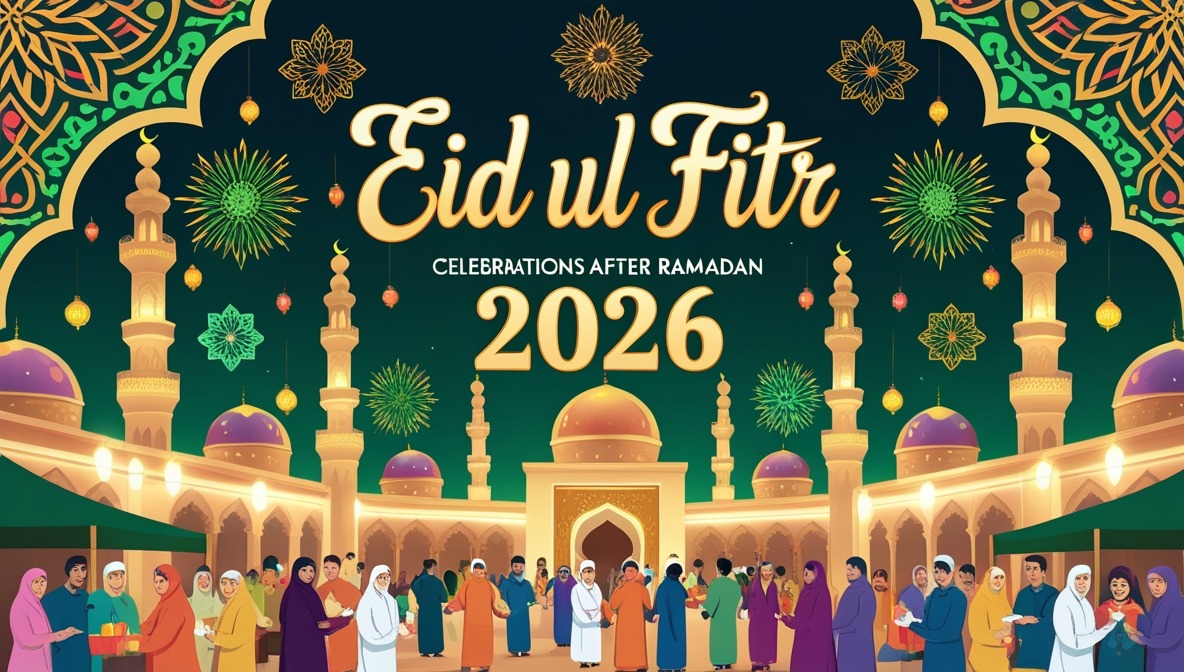
As the holy month of Ramadan draws to a close, millions of Muslims around the world are eagerly awaiting the celebration of Eid-ul-Fitr 2026, one of the most significant festivals in Islam. However, every year the exact date of Eid becomes a topic of discussion because it depends on the sighting of the Shawwal crescent moon. In 2026, the key question many people are asking is: Will Eid-ul-Fitr fall on March 20 or March 21?
Astronomical predictions and moon-sighting traditions indicate that the answer may vary depending on geography and the visibility of the crescent moon. While some countries may celebrate the festival on March 20, others, particularly in South Asia, are more likely to observe Eid on March 21.
Let’s have a look on the moon-sighting process, expected dates, and why different regions may celebrate Eid on different days.
Understanding the Lunar Calendar and Eid
The Islamic calendar is purely lunar, meaning months begin with the sighting of the new crescent moon. Unlike the Gregorian calendar, which follows the solar cycle, the Islamic year is about 10–11 days shorter, causing Islamic festivals to shift earlier each year.
Eid-ul-Fitr is celebrated on the first day of Shawwal, the tenth month of the Islamic calendar. The day marks the end of Ramadan, the month of fasting, prayer, charity, and spiritual reflection.
Because the start of Shawwal depends on the visibility of the moon, the exact date of Eid cannot be confirmed until religious authorities officially announce the sighting.
Astronomical Predictions for Eid 2026
Astronomical calculations indicate that the new moon of Shawwal will be born on March 19, 2026. However, whether the moon can actually be seen with the naked eye on that evening is another matter.
Experts say that if the crescent moon is visible on March 19, Eid will likely be celebrated on Friday, March 20, 2026 in many countries.
However, if the moon is not sighted that evening, Ramadan will complete 30 days, pushing Eid to Saturday, March 21, 2026.
Astronomical observations suggest that the chances of seeing the crescent moon on March 19 in South Asia are relatively low. Therefore, countries such as Pakistan and India are more likely to celebrate Eid on March 21.
🌍 Expected Eid-ul-Fitr 2026 Dates by Country/Region
| Country / Region | Expected Moon Sighting | Expected Eid Date | Notes |
|---|---|---|---|
| Saudi Arabia | March 19, 2026 | March 20, 2026 | Likely earlier Eid based on visibility |
| UAE | March 19, 2026 | March 20, 2026 | Follows Gulf moon sighting |
| Qatar | March 19, 2026 | March 20, 2026 | Same as Saudi Arabia |
| Kuwait | March 19, 2026 | March 20, 2026 | Gulf region trend |
| Oman | March 19, 2026 | March 20, 2026 | May vary slightly |
| Turkey | March 19, 2026 | March 20, 2026 | Often follows calculations |
| Egypt | March 19, 2026 | March 20, 2026 | Based on official committees |
| USA / UK / Europe | March 19, 2026 | March 20 or 21 | Depends on local or Saudi follow |
| Pakistan | March 20, 2026 | March 21, 2026 | Likely after 30 Ramadan fasts |
| India | March 20, 2026 | March 21, 2026 | South Asia trend |
| Bangladesh | March 20, 2026 | March 21, 2026 | Similar to India/Pakistan |
Because of differences in moon visibility and local religious rulings, Eid may be celebrated on different days around the world.
Gulf Countries and the Middle East
Countries such as Saudi Arabia, the United Arab Emirates, and Qatar often observe Eid based on local moon sightings or astronomical calculations. If the crescent moon is seen on March 19, these countries may celebrate Eid on March 20.
South Asia (Pakistan, India, Bangladesh)
In South Asia, moon sightings often occur a day later due to geographical factors. Experts in Pakistan have indicated low chances of moon visibility on March 19, suggesting Eid will likely fall on March 21.
Western Countries
Muslim communities in Europe and North America sometimes follow moon sightings from Saudi Arabia or rely on astronomical calculations. Therefore, Eid may be observed on either March 20 or March 21 depending on community decisions.
Why Moon Sighting Matters in Islam
Moon sighting holds great religious significance in Islam. The Prophet Muhammad emphasized the importance of beginning and ending Ramadan based on the sighting of the crescent moon.
This tradition has been followed for centuries and remains an important spiritual practice. Many countries have official committees responsible for confirming moon sightings, often combining astronomical data, witness testimonies, and religious guidance.
In Pakistan, the Central Ruet-e-Hilal Committee is responsible for announcing the official sighting of the Shawwal moon.
Chand Raat: The Night Before Eid
The evening when the Shawwal moon is sighted is popularly known as “Chand Raat.” It is a night filled with excitement and celebration, especially in South Asian cultures.
Markets stay open late as people shop for clothes, sweets, and gifts. Women and girls apply henna (mehndi), while families prepare traditional dishes for the next day’s festivities.
Chand Raat symbolizes the transition from a month of fasting to a day of celebration and gratitude.
How Eid-ul-Fitr Is Celebrated
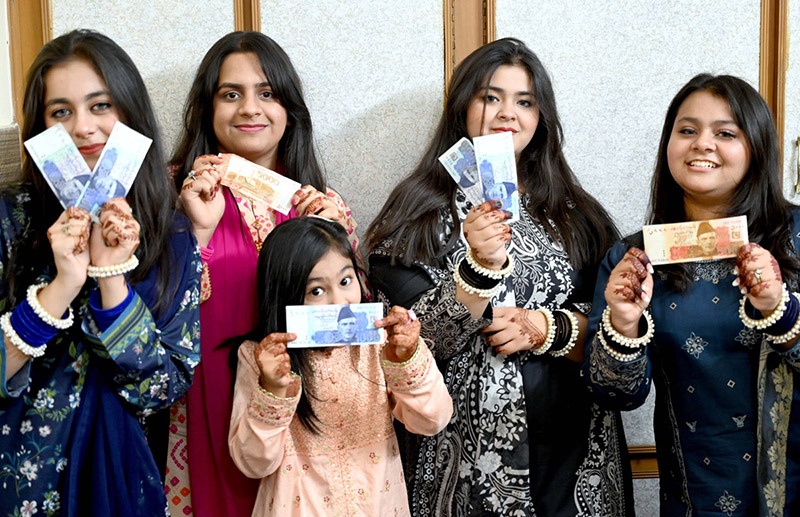
Eid-ul-Fitr is often referred to as the “Festival of Breaking the Fast.” It is a day of joy, gratitude, and community bonding.
The celebration usually begins early in the morning with a special Eid prayer held in mosques or large open grounds known as Eidgahs. Before the prayer, Muslims are required to give Zakat-ul-Fitr, a form of charity intended to help the poor participate in the festivities.
After the Eid-ul-Fitr prayer, families gather to exchange greetings such as “Eid Mubarak.”
Traditional activities include:
-
Visiting relatives and friends
-
Sharing festive meals
-
Giving children gifts or money known as Eidi
-
Preparing special dishes and sweets
In South Asia, popular Eid foods include sheer khurma, seviyan, biryani, and kebabs.
A Celebration of Gratitude and Unity
Beyond the festivities, Eid-ul-Fitr carries a deeper spiritual meaning. It represents the successful completion of Ramadan, during which Muslims practice self-discipline, patience, and compassion for the less fortunate.
The Eid-ul-Fitr day encourages forgiveness, reconciliation, and strengthening of family and community bonds.
Muslims are also encouraged to remember those in need and continue acts of charity even after Ramadan ends.
Final Word: Awaiting the Official Announcement
Although astronomical calculations provide strong predictions, the final date of Eid-ul-Fitr 2026 will only be confirmed after the Shawwal moon is sighted.
If the crescent moon is seen on March 19, many countries may celebrate Eid on March 20. However, if the moon is not visible, Ramadan will complete 30 days and Eid-ul-Fitr will be observed on March 21, especially in South Asian countries.
For now, Muslims around the world continue their final days of fasting and spiritual reflection, eagerly awaiting the joyful moment when the crescent moon appears and the celebration of Eid begins.

Dr. H. Zafar is a distinguished writer and analyst associated with Press Network of Pakistan as Associate Editor. With a strong academic background and years of research experience, she brings depth, clarity, and analytical rigor to her writings.